
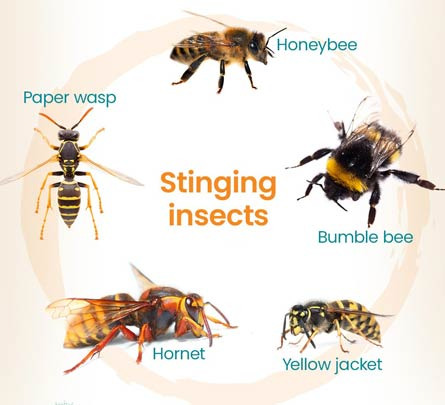
One day while hiking with a friend, they got stung by a bee and suddenly had a severe reaction that required a trip to the emergency room.
Since then, my perspective has changed. It's not just bears and snakes to watch out for in the mountains; you also need to be aware of small insects.
In the summer, especially in Utah, you need to be cautious of different types of wasps. While there are honeybees, there are also aggressive types like yellow jackets and wasps. Yellow jackets, in particular, tend to appear around outdoor eating areas or trash cans late in the summer.
For most people, a sting results in pain and swelling at the site. However, for those with a bee venom allergy, the situation can be completely different.
Symptoms of anaphylaxis can include difficulty breathing, swelling of the throat and tongue, hives all over the body, or dizziness. If these symptoms occur, you should call 911 immediately.
If you've experienced severe swelling or unusual reactions after a bee sting in the past, it's a good idea to consult an allergy specialist.
If deemed necessary, you may be prescribed an epinephrine auto-injector.
When hiking, it's also important to check for ticks. There are ticks in Utah that can bite humans. However, it's a bit of an exaggeration to think that Lyme disease is common in Utah. Lyme disease occurs much more frequently in the northeastern and midwestern United States and is relatively rare in Utah. That said, you shouldn't ignore ticks, as they can transmit other diseases.
On days when I've hiked trails with a lot of grass or bushes, I check my ankles and calves as soon as I get home. It's also a good idea to check less visible areas like behind the knees, around the waist, under the arms, and inside the hair.
Wearing long pants and tucking the pant legs into your socks is one method. It may look a bit silly at first, but it's better than worrying about ticks while walking. Using insect repellent can also help.
At home, you may encounter another pest. The elm seed bug is often mentioned in Utah. These small bugs can come in through window gaps or between doors, but they don't bite or carry dangerous diseases. However, if they come in all at once, they can be quite a nuisance.
You may also see carpet beetles. Their larvae can irritate the skin for some people, causing itching or rashes. If you keep finding them indoors, it's a good idea to clean around carpets, closets, and upholstered furniture.
When traveling in the southern desert regions of Utah, it's worth noting the fungal infection called Valley Fever. This disease is caused by fungal spores in the soil that become airborne with dust and enter the lungs. It's not a major concern in Salt Lake City, but if you frequently travel to the southwestern desert areas, it's good to at least know the name.
That said, there's no need to fear the Wasatch Mountains because of these things.
In fact, knowing what insects are out there and how to deal with them has made me feel more at ease. Wearing long pants, bringing repellent, checking for ticks after hiking, and carrying necessary medications for those with severe bee allergies is all it takes.
Making these habits part of your routine is enough.
It's too bad to give up such a beautiful place as the Wasatch Mountains just because of a few bugs. If you're prepared and informed, Salt Lake City is a really fun place for hiking enthusiasts.
 SunnyField74
 MintBuddy
 ANSLO





 Diana Blues |

 Dragon Lee |

 Churros Train Conductor |
 Tora Tora |

 neroyo |

 Utah, the Most Livable State |

 Tan Sol |

 morvex37 |

 AliAluAlo Blog |

 loran |
 The Gelaton |
 Twist Kim |
 berlon93 |
 Physical Laws and Science |
 good thinking |
 Solo Yolo |
 Mr Oh |
 laro90 |
 San Diego TOP Idol |
 Round and Round Children's Song Kingdom |
 American Golf Course Travelogue |
 MEDBIO American Doctor Blog |
 Hot Seat Driver |
 bryvexi |
 koala organic farm |
 riverstone |
 My Antonio |
 California Information News |
 chilli chilli |
 Moon Su San |