

When I meet friends who run their own businesses, there's a common complaint these days: if the minimum wage goes up again, it will be really hard to survive.
Just looking at online communities, similar comments always appear under articles about minimum wage increases. The overwhelming reaction is that small businesses are doomed.
But is this claim supported by actual data? Out of curiosity, I looked into related studies.
First, let's look at the numbers. The federal minimum wage is $7.25 per hour, and it hasn't increased since 2009.
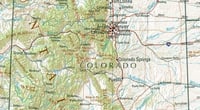
Conditions vary by state. Colorado has raised its minimum wage to $15.16 per hour by 2026, which is a 35-cent increase from $14.81 in 2025.
Even within Colorado, the city of Denver has set its minimum wage at $19.26 for 2026, which is much higher than the state average. For small businesses, the fact that standards differ by region is a burden in itself.
This trend isn't unique to Colorado. By 2026, 30 states and Washington D.C. will have implemented their own minimum wages that are higher than the federal minimum wage.
Depending on which state or city a business is located in, labor costs can vary significantly, meaning that small business owners with franchises in multiple areas must manage different pay structures for each location.
The discussion doesn't end at the local level. In 2025, a bill was proposed to gradually raise the federal minimum wage to $17 per hour by 2030.
The Congressional Budget Office (CBO) estimated that if the minimum wage were raised to $17, approximately 700,000 jobs could be lost on average. The same analysis also projected that about 400,000 people would escape poverty, indicating that evaluations will inevitably differ based on where one places the benefits and drawbacks.
Now, let's examine the crucial question: does such an increase actually reduce employment among small businesses?
A study by Professor Michael Reich's team at UC Berkeley is intriguing. They concluded that small businesses could pass some of the increased labor costs onto consumer prices, and the negative impact on employment was not significant.
In fact, the analysis also suggested that as wages increased, turnover rates decreased, and costs associated with hiring and retraining were reduced.
One explanation from the same study caught my attention. While hiring at small businesses slowed down, workers who could handle the increased costs moved to larger businesses, resulting in overall employment remaining relatively stable.
There are also studies showing opposing results. A study by the University of Washington tracked the minimum wage increase in Seattle, finding that when the wage rose from $11 to $13, the working hours of low-wage workers decreased by 9 percent.
During the same period, wages increased by 3 percent, but when factoring in the reduction in hours, this led to an average annual income loss of $125.
What stands out even more is the situation for less experienced workers. The reluctance of employers to hire low-skilled new workers was particularly concerning to me.
There was also a separate study focusing solely on the restaurant industry. It found that for every 1 percent increase in the gap between minimum wage and average wage, restaurant sales decreased by 0.92 percent.
Among these, full-service restaurants, where servers attend to tables, were hit harder than limited-service establishments like fast food. This seems to be due to the higher proportion of labor costs in that sector.
It's also worth mentioning the situation for tipped workers. In Colorado, the constitutional tip offset is fixed at $3.02 per hour, meaning that by 2026, the minimum wage for tipped workers will be $12.14.
If tips do not bring the total to $15.16 per hour, the employer must make up the difference, which means that on slow days, the burden on the employer increases, explaining why full-service restaurants react so sensitively.
The differing conclusions of these two studies ultimately stem from variations in industry and regional conditions. Even the same minimum wage increase can yield different results depending on where and in which industry it is applied.
A study focusing on sole proprietorships is also noteworthy. It found that for every $1 increase in minimum wage, the number of sole proprietorships in a county decreased by 0.5 to 0.9 percent.
This suggests that business owners operating alone are the first to be affected, leading me to think that we shouldn't lump all small businesses together under one term.
Another point to consider is the NFIB, or National Federation of Independent Business, survey results. A significant number of small business owners reported that they are already paying wages higher than the legally mandated minimum due to labor shortages.
In fact, 37 percent of small business owners reported that they had posted job openings but were unable to find candidates. This indicates that the market is pushing wages up even before legal mandates are set.
After examining all this, I feel a sense of clarity. The idea that small businesses will inevitably fail if the minimum wage increases is an exaggeration, just as is the notion that there will be no issues at all.
The most honest answer is that outcomes vary based on industry, region, and management style.
Personally, I believe that a gradual increase linked to inflation, like in Colorado, is more reasonable for both small businesses and low-wage workers than a sudden spike.
Rapid increases can lead to adverse effects, such as the displacement of new workers, as seen in Seattle, but a predictable pace allows small businesses to adjust prices and labor management in advance.
Ultimately, it seems that the realistic preparations small business owners can make are twofold: calculating the expected increase each year and gradually incorporating it into pricing, and ensuring they take advantage of existing systems like tip offsets and regional exceptions.
 MisoTankDef






 moname |
 mapsina |
 Mr. Largo |
 Victory 1988 |
 Infinite Style |
 Questions about firearms while living in America |
 Colorado Lee |
 Jellia Angel |
 Savion |
  pintos |
  coloradoman |
  Good Good |
  oh my salami |
  Lemonade Cider Planning Director |
  Way to easy |
  American Hardcore Band |
  Dala Dala |
  Pointy |
  Springs Korea |
  nixon |
  mini hometown |
  Gleeee |
  MacMorningBlog |
  ASURA |
  Elastico |
  shaket |
  vionoo |