

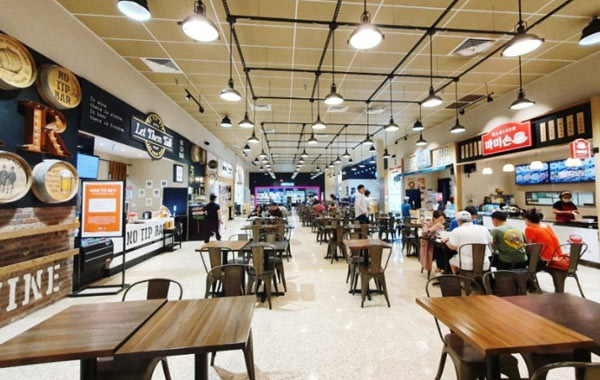
When a Korean person runs a business in America, there are certain industries that have been popular for a long time.
These include clothing sales, restaurants, general stores, and beauty products. Just walking around LA, you can easily spot these types of stores run by Koreans.
In the past, the methods of doing business were relatively simple.
People would go to Korea or China to find products that could sell well in the U.S., bring them in containers, and sell them with a reasonable markup.
Back then, simply being the first to bring hard-to-find items to America was a competitive advantage.
However, things have completely changed now. Nowadays, finding a product in Korea or China is not a difficult task.
With just a little bit of searching online, you can find manufacturers and get rough wholesale prices.
Consumers can also order directly from Amazon or Chinese online shopping sites.
So now, if you start a business with the mindset of "I can buy cheap from China and sell high in America," making money is not that easy.
The same goes for clothing sales.
Imagine someone without a good eye for fashion brings back a bunch of clothes they think are pretty from Dongdaemun or China.
There's no guarantee those will sell in America. You have to consider the body types of Americans and the different styles preferred in various regions.
You also need to know what age groups are shopping and how much they are willing to spend.
This is where the successful businesspeople stand out.
They don't just pick clothes they like from a hundred options; they select items that customers will want to buy.
This is the sense of business.
Food sales are even more straightforward.
There are people who wonder why customers aren't coming in after they've made food that they personally find delicious.
But business is not a cooking competition.
Food quality is just the baseline; price, portion size, location, service, menu composition, packaging, and delivery are all part of the product.
If you sell food that takes 30 minutes to prepare in a busy lunch area, no matter how delicious it is, you'll struggle.
On the other hand, successful businesspeople think about what customers want during lunch hours.
They create menus that are quick to serve, filling, reasonably priced, and not boring to eat repeatedly.
The same applies to general merchandise.
Having the ability to source products cheaply is less important than having the insight to see which items will sell in the future.
The person who brings in items that will trend three months later will make money, while the one who brings in items that are already being sold everywhere will end up in a price competition.
This will continuously reduce their profit margins.
These days, business seems to be less about sourcing products and more about reading information first.
If you visit a successful store, you'll see the owner paying close attention to customers.
They remember who walked in, what items they picked up and put down, and what prices made them hesitate.
If a customer asks, "Do you have something like this?" they don't just say no and move on.
They remember that question.
If similar questions keep coming up, that becomes the next item to sell.
The most dangerous mindset in business is relying solely on your own thoughts.
"This will definitely sell."
If you order $50,000 worth of products based on that belief and they don't sell, they become inventory from that moment on.
That's why successful businesspeople don't dive in too deep from the start. They bring in a small amount, gauge the response, and if it sells, they order more.
They let the customers provide the answers.
The way Korean Americans have been making money in business is also continuously changing.
In the past, there was a significant information gap between Korea or China and the U.S.
That gap allowed for profit opportunities, but now, due to the internet, that gap has nearly disappeared.
Ultimately, what remains is human intuition.
It's more important to know who to sell to than what to bring in.
It's not just about how much you bought it for, but about creating a reason for customers to pay that price.
This applies to clothing, food, and general merchandise alike.
If you think that buying cheap and selling high is the only way to do business, it's going to be tough to survive in America now.
It's about observing customers, quickly reading changes, identifying reasons why things aren't selling, and discovering what does sell, then acting immediately.
In the end, those are the people who succeed in business.
 Leprechaun
 SinbadInsure





 coloradoman |
 Living Economy Information Blog |
 Tomato Health Club blog |
 Banana Style Life |
 crystalo |
 U.S. Weather Bureau News |
 Choco Choco Star |
 Exploring American Life Information |
 Conflite Teacher |
 US Home Buying Information Home Insurance |
  novapixel |
  mortrix |
  Esther 1983 |
  fortbliss |
  Moscow Kim |
  My Two Way |
  toastyfox |
  FLORIDA Acus |
  tracker |
  TONTON COFFEE |
  sunrise |
  ultron78 |
  uplifted |
  Folding Instructions |
  same same life |
  USA Hyundai Kia |
  morvex37 |
  BOL SA RAM |
  TOUCHE NEWS |
  Small Business Information USA |