

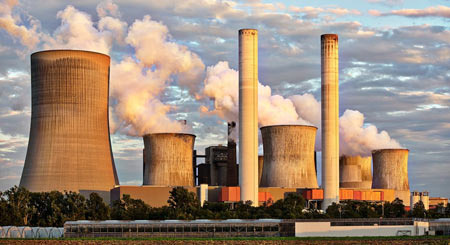
In the western United States, specifically in Washington, Oregon, and California, there are only three commercial nuclear power plants currently producing electricity.
Considering the total area, economic importance, and population of Washington, Oregon, and California, this number is surprisingly low. For reference, there are 54 nuclear power plants operating across the entire United States, and six nuclear power plants are currently operational in South Korea.
For reference, there are currently no commercial nuclear power plants operating in the remaining western states such as Colorado, Nevada, Oregon, Utah, and New Mexico. Discussions about new SMRs (Small Modular Reactors) are underway, but construction has not yet begun.
Currently Operating Nuclear Power Plants in the West (3 plants)
-
Diablo Canyon – Located on the coast of San Luis Obispo County, California, with 2 PWRs / approximately 2.2 GW. Extended operation until 2030.
-
Palo Verde – Located in the Arizona desert (west of Phoenix), with 3 PWRs / approximately 3.9 GW. The largest facility in the U.S., cooled with reclaimed water.
-
Columbia Generating Station – Near Richland, Washington, with 1 BWR / approximately 1.2 GW. The only commercial nuclear power plant in the Pacific Northwest.
Next Generation and Planned Projects
-
Natrium (TerraPower) – Located in Kemmerer, Wyoming, with a 345 MW sodium fast reactor + molten salt storage, targeting 2030.
-
UAMPS CFPP (NuScale SMR) – In Idaho, canceled and under review due to rising costs, targeting 2024.
-
XE-100 (Energy Northwest) – Proposed 80 MW high-temperature gas reactors in Richland, Washington, in the proposal stage.
Reasons for the Low Number of Nuclear Power Plants in the West
-
High geological risks such as earthquakes and fault lines make new licensing difficult.
-
Abundant renewable resources such as Columbia River hydropower and California solar and wind have reduced the economic necessity.
-
In California, strong public opinion and state policies favoring nuclear phase-out have hindered new developments.
-
The emergency planning zone within a 16 km (10 mile) radius of a nuclear power plant has evacuation and alert systems in place.
-
Electricity from Palo Verde and Diablo Canyon is transmitted and traded with neighboring states in the western electricity market (WECC).
-
Due to recent heatwaves and concerns over power shortages, there is an accelerating movement towards extending the lifespan of existing nuclear plants and introducing SMRs (Small Modular Reactors).
San Onofre (CA), Rancho Seco (CA), Trojan (OR), and Fort St. Vrain (CO) are already in permanent shutdown and decommissioning stages. Research and military facilities such as the Idaho National Laboratory (INL) and the Hanford site in Washington have experimental and research reactors separately.
Discussion of "New Nuclear Power Plants" in the U.S.
With the large Vogtle Unit 4 finally starting commercial operation in spring 2024 (Unit 3 in 2023), the atmosphere of "no more construction" has slightly changed.
Vogtle Units 3 and 4 (Georgia) – Expected to operate in 2023 and 2024, adding a total of 2.2 GW with 1.1 GW each.
Although it symbolizes the "first large new nuclear power plant in 30 years," it has become an icon of time and budget overruns with a total project cost of $35 billion.






 El Dorado |
 lightyear |
 Moscow Kim |
 coloradoman |
 Montgomery Mom |
 U.S. Weather Bureau News |
 Conflite Teacher |
 Exploring American Life Information |
 Soy Angelino |
  laro90 |
  MEDBIO American Doctor Blog |
  SWAT TEAM BLK |
  DREAM BIG |
  frostbite |
  330 Forever My Love |
  dralix58 |
  Gorama Round |
  Skydiving |
  dreamport |
  Yellow Snowman |
  Toaster Pizza Magic Show |
  velvetnom |
  Anytime Journey |
  Mrs. Duluth |
  jaxter |
  Atlanta Mama |
  Baguette Blog |
  Tan Sol |