
Gift cards that are lying dormant in your drawer are not just gifts; they are money you haven't spent yet.
A few days ago, while organizing for the end of the year, I took out the cards stuck in my wallet. I found six cards: a coffee shop card, a restaurant card, and a Visa gift card sent by a friend.
When I checked the balances one by one, they were awkwardly low amounts like $3, $7, and $12. It felt too little to use but too valuable to throw away, truly a dilemma.
But it seems I'm not the only one in this situation. According to a survey conducted by Bankrate in August 2024, 43% of American adults reported having at least one unused gift card.
The average unused amount per person was $244. In a 2021 survey, it was $116, meaning it has more than doubled in just a few years.
I was honestly a bit surprised by this number. If it were my mother's generation, they wouldn't even imagine leaving money like this untouched, as if it were emergency savings hidden under a rice container.
So how can we make use of these balances? First, it's important to know the basic protections set by federal law.
According to the Credit CARD Act that took effect in August 2010, the balance on gift cards must be valid for at least five years from the date of issuance or the last recharge. This means you shouldn't give up just because the date printed on the card has passed. In such cases, you can contact the issuer to get a new card without any fees.
Additionally, a dormancy fee can only be charged if the card hasn't been used for more than 12 months, and even then, it can only be charged once a month. Conversely, this means that after a year, the balance may gradually decrease.
Especially for general prepaid cards like Visa or Mastercard, these fee clauses are often attached. Even if the print is small, I recommend reading the terms on the back with a magnifying glass.
You can check your balance by calling the number or visiting the website listed on the back of the card. If it's a store card, you can also ask the cashier to check it for you, and they will kindly assist.
Next, many people are curious about cash refunds. Some states have laws requiring small balances to be refunded in cash.
A notable example is California, where starting April 1, 2026, balances under $15 will be refunded in cash upon request, up from the previous $10 threshold.
Unfortunately, Georgia does not have such a cash refund requirement. So in our area, it's more of a courtesy that stores may or may not provide, rather than a legal right.
Still, it doesn't hurt to politely ask at the checkout. Surprisingly, some places may handle it at the manager's discretion, and even if you get turned down, you have nothing to lose.
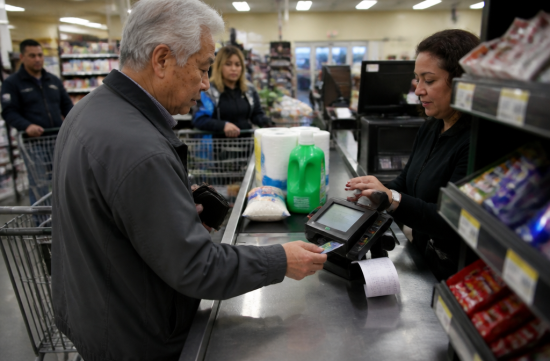
If cash is difficult, the most reliable method is split payment, meaning paying in parts. If an item costs $20 and you have $7 left on your card, you can use that $7 first and pay the rest with another card.
This is key for general Visa gift cards. If you try to swipe for an amount larger than the balance, it will be declined, so you need to tell the cashier the exact amount first.
Online shopping is even simpler. On sites like Amazon, if you register your gift card to your account, the balance accumulates and is automatically deducted from your next order.
Using the store card intentionally when buying essentials once or twice is also a strategy. If you use it for items you were going to buy anyway, like toilet paper or detergent, it doesn't feel like a waste, and it saves you cash.
If you have a store card that you absolutely won't use, you can sell it on a gift card exchange site. However, they will offer less than the face value, so it's best to consider this as a last resort.
Another idea is to pool balances with family members. If I pass on a restaurant card I rarely use to someone who enjoys that place, it can become a meal for them.
One important note: gift cards are also a favorite payment method for scammers.
Calls impersonating government agencies, banks, or family members asking for gift card numbers are clearly identified as scams by the FTC. Real agencies will never ask for payment via gift cards.
When buying cards in stores, if the packaging is torn or the PIN on the back is scratched off, put it down. There are methods where the balance disappears as soon as it's loaded.
This is the order I've organized. First, check the balances of all the cards and write them down.
Next, separate those you can use within a year from those you can't. Keep the usable ones at the front of your wallet and pass on the others for exchange or gifts.
For general prepaid cards, use them for essential purchases before any fees apply. I'm planning to clear two cards at the grocery store this week.
When I was younger, I wrote that saving money is important. Now I realize that what's even more important is not forgetting the money you have.
If someone gave you a card with their heart, it's even more so. Letting it sit in a drawer means you're letting that sentiment go to waste too.
Before this year ends, I encourage you to open your wallet and drawer. You might find more money quietly waiting than you expect.
 RiverWave
 MacaronTroupe



 Nevada Vegas UNLV |
 Things to know |
 West Kong |

 havero70 |

 Grow Your Gut Bacteria Well |

 Going Once |

 Macon Boy |




 Shining Our Own World |
 Raymond K. |
 gravity |
 714 Success Era Real Estate |
 Investment Beginner Company Information Encyclopedia |
 musicque |
 The Gelaton |
 ovelion |
 Chicagonian |
 Freedom Yea |
 AZ Road Master |
 glenix39 |
 Something is popping in the situation |
 orvella |
 vella |
 comets |
 Banana |
 Yes Dorian |
 Minnesota Sonata N |
 zentar |