
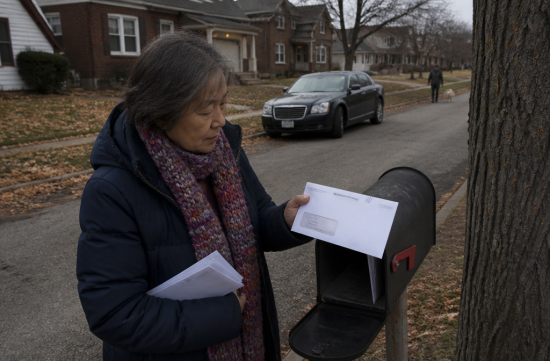
Last week, a church member brought over a thick envelope she found in her mailbox. It had arrived in September, but she had just put it in a drawer. When we opened it, it was the notice about changes to the Part D plan for next year.
Inside, we found that one of her daily medications was missing from next year's list. Oh, at that moment, we both fell silent for a while.
So today, I want to emphasize this point. Before December 7, you need to check if your medications will still be covered by insurance next year.
The Medicare annual enrollment period is from October 15 to December 7, 2026. The plan you choose will take effect on January 1, 2027.
If this period passes, most standalone Part D plans will remain unchanged for the entire next year. It would be quite a shock to find out in January at the pharmacy counter that a medication is missing from the list.
The thick envelope contains the annual notice of changes, referred to as ANOC in English. Plans must send this to enrollees by September 30 each year.
It includes information on how premiums, deductibles, drug tiers, and pharmacy networks will change next year. The drug list, or formulary, may be included or instructions may be provided to check it separately.
If you didn't receive the envelope or threw it away, you can call the plan directly using the number on the back of your card. There are actually quite a few people who find themselves in this situation.
This is the process I went through with the church member. First, I wrote down all the names and dosages of her current medications on a piece of paper.
Then, I used the plan finder tool on Medicare.gov to input those medications and check the 2027 information for her current plan. It showed whether any medications were missing, if their tiers had changed, and if there were new prior authorization or quantity limits.
On the same screen, you can also compare estimated costs for next year with other plans. You shouldn't just look at the drug list and premiums; you need to consider the total cost, including the price of the medications.
Another easy-to-miss aspect is the pharmacy. If your usual neighborhood pharmacy is no longer a preferred pharmacy next year, the cost for the same medication could change.
Don't overlook the premiums either. An analysis by KFF indicated that some enrollees might see a significant increase in premiums if they keep their plans unchanged, as temporary premium assistance for standalone Part D plans is ending.
Next year, the numbers will change slightly. The annual out-of-pocket maximum for Part D in 2027 will be $2,400, which is an increase of $300 from this year's $2,100.
The maximum deductible that plans can impose has also risen from $615 to $700. Honestly, this part was a bit disappointing. For those with high medication costs, this is not a small difference.
However, this out-of-pocket maximum only applies to the medications covered by the plan. Any medications that are missing from the list won't count towards the out-of-pocket maximum, making it even more important to check the list.
So, what should you do if you already know that a medication is missing? There are three main options.
The first is to switch to another plan that includes your medication before December 7. This is the most certain method.
The second is to change the prescription to another medication on the list that provides the same effect. This should be decided in consultation with your doctor and pharmacist.
The third option is to request an exception from the plan. If your doctor writes a justification for why this medication is necessary, the plan may continue to cover it.
Some plans even accept exception requests in advance for medications that will be excluded next year. So, it's worth calling now to ask.
If you find out in January that a medication is missing, don't be too surprised. Plans have a transition period policy, allowing you to receive a one-time 30-day supply within the first 90 days of the new year.
When you receive this temporary supply, the plan is required to send you a notification letter within a few days. The duration and number of days can vary by plan, so you should check your plan's policy.
Medicare Advantage enrollees have another opportunity to switch between January 1 and March 31. Still, it's much more reassuring to get everything sorted out now.
If you're feeling overwhelmed, be sure to take advantage of the free counseling available in Michigan. The MI Options counseling hotline is 800-803-7174, and they are available Monday through Friday from 8 AM to 8 PM.
They connect you with certified counselors who are not affiliated with any insurance companies, so you don't have to worry about being pushed towards specific products. This service is truly appreciated.
One more thing, there are many calls impersonating Medicare during this time. You do not need to provide your Medicare number to inquire about plan information.
If you're suspicious, hang up and verify directly by calling 1-800-633-4227. This is something the state government emphasizes every year.
In the end, the church member found a plan that included her medication and made the switch. After everything was done, we shared a cup of coffee, and her expression was so bright.
If I were you, I wouldn't wait until the last minute; I would start by writing down my medication list this weekend. Time is running out, so take out that envelope today.
 QuitDiet







 Joyce 77 |

 zestorbit |

 hihihi |
 fruitflash |

 Anjollinya Blog |

 bayaa |

 juniper |

 kerkee |

 honeycom |


 some fame |
 aaoaa |
 Mr. Midwest America |
 Taek Jun |
 molten |
 Kondae Garusong Blog |
 micos |
 Living Economy Information Blog |
 vintage |
 vorame |
 rosem |
 Various Knowledge and Information in the USA |
 aloeverame |
 coffeee |
 Well Done Sir |
 cantsay |
 winter |
 swiftlane |
 ovelion |
 wexlin84 |