
I recently received an invitation to a wedding. It's for my coworker's son, and there was a small card inside the envelope.
It had a QR code and the words "Our registry." At first, I honestly had no idea what that meant.
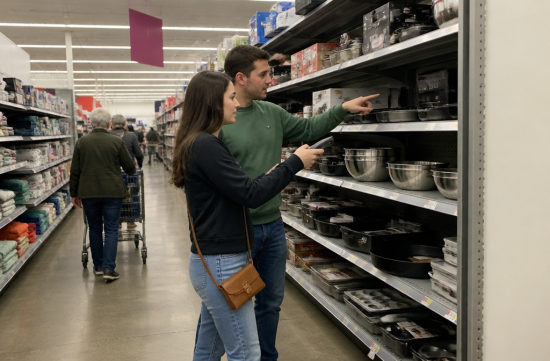
When I scanned it, a list of items the newlyweds wanted popped up. There were pots and pans, towels, blankets, and even a coffee maker, all with price tags attached.
This is a bit unfamiliar for someone raised in Korea. We just put cash in a white envelope, wrote our names, and handed it over at the reception desk.
At first, it felt a bit awkward to openly ask for gifts. I thought it seemed too calculating from the perspective of the person receiving it.
However, after looking into it and hearing from some friends with kids, my perspective started to shift. It actually shares many similarities with our cash gift culture.
The concept of registries has a longer history than I expected. It's believed to have started in 1924 at Marshall Field's department store in Chicago.
Back then, it was a service where the bride and her family selected items like china, silverware, and crystal glasses. Guests would contribute to the couple's household items.
So, the starting point was ultimately about "setting up a new home." It was a very practical idea to prevent receiving three of the same plate.
I was curious about what items are popular nowadays, so I looked it up. I found a registry survey released this year by the wedding site The Knot and read through it.
They surveyed 1,759 engaged and newlywed couples, and the most commonly registered item was baking tools at 79%. Cooking utensils followed closely at 75%.
Bathroom items were at 73%, and bedding at 69%. Even after 100 years, it still revolves around the kitchen and bedroom. It seems that people's needs are quite similar.
But what really surprised me was that 75% of couples include cash funds in their registries.
41% of couples said cash was the gift they most wanted. Additionally, 56% of couples mixed traditional items with cash funds.
Among cash funds, honeymoon funds, new home funds, and round-trip airfare are commonly included. It's essentially just a different name for cash gifts.
I found myself laughing at this. It seems like we're coming full circle back to the Korean-style envelope.
When you think about it, cash gifts were originally a form of mutual aid. Neighbors would contribute rice and money to help families celebrating significant events. If you trace the roots of the American registry, it ultimately reflects the desire to support a couple starting their life together.
The difference is that the purpose is clearly stated. This money is for the cost of a flight to Hawaii, this money is for a down payment on a house, and so on.
This oddly brings a sense of comfort. Knowing where my money is going makes it feel less empty than just handing over an envelope.
When considering why this has become the norm, we can't ignore the costs of weddings. According to The Knot, the average cost of a wedding in the U.S. last year was $34,000.
They say the average spent per guest is $292. Seeing that number made me gasp. Just covering the venue and food costs that much, and it's tough for parents or the couple themselves to manage the expenses for starting a new life.
These days, many young people live together before getting married. They already have pots and toasters at home, so receiving more would just add to the clutter. With small apartments, where would they even put everything?
So, asking for help with rent deposits or down payments might actually be a more honest request.
Of course, there are some uncomfortable aspects. Since all the prices are visible, it's very clear how much I spent on my gift.
And our generation still enjoys the tactile experience of handing something over. Clicking a few times on a screen feels a bit anticlimactic.
Sometimes popular items sell out quickly, leaving only the expensive ones available. When I first checked the registry, the decent items were already taken, and I had to look for a while.
Still, one thing is definitely a plus. The couple chose items they truly need, so there won't be gifts piling up in storage that they won't use.
I've received wedding gifts in the past that sat unopened for years. Considering that, this is much better. It also produces less waste.
In the end, I chose a cast iron skillet from the list. If well cared for, it's something that can be passed down for generations, which I liked. Buying something once and using it for a lifetime is, in my opinion, the most eco-friendly choice.
And I wrote a few lines on the card in a Korean style. I wished them a long and happy life together while cooking eggs in that skillet.
Even if the format is different, the sentiment remains the same. Whether it's an envelope or a registry, as long as the congratulatory spirit is conveyed, that's enough. Next time I receive an invitation with a QR code, I plan to smile and open the list without feeling flustered.
 FlixFlex













 Yo Lock Me Up |

 moodansa 77 |

 Conflite Teacher |

 US Snowboard Information Exchange |

 There Are Such Things in the World |
 Good Neighborhood, Wealthy District Information |

 Gongs Blog |




 some fame |
 aaoaa |
 Mr. Midwest America |
 Taek Jun |
 molten |
 Kondae Garusong Blog |
 micos |
 Living Economy Information Blog |
 vintage |
 vorame |
 rosem |
 Various Knowledge and Information in the USA |
 aloeverame |
 coffeee |
 Well Done Sir |
 cantsay |
 winter |
 swiftlane |
 ovelion |
 wexlin84 |