
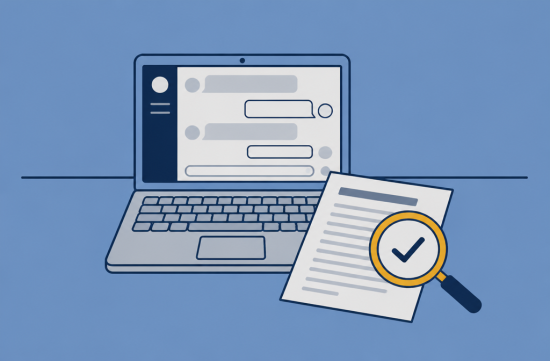
After dinner, I casually glanced at my child doing homework and noticed ChatGPT open in one corner of the laptop. I immediately asked, "Is this allowed?" and the response was a masterpiece: "It varies by teacher."
At first, I thought it was just an excuse. But upon checking, I found that this statement was quite accurate.
California passed a law called SB 1288 in 2024 to create a public school AI working group. This team includes teachers, students, administrators, and industry experts.
Based on this team's work, the state Department of Education (CDE) released a public school AI usage guide in January 2026. It covers topics like data privacy, academic integrity, and teacher support.
By the end of June 2026, a model policy was also released that school districts could adopt and modify, essentially a template. This was in line with the July 1 deadline set by the law.
Here's a key point: this model policy is a recommendation, not a mandate. What actually applies to students is the version adopted by each school district.
Therefore, rules can differ from district to district, school to school, and even classroom to classroom. Honestly, this can be a bit frustrating for parents.
Still, there are several noteworthy points in the model policy. First, there's a clause stating that submitting content created by AI without disclosure is considered plagiarism and academic dishonesty.
In other words, it means that using AI within allowed limits and transparently stating, "I received help from AI," is fundamental. The key issue is not whether to use it, but rather the disclosure.
Secondly, it's reassuring that disciplinary actions or grades cannot be determined solely based on the results of AI detection programs. Teacher judgment should be central.
Since detectors can mistakenly identify well-written texts as AI-generated, this clause is a great addition. It serves as a safeguard, especially for children for whom English is a second language.
The third point is parental rights. If AI-generated content is used in decisions regarding a child, parents can request a human review according to district procedures.
Additionally, there is a clause advising students and teachers not to input academic records or personal information into AI tools not permitted by the district. This is something to emphasize at home.
So, what are the actual practices of school districts? Just looking at the Sacramento area, the approaches vary widely.
San Juan Unified has explicitly included AI in its technology use policy and academic integrity policy, and it licenses a platform called MagicSchool for student use.
Elk Grove Unified has formed a task force to recommend AI policies, and some schools have reportedly established their own criteria for operation.
Sacramento City Unified has a new technology use agreement that includes AI. However, students have reported that rules vary widely between schools and teachers.
Ultimately, the statement "It varies by teacher" turned out to be true. So, what can parents do? One thing: directly check the rules for our child.
The first step is to look for the Board Policy on the district's website. Searching with keywords like academic honesty, technology use, and artificial intelligence will speed things up.
The second step is to revisit the student handbook and technology use agreement received at the beginning of the semester. Many households probably just signed and put it away. I admit I'm guilty of that too.
The third step is the most important. Check the syllabus for each subject. Most actual homework rules are set here.
If there's no mention in the syllabus, it's best to directly ask via email. Just three questions are enough: whether idea brainstorming is allowed, if grammar correction is permitted, and how to indicate AI assistance if used.
When emailing, it's better to adopt a tone like, "I want to know how far I can help at home." Teachers usually appreciate such questions.
Also, check the age restrictions for AI services used at home. OpenAI's terms state a minimum age of 13, and parental consent is required for those under 18.
As seen in the San Juan Unified case, educational tools contracted by the district may have restrictions for student use. It's important to note that this differs from using personal accounts at home.
School policies can change as districts update them, so it's a good habit to check back once each semester.
In my opinion, outright banning AI isn't the solution. I'm concerned about the gap between kids who have good tools at home and those who don't.
Instead, it's better to set agreements with the child. Think first, use AI for verification, and always disclose if used. Following these three guidelines will prevent major issues.
If it were me, I would open the syllabus with my child tonight. It only takes five minutes. It's a hundred times better than getting caught up in a plagiarism dispute due to ignorance.
 BlueSummit74









 korando9 |
 Augusta 90 |
 Pointy |

 rissa |
 Gomo Nim |

 Noodle Noodle |

 Koreab Date |

 Grow Your Gut Bacteria Well |

 Physical Laws and Science |

 micos |
 Living Economy Information Blog |
 vintage |
 vorame |
 rosem |
 Various Knowledge and Information in the USA |
 aloeverame |
 coffeee |
 Well Done Sir |
 cantsay |
 winter |
 swiftlane |
 ovelion |
 wexlin84 |
 Victory 1988 |
 noraro |
 Scade Studio |
 flingstone |
 Rynex |