
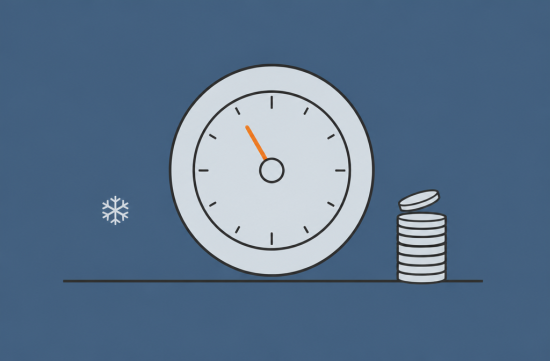
On Thanksgiving morning, as I put the turkey in the oven and looked out the window, I saw late autumn rain instead of snow. I started humming along to an old song playing on the radio when suddenly, last winter's heating bill popped into my mind.
This winter is said to be a bit warmer, but is that really the case? And if so, can we reduce our heating budget? Let's break it down step by step.
First, let's talk about the weather. The winter outlook released by NOAA on October 16 covers the period from December to February and indicates a higher likelihood of warmer temperatures along the Great Lakes and in the Northeast.
The background for this is El Niño. Winters with El Niño tend to be generally milder in the Northeast.
However, snow is a different matter. NOAA's seasonal outlook does not predict snowfall amounts. Even with a warm winter, a couple of lake-effect snowstorms could mean shoveling is still necessary around here.
And this is a matter of probability. Just because there's a greater chance of warmth doesn't mean we can guarantee there won't be a cold snap.
Now, let's move on to the financial aspect. National Grid's winter rate forecast for upstate New York, released in mid-October, covers the five-month period from November 1 to March 31 of the following year.
If a typical household uses 713 therms of gas, they can expect to pay about $9 less than last winter. Honestly, seeing that number was a bit disheartening. $9 isn't even enough for an hour of karaoke.
There are reasons for this small decrease. According to reports for the Capital Region, gas supply costs are expected to save about $100, but delivery charges are rising, which offsets most of that savings.
Electricity, on the other hand, is expected to rise. During the same five-month period, total electricity costs are projected to increase by 3-5% depending on the region, which translates to an increase of $22-$39.
It's important to note that these projections are based on average weather conditions. If it really is warm, costs will be lower, and if it's cold, costs will be higher.
Looking at the national level, the EIA predicts that winter heating expenditures for homes using gas will decrease by an average of 9%. The overall heating expenditures for the Northeast are also expected to decline compared to last winter.
The issue lies with homes using oil boilers. The EIA expects households using heating oil to pay 21% more than last winter. The mild weather in the Northeast is only expected to slightly alleviate the price increases.
A survey by NYSERDA on October 5 shows the impact. The average price of heating oil in New York State is $6.210 per gallon, up 67% from $3.720 a year ago.
Propane has also increased to $3.532 per gallon, a rise of 12.8% compared to last year. Those living in rural areas may feel this increase even more acutely.
So, to summarize: gas heating is nearly stable, electricity is slightly rising, and heating oil is significantly increasing this winter. It's hard to expect that warm weather will drastically reduce our bills.
So how should we plan our budget? Personally, I would base it on the actual amount spent last winter and exclude any assumptions about benefiting from the weather.
National Grid offers a Budget Plan that allows you to spread your energy costs over 12 months. Even if bills pile up in January and February, you pay the same amount each month, which can be a relief.
Adjusting your thermostat can also be beneficial. According to National Grid data, lowering it by just 1 degree can save you 1-3% on annual heating costs. They recommend lowering it when you leave home for more than two hours or while sleeping.
Sealing drafts can also have a significant impact. Just managing outside air can reduce heating and cooling costs by about 15%, so it's a good idea to remove window air conditioners or seal any gaps.
Don't attempt to inspect your boiler yourself; have a professional do it once a year, and check the filters monthly during the heating season.
If you need assistance, be sure to check HEAP. Applications for the 2026-27 season's general assistance opened on November 2.
The income limits are $3,563 for a one-person household, $4,659 for two, and $6,852 for four. Applications can be made through the myBenefits website or your county's social services department.
Emergency assistance will open on January 4 of next year, and the Clean and Tune program, which helps with boiler cleaning and inspections, has been accepting applications since October 1. Be sure to verify the specific eligibility requirements through official channels.
If your income exceeds the HEAP limits but is below the state median income, there is also the Enhanced Energy Affordability Program, which offers monthly bill credits. This is a program worth knowing about.
While the idea of a mild winter is welcome, it doesn't mean our bills will be mild as well. However, if we prepare in advance, we can make it through the long winter song.
Today, I turned down the thermostat by 1 degree and pulled out another sweater. While the turkey cooks, I'm playing Lee Mu-song's "What Is Living" and raising a toast to getting through this winter safely.
 FungusLegend



 Scade Studio |

 Nevada Vegas UNLV |

 Things to know |
 West Kong |

 havero70 |

 namico |



 racuse |


 micos |
 Living Economy Information Blog |
 vintage |
 vorame |
 rosem |
 Various Knowledge and Information in the USA |
 aloeverame |
 coffeee |
 Well Done Sir |
 cantsay |
 winter |
 swiftlane |
 ovelion |
 wexlin84 |
 Victory 1988 |
 noraro |
 korando9 |
 flingstone |
 Rynex |