
As you pass in front of the state capitol, there stands a statue of a woman in a dress. At first, I thought it was just a figure from the pioneer era and walked by. It wasn't until I looked up her name later that I understood why this town takes such pride in it.
The statue's subject is Esther Hobart Morris. She was a woman who served as a justice of the peace in South Pass City in 1870. This is considered one of the early examples of women holding such public office in the United States.
However, the story begins a year earlier. In the fall of 1869, the first Wyoming territorial legislature convened right here in Cheyenne. The session ran from October 12 to December 10.
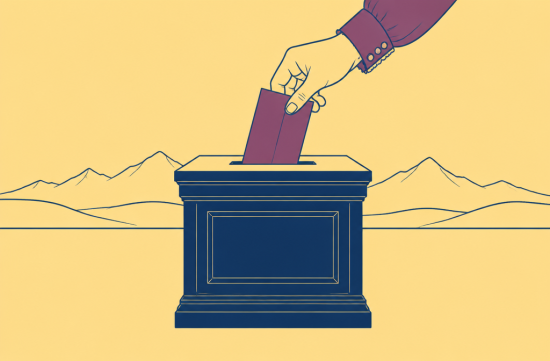
At the end of that session, a bill was introduced granting women the right to vote and hold public office. The person who proposed it was William Bright, the president of the council, which was the upper house.
The voting results are also recorded. It passed in the council by a vote of 6 to 2 and in the house by 7 to 4. I noticed that the number of opposing votes was surprisingly not small.
Republican Governor John Campbell reportedly pondered for several days. He signed the bill on December 10, 1869, the last day of the session. This law is considered the first to explicitly guarantee women's voting rights in U.S. territory.
To be honest, I felt a bit deflated here. There are many interpretations suggesting that the motivations of the legislators were not entirely noble.
The legislature at the time was dominated by the Democratic Party, and there are explanations that they aimed to put the Republican governor in a difficult position. Some say they were looking for publicity to attract attention and settlers to the sparsely populated territory.
On the other hand, there are records indicating that Bright genuinely believed in women's rights. The motivations remain a point of contention among historians. Therefore, it's hard to definitively conclude one way or the other.
Still, I believe the outcome is what matters most. Regardless of the motivations, the law was the law, and it was actually enacted.
Evidence of this comes two years later. In 1871, the legislature attempted to repeal this law, but Governor Campbell exercised his veto to stop it. The person who was initially hesitant this time stood firm.
There are also records of actual voting scenes. On September 6, 1870, a woman in her 70s named Louisa Swain cast her ballot in Laramie.
Local newspapers reported that she voted 30 minutes earlier than other women in Cheyenne. However, Wyoming state historical records cautiously refer to it as "the first verified female vote." I think it's appropriate to accept it that way.
In 2008, Congress passed a resolution commemorating September 6 as Louisa Swain Day.
The real challenge came when it was time for statehood. Wyoming needed federal approval to become a state, but there was pressure to remove women's suffrage.
At that time, the territory reportedly sent a response stating that they would rather remain outside the federal union for 100 years than enter without women. The exact wording and the sender vary slightly across records. However, the sentiment is consistently reflected in various accounts.
The outcome was close. On March 26, 1890, the U.S. House of Representatives passed it by a narrow margin of 139 to 127, just 12 votes apart.
Then, on July 10, 1890, President Harrison signed it, making Wyoming the 44th state. It was the first state to enter with women's voting rights intact.
The 19th Amendment, which guaranteed women's suffrage nationwide, was not ratified until 1920. By that calculation, this area was over half a century ahead. It's astonishing when you look at it in numbers.
Wyoming's nickname, the Equality State, also comes from this history. You can see this phrase quite often in state government materials and tourist brochures. At first, I thought it was just a nice slogan.
December 10 is still celebrated as Wyoming Day. It's not a day of grand festivities, but it's a day when schools and museums revisit this history.
This year marks the 157th anniversary of the law's passage. It's also a day that can easily get overshadowed by the holiday season, as it falls two weeks after Thanksgiving.
What I feel living here is that the people in this town don't embellish this story. They simply say, "We did it first," in a straightforward manner.
I appreciate that attitude. Whether the motivations were politically calculated or not, the fact remains that they made a decision first in the middle of the windy, sparsely populated plains.
From the perspective of an immigrant, there's an even deeper resonance. The right to vote is not something that is simply given; it is the result of someone voting, signing, and safeguarding it.
If you ever find yourself in Cheyenne, I recommend taking a moment to see the Morris statue in front of the state capitol. Five minutes is all you need.
I would aim to visit around December 10. Even though the weather is cold, you'll get a sense of why this town holds onto the name of the Equality State.
 KeepHolding
 BlueRiver




 Yo Lock Me Up |
 moodansa 77 |
 Conflite Teacher |
 US Snowboard Information Exchange |

 There Are Such Things in the World |
 yenne |





 nixxon |
 micos |
 Living Economy Information Blog |
 vintage |
 vorame |
 rosem |
 Various Knowledge and Information in the USA |
 aloeverame |
 coffeee |
 Well Done Sir |
 cantsay |
 winter |
 swiftlane |
 ovelion |
 wexlin84 |
 Victory 1988 |
 noraro |
 korando9 |
 Scade Studio |
 flingstone |
 Rynex |