

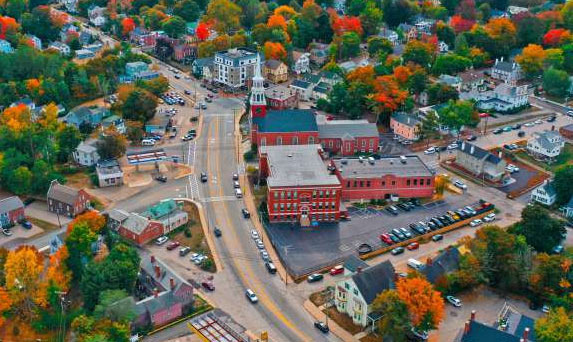
If you're considering moving to Concord, New Hampshire, the first question that comes to mind is likely, 'Should I rent or buy a house now?'
First, let's look at rental prices. The median rent in Concord varies slightly by source, but generally falls between $1,800 and $2,000, with RentCafe reporting a slightly lower figure of $1,751. Based on various sources, a realistic expectation for a 2-bedroom apartment is around $1,900.
The average home value according to Zillow is $449,637, which has increased by 3.9 percent over the past year.
Redfin reports a median sale price of $473,000, which is a bit higher.
A point that newcomers from other states often overlook is the tax structure.
New Hampshire has no state income tax, but property taxes are among the highest in the nation, so if you're considering buying, it's wise to factor this in from the start. If you only budget based on home prices, your actual monthly burden could be higher than expected.
Looking at the Price-to-Rent Ratio (the home price divided by annual rent), using a figure of $460,000 for home price and $22,800 for annual rent gives a ratio of about 20.2.
With a guideline that a ratio below 15 favors buying and above 21 favors renting, Concord falls in the middle range, closer to the rental side. It's difficult to definitively say one option is overwhelmingly better than the other.
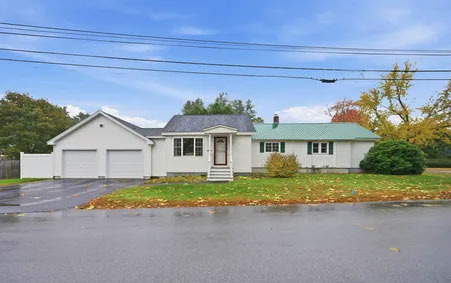
When considering monthly costs, the principal and interest amount to $2,387, and when you add property taxes and insurance, the total monthly payment can rise to about $3,317.
Compared to renting at $1,900, this results in a difference of over $1,400 each month.
The approximately $90,000 needed for a down payment is also a factor to consider. Even with a 7 percent annual return, this could yield around $6,300 annually, but if you buy a house, that money will be tied up in the property. Of course, this return is not guaranteed and is just a hypothetical comparison to keep in mind.
Compared to nearby Manchester or Nashua, Concord, being the state capital, has a steady demand from public sector employees, and the rental market is relatively stable. However, the rate of increase in home prices is somewhat steeper than in neighboring cities, so it's important to be cautious about the timing of your purchase.
So, before making a decision, you might want to ask yourself three questions: Is there a clear reason to stay in this city for more than five years? Will I have enough financial flexibility to handle an additional burden of over $1,400 each month? Am I okay with tying up $90,000 in a house?
For example, if you imagine hanging a wreath on your front door this winter, think about how many more winters you might spend in this house; that could help you determine your criteria for renting versus buying.
If you are certain about settling down for over five years due to work or children's education, there seems to be sufficient reason to consider buying even at the current interest rates. Conversely, if the area still feels unfamiliar or the property tax burden seems significant, renting for 1-2 years to gradually get to know the neighborhood might be a more realistic choice.
Personally, I believe there's no rush to make a decision in a market that isn't overly large. Considering the ratio is close to the rental side and the monthly difference exceeds $1,400, it might not be too late to act once your living plans are more certain.
Rather than rushing, it might be a more comfortable choice to live in the area for at least a season before making a judgment.
 HoneyBearUp
 silverroadwalker1915





 Something is popping in the situation |

 lumix88 |

 quiet river |

 Doori Ark |

 My Town My Way Blog |

 what gives |

 ovelion |

 abox |


 wexlin84 |
 Victory 1988 |
 noraro |
 korando9 |
 Scade Studio |
 flingstone |
 Rynex |
 Mint Star |
 Dalsabet dolstar |
 Winter bear |
 FLORIDA Acus |
 Anytime Journey |
 Information on All Regions of the United States |
 Lim Ario |
 Mr Oh |
 Whale Roar Improvisation Band |
 Lululala |
 Atlanta Business Information |
 Yo Lock Me Up |