
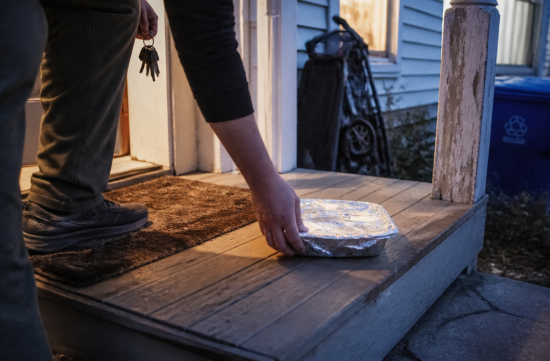
Living in America, you might encounter a scene where, after hearing that someone has lost a family member or is facing a major surgery, dishes covered with foil start to pile up in front of their door within a few days.
Some neighbors quietly leave an oven dish without saying a word of comfort. Honestly, when I first saw this, it felt a bit strange.
I thought that words were necessary in times of sadness. However, as time passed, I began to think that this might actually be a more considerate way to show support.
Moreover, this sharing of food is not limited to funerals. When a baby is born, after someone has surgery, or during cancer treatment, neighbors show up with dishes just the same.
So, I was curious about why it is specifically food that is brought.
The reason Americans bring casseroles for condolences or hospital visits is surprisingly practical. A single oven dish can be heated and shared easily, relieving the burden of cooking for the overwhelmed family.
This casserole culture has an unexpected history. In the late 1950s, Campbell Soup Company began printing casserole recipes on soup can labels, which solidified in the 1960s as a standard in American home cooking, becoming a go-to dish to bring to neighbors or mourning families.
In the Southern United States, the tradition of 'funeral potluck' centered around churches has been ongoing since the 19th century. Neighbors share the cooking responsibilities for the grieving family, naturally involving the entire community in the mourning process.
In Utah, there is a dish called 'funeral potatoes,' which consists of layers of potatoes, cheese, and cornflakes. This dish has been a staple at funerals in local church communities for a long time.
This culture is not exclusive to Christianity. In Judaism, there is a tradition called 'seudat havra' where neighbors prepare the first meal for the bereaved family returning from the burial.
Nowadays, there are even online services to coordinate these gestures. A site called Meal Train allows people to sign up for specific dates, ensuring that food is delivered on the same day without overwhelming the family or leaving any days unattended.
I've also seen local cafes or bakeries subtly joining this trend. For instance, a shop owner who hears difficult news might leave a bag of freshly baked bread at the door without saying a word.
Interestingly, there is a certain etiquette even when it comes to the dishes. Many people choose to use disposable containers or dishes that don't require a name, so the recipient doesn't have to worry about returning them later.
If you are used to bringing envelopes when visiting a mourning family in Korea, in America, food generally fills that role. It's not about contributing money for the funeral, but rather about providing a meal for the evening right away.
Ultimately, there is a reason behind bringing food. In the face of sorrow, words can feel too cautious, while food allows for a heartfelt gesture that also provides practical help when it's truly needed.
In a country often seen as highly individualistic, it's impressive how tightly the community comes together in these moments. Even though it seems like everyone is living independently, it's reassuring to realize how many people quietly lend their support when someone is struggling.
In the future, if someone I know goes through a tough time, I would prefer to quietly show up with a warm dish rather than struggling to find the right words of comfort. After all, sometimes comfort lasts longer than words.
 HappyHeart


 Giant Squid and Sweet Potato Soup |
 Lol Life |
 lavender |
 logger |
 Conflite Teacher |
 Seattle - Emerald City |

 PETRO Vatican Shrine |
 Western US Medical Student Association |
 Good Neighborhood, Wealthy District Information |
 Bacon King Blog |
  Mr. Midwest America |
  wildfire |
  kerkee |
  legalway |
  postcard |
  cheesecake07 |
  My Miami Stories |
  windylotus |
  Mia Flori |
  velaro29 |
  velaro |
  foxtrot83 |
  moname |
  mapleline |
  US Legal Consultation on Trials |
  UNI Lover |
  Karina's Blog |
  California Dreamer |
  Choco Mint Creator |
  Chili Boy Club |