

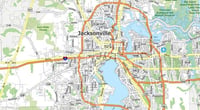
Recently, while looking at properties in Jacksonville, I've noticed that the urgency that used to be prevalent has significantly diminished. Just a few years ago, if a desirable home came on the market, you had to make an offer that same day, but now there are more properties available that allow for negotiation without the rush. However, it's not entirely tilted in favor of buyers, so Jacksonville is currently in a neutral phase where neither buyers nor sellers have a clear advantage.
Looking at prices, the average home value in Jacksonville, according to Zillow, is $287,871, which has decreased by 1.8% over the past year. The median sale price according to Redfin is around $295,000, down by 2.5%. However, other reporting methods indicate that the median sale price has actually increased to $315,000, up by 8.62%, so it's important to consider which statistics you are looking at. Sources include Zillow Home Values, Redfin Jacksonville, and Momentum Realty.
The speed of sales has decreased to an average of 54 days as of June 2026, down 12.9% from the previous year, but there is a wide range from 36 to 67 days month-to-month. Inventory stands at 4.35 months of supply, down from 5.29 months a year ago, with active listings reaching 10,428. The actual sale price compared to the listing price is about 97.94%. Given these indicators, it's accurate to describe the market as neutral, where neither buyers nor sellers hold a complete advantage. In fact, in the high-end market with listings over $500,000 and new constructions, we often see buyers gaining negotiation power. Source: Momentum Realty.
In terms of rental yields, Jacksonville maintains a gross yield of 8.17%, which is quite close to Florida's average of 8.28%. The median asking rent is $2,000, while the average home value is around $283,170. However, it's important to note that the gross yield does not account for taxes, insurance, vacancies, and financing costs, so the actual net yield is lower. Jacksonville's price-to-rent ratio is 16% lower than the national average, making it relatively attractive for investors. Source: SFR Analytics.
As is the case throughout Florida, insurance premiums play a significant role in calculating investment returns in Jacksonville. The average landlord insurance premium is reported to be around $2,400 annually, which widens the gap between the apparent gross yield and the actual net yield.
For families looking for preferred school districts, it's important to remember that there can be significant variations in school districts within Jacksonville. While resources like GreatSchools or Niche can provide ratings, school district boundaries change frequently, so if you have a property in mind, be sure to verify the assigned school for that address before signing a contract.
If you are moving to Jacksonville from another state, keep in mind that while Florida has no state income tax, insurance premiums can often be higher than in other states, which can be easy to overlook based on your previous residence. Property tax assessment methods can also vary by county, so separate verification is necessary.
From an investment perspective, many investors are now looking for cap rates in the 6-8% range, and it has become more challenging to find properties in good neighborhoods where the monthly rent exceeds 1% of the purchase price. As of July 2026, the average fixed mortgage rate for 30 years is around 6.6%. Source: Freddie Mac PMMS. To accurately gauge cash flow, cash-on-cash return must also be calculated.
In summary, Jacksonville is close to a balanced market where neither buyers nor sellers have a clear advantage, and rental yield indicators remain decent. However, the burden of insurance premiums and discrepancies in statistics are factors that must be considered when making actual decisions. This article does not constitute investment or legal advice, and it is recommended to consult with a professional before finalizing any contracts.
 PuddingVibe
 SushiHunter





 cheesepup |
 breezem |
 yentra |
 virex |
 vexon87 |
 oh my salami |
 Taco Bell Candy Note Blog |

 Well Done Sir |
  hazelnut |
  Korean News American Blog |
  AH LALA |
  Savion |
  pintos |
  Good Good |
  Lemonade Cider Planning Director |
  Way to easy |
  American Hardcore Band |
  Dala Dala |
  Pointy |
  Springs Korea |
  nixon |
  mini hometown |
  Gleeee |
  MacMorningBlog |
  ASURA |
  Elastico |