
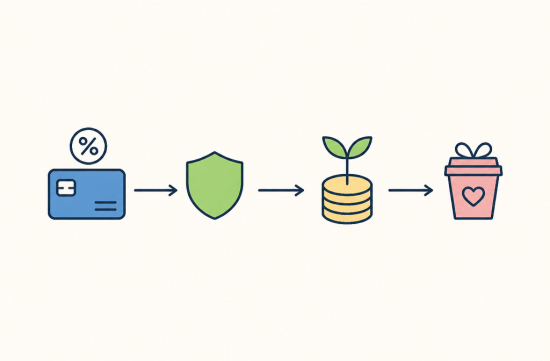
As soon as the tax refund hits your account, many people have already decided how to spend that money in their minds.
Whether to buy a new laptop, pay off credit card debt, or simply put it into a savings account, the dilemma begins right at that moment.
Surveys show that a significant number of people spend their refunds immediately upon receiving them.
In one survey, 17.8 percent of respondents said they spend it as soon as they get it, and when you add those who spend it within one to two weeks, the number approaches 40 percent.
When you include those who say they spend it all within a month, it exceeds half, indicating that without a predetermined plan, the money can disappear before you know it.
According to the IRS, the average refund amount for this filing season is $3,275, which is an 11.3 percent increase from $2,942 during the same period last year.
Among those who filed, 72 percent, or nearly 63 million out of 87.5 million returns, were eligible for a refund, which is not a small percentage.
There is a specific reason why the refund amounts have increased. It is explained that the tax cuts implemented in 2025 were not reflected in the withholding tables in time, resulting in higher taxes being collected, which are now being returned.
This year, the vast majority of individual filings will no longer involve paper checks, with over 98 percent of refunds being directly deposited into accounts.
If you choose direct deposit after e-filing, the funds are generally deposited within two to three weeks, allowing you to predict when the money will arrive and plan accordingly.
Ultimately, this money is not free money; it is simply your own funds arriving late, but if you start spending it without a plan, you will likely regret it later.
Especially when a large sum comes in at once, it is easy for emotions to take over rather than rational judgment, a point that financial advisors often highlight.
Therefore, the first thing to consider when deciding on the order of spending is high-interest debt.
According to the Federal Reserve, the average credit card interest rate this year is around 21 percent.
For example, if you have $3,000 in credit card debt, at a 21 percent interest rate, you would incur nearly $630 in interest over the year.
This means that while your refund sits in a regular savings account, your credit card debt continues to accrue that much interest every month.
If you have multiple cards, the principle is to pay off the highest interest card first rather than just any card.
However, if you have no emergency fund at all, the situation changes slightly.
There is some debate among financial experts about whether to pay off debt or build an emergency fund first, but the prevailing opinion is to at least establish a minimal emergency fund.
Having enough for a month's living expenses can help prevent a cycle of swiping your card again when the next crisis hits.
In fact, surveys show that 40 percent of respondents plan to use their refunds for savings or investments, while 20 percent plan to use them to pay off debt, indicating that more than half are looking to organize their finances rather than spend recklessly.
Among those who plan to spend, 38.9 percent intend to build an emergency fund, and 32.3 percent plan to cover bills or living expenses, while only 6 percent plan to buy things they simply want.
While many advise saving three to four months' worth of living expenses, it is realistically difficult to achieve that with just one tax refund. Securing even one month's worth can help alleviate immediate financial pressure, so there's no need to set the goal too high from the start.
Also, you shouldn't just choose any account to hold your emergency fund.
As of September, high-yield savings accounts offer rates as high as 4.5 percent, while the national average savings account rate is only 0.37 percent.
This means that even with the same amount of money, there can be more than a tenfold difference, making it a significant factor that shouldn't be ignored.
If you have no debt and sufficient emergency savings, the next step should be to focus on filling retirement accounts.
Contributing extra funds to a 401(k) or IRA allows you to take advantage of tax benefits, making it a wise choice.
As a next step, many recommend following the 50/30/20 rule or the 80/20 rule.
The 50/30/20 rule suggests saving half, using 30 percent for debt repayment, and spending the remaining 20 percent as you wish, while the 80/20 rule suggests allocating 80 percent to essential savings and debt repayment and only 20 percent for discretionary spending.
Personally, I find the latter approach more comfortable.
For instance, based on the average refund amount of $3,275, 20 percent would be about $655, which is a reasonable amount to spend on a nice meal or something you've wanted without feeling guilty.
By setting a numerical limit in advance, you can spend that portion later without guilt, which can actually reduce wasteful spending.
It does raise the question of whether this method of creating a large sum of money to return each year is truly the best approach.
If the structure is such that I'm essentially lending my money to the government interest-free and receiving it back late, wouldn't it be more rational to adjust the withholding more precisely from the start?
By submitting a new W-4 form to your employer, you can change your withholding rate, and using the IRS withholding calculator can help you determine a rough adjustment direction.
Still, the fact remains that when money does come in, following a planned order for its allocation is the most beneficial approach.
 StrangeDogWlk



 Idaho's Sumi's House |
 holy cheese |
 Michigan Enthusiast |
 Anna Life |
 JESIKYEOALBA BLOG |
 BIODOCTOR NEWS |
 Texas Lone Star Longhorn Spirit |

 Gupabal MissKorea |
 lorixa |
 Mental Health Psychiatrist |
  Savion |
  pintos |
  coloradoman |
  Good Good |
  oh my salami |
  Lemonade Cider Planning Director |
  Way to easy |
  American Hardcore Band |
  Dala Dala |
  Pointy |
  Springs Korea |
  nixon |
  mini hometown |
  Gleeee |
  MacMorningBlog |
  ASURA |
  Elastico |
  shaket |
  vionoo |