
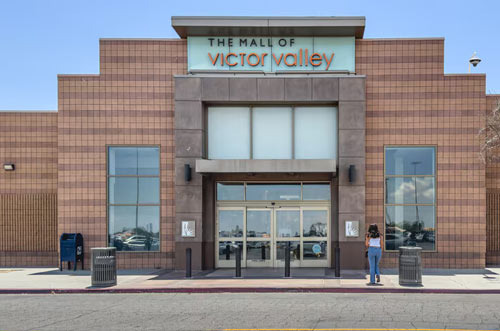
When asked what can be frustrating about living in Victorville, I would want to talk about transportation first.
Who doesn't know that you need a car in the U.S.? However, here, it's not just a necessity; without a car, your entire daily routine can fall apart.
It's not that public transportation doesn't exist. Victor Valley Transit operates buses that connect Victorville with nearby areas like Hesperia, Apple Valley, and Adelanto.
The problem is that just because there are buses doesn't mean you can think of it like LA. The routes aren't dense, and the wait times are long, so if you miss one, you'll be waiting a while. Even for a quick trip, you have to factor in the bus schedule, which can be quite tiring.
What's even more disappointing is the lack of rail service. How great would it be to commute using Metrolink like in LA? Unfortunately, there are no Metrolink trains coming into Victorville. As a result, the reliance on cars increases if you want to travel far. I don't understand why the transportation infrastructure is lagging behind as the city grows and more people move in.
If you have a car, things get a bit better. The center of transportation in Victorville is definitely I-15. Head south, and you can go towards San Bernardino and Rancho Cucamonga, or head north to Las Vegas.
But this also brings its own headaches. Every Friday afternoon, cars heading to Las Vegas pile up, and on Sundays, the opposite happens with vehicles returning to California. Even if I'm not going to Las Vegas, I end up spending time on the road because of them. Seeing I-15 congested on weekends is just frustrating.
On weekdays, commuting south means facing Cajon Pass. It might not seem like a big deal normally, but if there's an accident during rush hour, you're in trouble. If the weather is bad, it's even more stressful. While it's better than commuting in the heart of LA, if you're driving to Rancho Cucamonga or San Bernardino every day, it's a different story.
Life here is also car-centric. Whether you're going grocery shopping, visiting the doctor, dropping kids off at school, or going out to eat, it all requires a car. If you were hoping for a neighborhood where you could walk to get things done, you'll quickly give up. Some might suggest biking, but it's hard to say that the biking infrastructure is sufficient, and considering the summer heat, commuting by bike every day isn't realistically easy either.
So, if you have a spouse and kids, it's not surprising that you end up with two cars. If one person takes the car to work, the person left at home finds it hard to get around, so they end up buying another one. When you factor in car insurance, gas, registration fees, and maintenance costs, the money you thought you saved on a cheaper house ends up going towards transportation expenses.
This doesn't mean Victorville is a bad place to live. There are definite advantages, like being able to find relatively spacious homes in Southern California and escaping the chaos of LA. However, there's something important to know before moving here: a car is not just a convenience; it's close to being a necessity for daily life. If you only calculate housing costs before moving in, you might later find yourself saying, "Oh, I should have factored in transportation costs too."
 Walker1976
 popculturemaker1967






 quanta7 |
 Helpful Life Stories |
 wendra |
 moonshine 7 |
 golfmaster |
 Forever Young |
 B.I.G. Victor |

 Mr Oh |
 Round and Round Children's Song Kingdom |
  Mia Flori |
  nova nova |
  healthy |
  leaves |
  sparkling |
  maryland park |
  persiste |
  conte |
  blueman |
  Going Once |
  Eldorado 88 |
  cherrydino |
  garlic bread |
  middlekick |
  Moscow Kim |
  nivex85 |
  Tomato Health Club blog |
  horse |