

In this blog post, we will take a closer look at the average number of rainy days in Los Angeles, monthly average rainfall, record rainfall and snowfall, and climate characteristics.
Average Annual Rainy Days
Los Angeles receives an average of about 35 days of rain per year. This figure is relatively low compared to other major cities in the United States. Rainfall is mainly concentrated in the winter and early spring, with almost no rain during the summer. The city has a dry climate, so rain is infrequent, but sudden downpours can occur during the monsoon season.
Monthly Average Rainfall
The monthly average rainfall in Los Angeles varies greatly depending on the season and the monsoon. The average rainfall for each month is as follows:
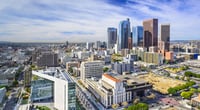
Los Angeles
- January: about 3.0 inches
- February: about 3.5 inches
- March: about 2.8 inches
- April: about 1.5 inches
- May: about 0.5 inches
- June: about 0.1 inches
- July: about 0.0 inches
- August: about 0.0 inches
- September: about 0.2 inches
- October: about 1.2 inches
- November: about 2.0 inches
- December: about 3.1 inches
Main Features:
- Winter (December to February): The period with the most rainfall, with frequent thunderstorms occurring in coastal areas.
- Summer (June to August): Very dry, with short and intense downpours occurring rarely during the monsoon season.
- Spring and Fall: Rainfall gradually decreases, and dry weather persists.
Average Annual Snowfall
The city of Los Angeles itself has a desert climate, so it does not receive snow. However, when winter rain falls in the LA area, snow can fall in nearby mountainous regions within a 1-2 hour drive, allowing ski resorts and sledding areas to operate.
Record Rainfall and Snowfall
Record Rainfall: The highest recorded rainfall in Los Angeles occurred during a monsoon downpour in July 1995, with 5.0 inches (about 127mm) of rain. This amount of rainfall was concentrated over a short period, resulting in severe flooding and inundation in the area.
Record Snowfall: The highest recorded snowfall in Los Angeles was 0.6 inches (about 15mm) of snow that fell in February 1932. This was a very rare event, as most weather conditions see little to no snowfall.
Climate Characteristics
Los Angeles is characterized by a Mediterranean climate, featuring mild and dry weather throughout the year. Here are the climate characteristics of Los Angeles:
- Mediterranean Climate: Los Angeles has a Mediterranean climate, characterized by mild temperatures and humid weather throughout the year. Even in winter, the weather remains relatively mild rather than experiencing extreme cold.
- Frequent Rainfall: Due to the influence of the Mediterranean climate, Los Angeles does not experience frequent rain throughout the year, but tends to receive rain in winter and early spring.
- Extreme Temperature Variations: Summer can record very high temperatures, while nighttime temperatures can drop sharply. Winter maintains mild temperatures.
- Monsoon Influence: During the summer monsoon season, short and intense thunderstorms can occur due to the influence of the northwestern monsoon, leading to sudden downpours. This increases the risk of flooding and inundation.
The climate of Los Angeles exhibits the characteristics of a Mediterranean climate, with an average of 35 rainy days per year and monthly average rainfall varying according to the season and monsoon influence. Unusual heavy rainfall can significantly impact transportation and daily life. Understanding these climate characteristics and preparing countermeasures will greatly help make life in Los Angeles more pleasant and safe.




 Weekend Movie Blog |
 Beauty, Health, Lifestyle Blog |

 coloradoman |
 Superman Cat Blog |
 Noodle Noodle |
  Tonky |
  viroma |
  cookie |
  Live and that's it |
  Alright Twain |
  eatontown blog |
  HAWAII Korean Church News |
  Amore |
  linex |
  Balancework |
  laro90 |
  MEDBIO American Doctor Blog |
  SWAT TEAM BLK |
  DREAM BIG |
  frostbite |
  330 Forever My Love |
  El Dorado |
  dralix58 |
  Gorama Round |
  Skydiving |