

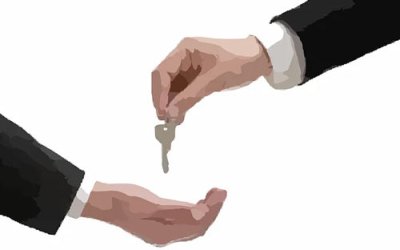
There's a story about someone who owned a three-bedroom house north of Dallas.
When they first decided to rent it out, they thought they would quickly find a tenant and just collect rent every month.
However, four months later, problems arose. The rent was a month late, and then it didn't come in for the second month.
Only then did they pull out the lease agreement, which didn't properly outline how to handle late payments, and they had also collected a low security deposit.
Whenever I hear stories like this, I always say:
Why treat a property worth hundreds of thousands of dollars so casually in the contract?
Renting out a home is a business. If you meet a good tenant, everything can go smoothly for years, but if you make a mistake, it's not just a few months of rent that's at stake; it can really turn your life upside down.
First, you need to set the rent correctly.
Even if the median rent in Dallas is around $1,600 to $1,700 a month, you can't just base your rent on that number. Dallas is huge.
Look for similar homes within a 1-2 mile radius of your house. If it's a three-bedroom house, compare it to other three-bedroom homes, and make sure they are similar in size and age.
If you try to charge an extra $200 and end up with the house vacant for a month, you'll actually lose money.
On the other hand, pricing it too low just to find a tenant quickly isn't a good strategy either.
And don't just jump into a contract when a tenant applies.
Check their credit score, verify their employment, and confirm their income. Typically, landlords look for a monthly income that is about three times the rent.
It's also a good idea to call their previous landlord to ask if they paid rent on time.
Don't say things like, "They seemed really nice."
Just because someone seems nice doesn't mean they will pay rent. It's not about doubting people; it's about confirming what needs to be confirmed.
The lease agreement is even more important.
It should clearly state how much the rent is, when it's due each month, what happens if it's late, how much the security deposit is, how much extra rent is if additional people move in, and any pet policies, including weight limits and how many pets are allowed.
It's very risky to say, "We'll work it out nicely later."
Writing a proper lease when things are good will help maintain a good relationship later.
In Texas, there's no general legal limit on the amount of the security deposit, but there are rules for returning it.
When a tenant moves out and provides a forwarding address, the deposit must generally be returned within 30 days, or if there are deductions, you must provide an itemized list.
A landlord cannot just change the locks or put a tenant's belongings outside because they are late on rent.
There are legal procedures for eviction as well. Unless the lease states otherwise, you typically must give at least three days' written notice before starting court proceedings.
Finally, take plenty of photos on the day the tenant moves in.
Check for any wall damage, the condition of the carpet, and whether the refrigerator and air conditioning are working properly, and document everything with the tenant.
Years later, if the tenant moves out and says, "This was like this from the beginning," are you going to argue based on memory?
A single photo can resolve that issue.
Just because you're renting out one house doesn't mean you've become a real estate mogul. In fact, that's when you have a lot more to learn.
If I could tell young landlords just one thing, it would be this:
Finding a good tenant is important, but it's even more crucial to have a solid contract and documentation from the start to prevent issues, even with a tenant who isn't ideal.
That's far more important than collecting a few hundred extra dollars in rent.
 CabbageMagic
 AssaultMon



 Sugar Cream Door Bulletproof Noodles |
 urbanmint |
 |
| 
 Premium Gas Camp |
 CA Real Estate |
 xylora |
 Aura-Infused WACAM |

 SWAT TEAM BLK |
 Texas Migration Story |
  UCLA Captain |
  lattecu |
  dynamite |
  frostingline |
  Hakuna Matata |
  Your Curiosity Resolved |
  Way to easy |
  Chino Min |
  nexabyte |
  moonshine 7 |
  Sunset Oregon |
  victoria 68 |
  golfmaster |
  Montgomery Mom |
  squidogame |
  Noodle Noodle |
  Rhode Island Good People |
  Big North |
  Famous Attractions in the United States |
  Jin Soo V |