
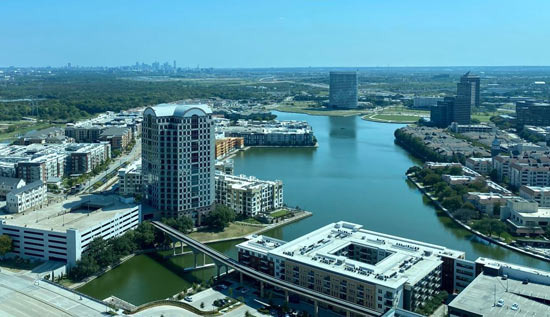
As you drive from DFW Airport toward Dallas, it's natural to see the signs of large corporations. However, a closer look reveals that the Irving economy is too large and diverse to be explained by just a few corporate headquarters.
There are about 10,000 companies operating in Irving, including those listed in the Fortune 500, which have their headquarters or major operations here. Because of this corporate base, it's hard to view Irving simply as a bedroom community for people commuting to Dallas.
Las Colinas is at the center of it all. This business district, developed with large offices, hotels, and residential facilities, is home to financial, insurance, IT, healthcare, and professional service companies. Major corporations, including Wells Fargo, operate significant facilities in this area. An interesting aspect of the Irving economy is that industries are not concentrated in just one sector.
Professional, scientific, and technical services are key industries, and construction and retail also create many jobs. Additionally, technology, logistics and distribution, life sciences and healthcare, aviation-related industries, and manufacturing are all mixed in.
In particular, the logistics sector benefits from its location. DFW International Airport is practically right next door. Having such a massive airport nearby, capable of handling both domestic flights and international cargo, is a significant advantage for companies operating on a national scale.
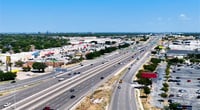
Highways are also crucial. With connections to major DFW roadways like SH 114, President George Bush Turnpike, and I-635, it's easy to travel to Dallas, Fort Worth, Arlington, and Plano. For businesses, this location is ideal for managing both employee commutes and logistics.
Talent acquisition is also favorable. Rather than looking at Irving's population alone, considering a commuting radius of about 30 minutes allows access to the vast labor market of Dallas-Fort Worth. The presence of professionals from diverse nationalities and backgrounds is another reason international companies choose Irving.
Moreover, this business ecosystem doesn't stop at large corporations. When big companies cluster together, related businesses in law, accounting, IT, marketing, construction, restaurants, and hotels naturally follow. The abundance of hotels and restaurants around Las Colinas is not just for the residents; it's also due to the steady flow of business travelers and corporate events.
Ultimately, the strength of the Irving economy lies in its independence from any single company.
Various industries, from professional services to finance, technology, construction, healthcare, logistics, and distribution, all thrive together.
Understanding Irving as a city that combines the location of DFW Airport, the business district of Las Colinas, and the entire DFW labor market makes it easier to grasp.
Therefore, viewing Irving simply as "a nice place to live next to Dallas" only tells half the story. Unlike a typical bedroom community where people leave for other cities during the day, Irving is also an economic hub where countless people come to work every day.
 TootButler
 Student






 Smile Face |
 Helpful Life Stories |
 Casa Mia |
 Study Abroad Life Know-How Tips |
 pravix22 |
 yorvik12 |
 Vivid U.S. Regional Information |
 zentra95 |
 wexlin84 |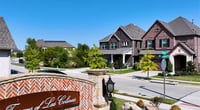
 axelon47 |
  newyorker 101 |
  coffeee |
  |
|  Christopher |
  sylven |
  Sammy Beach |
  Bliss O |
  blue ocean |
  greenlight |
  Watanaka Karametibaksa |
  castle |
  xelton52 |
  carefree |
  vrixen73 |
  AZ Road Master |
  Victory 1988 |
  summita |
  business lim |
  Colorado Lee |
  Make My Day |