
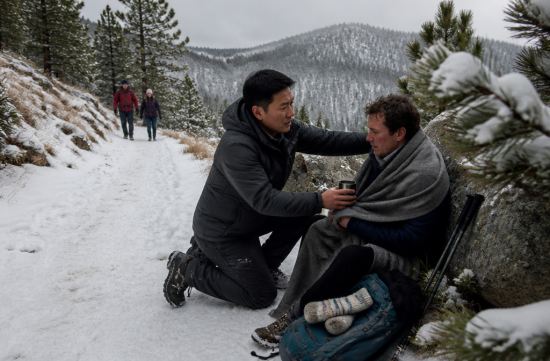
A few winters ago, a colleague who was hiking Barr Trail suddenly went quiet. At first, he was shivering so hard his teeth were chattering, but then at one point he said, "I'm okay now, not cold anymore."
Hearing that made me feel relieved. But later I learned that was the most dangerous signal.
So today, I want to talk about winter hiking hypothermia, especially why the moment shivering stops is a warning sign. If you hike around Pikes Peak, please read this to the end.
First, let's clarify what shivering is. Shivering is a kind of emergency generator where the body keeps moving its muscles to generate heat.
So if someone is shivering, it means their body is still fighting hard. It's uncomfortable, but the system is still functioning.
The problem arises when the body temperature drops further and enters a moderate to severe stage. Medical literature indicates that shivering often stops at this stage.
It's not that the body has warmed up and stopped shivering; rather, the generator has shut down because it has run out of energy. The person may even feel less cold.
At this stage, judgment also deteriorates. So even in a dangerous situation, the person might say, "I'm fine."
Even scarier is a phenomenon called paradoxical undressing. This occurs when someone with severe hypothermia suddenly feels hot and starts removing their clothes, which leads to losing heat even faster.
It's not yet fully understood why this happens. There's an explanation that the blood vessels, which had constricted, suddenly dilate, creating a false sensation of warmth.
So what should you look for before shivering stops? The CDC identifies the following warning signs of hypothermia in adults.
Shivering, extreme fatigue, confusion. Clumsiness in movements, memory lapses.
Also, slurred speech, overwhelming drowsiness. If a hiking companion can't zip up their jacket or keeps repeating the same thing, you should be suspicious immediately.
The CDC advises that if these signs are present, check the body temperature, and if it's below 95°F, seek medical help immediately. If you don't have a thermometer on the mountain, it's best to act based on the symptoms.
Another thing many people overlook is that, according to the CDC, hypothermia can occur even at temperatures above 40°F. This can happen if you're wet from rain, sweat, or cold water.
The most common trap in winter hiking is sweat. When climbing, you might feel hot and overdress, then that wet clothing can sap your body heat while resting at the summit.
The National Park Service (NPS) also advises that the best way to prevent hypothermia is to avoid getting cold and wet in the first place. Ultimately, prevention is much easier than treatment. Wearing layers made of wool or synthetic materials instead of cotton is part of this strategy.
The summit of Pikes Peak is at an elevation of 14,115 feet. The notice from Colorado Springs even states that it's much colder up there than below.
There have been reports of the El Paso County Search and Rescue rescuing hikers trapped in snow on Barr Trail overnight. This is not just someone else's problem.
So what should you do if a companion shows signs of hypothermia? I'll summarize based on the Mayo Clinic's first aid guidelines.
First, call 911. Then move them to a sheltered area, remove wet clothing, and wrap them in dry clothes or blankets.
When handling a person, you should move them as gently as possible. Rough shaking or lifting can lead to cardiac arrest.
Rubbing or massaging limbs is also a no-go. I used to think that rubbing was the right answer, but it actually puts stress on the heart and lungs.
Hot packs or warm water bottles should only be applied to the neck, chest, and groin. Remember not to apply them to the limbs.
If the person is conscious, you can give them warm, sweet drinks in small sips. Never give alcohol to warm them up.
Fortunately, my colleague had an experienced person in our group, so we descended immediately and everything turned out fine. Since then, when I hear someone say, "I'm not cold," it makes me stop in my tracks.
My rule is simple. In winter, I never go alone, I remove a layer before I start sweating, and I put on a layer immediately when resting.
I always pack extra dry socks, gloves, and a thermos. I think it's really foolish to suffer in the mountains just to save a few ounces of weight.
This article is for general information only, and if you have any medical conditions or are taking medications, your response to cold may vary, so consult a doctor or pharmacist before winter hiking.
In summary, shivering is a signal that the body is still fighting, and when shivering stops, it's a sign that it's losing that battle. Be cautious of the phrase "I'm okay" on the mountain.
 CandyTiger
 DdoliSquad






 zestorbit |

 hihihi |

 fruitflash |
 Anjollinya Blog |

 United States Army |

 coloradoman |

 Questions about firearms while living in America |

 Famous Attractions in the United States |

 Colorado Lee |
 Raymond K. |
 gravity |
 714 Success Era Real Estate |
 Investment Beginner Company Information Encyclopedia |
 musicque |
 The Gelaton |
 ovelion |
 Chicagonian |
 Freedom Yea |
 AZ Road Master |
 glenix39 |
 Something is popping in the situation |
 orvella |
 vella |
 comets |
 Banana |
 Yes Dorian |
 Minnesota Sonata N |
 zentar |
 mykiwi blog |