
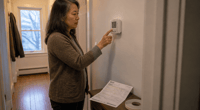
At the beginning of this month, after daylight saving time ended and I turned the clock back an hour, I started testing the CO alarms in my home one by one. However, the one in the hallway was silent instead of beeping.
After changing the battery, it returned to normal, but at that moment, I felt a chill down my spine. If the alarm had been off during the season when heating is in full swing, no one would have known.
So today, I will carefully outline where and how many carbon monoxide alarms you should install in your home. Surprisingly, many people buy just one and stick it anywhere.
First, let's discuss why this season is particularly important. Carbon monoxide is colorless and odorless, making it nearly impossible for people to detect it on their own.
Furnaces, gas boilers, gas stoves, fireplaces, and even cars parked in the garage can all be sources of carbon monoxide. This is why the risk increases in winter when windows are tightly closed.
The symptoms are also tricky. According to the CDC, they can manifest as very common symptoms like headaches, dizziness, nausea, drowsiness, or confusion.
So it's easy to dismiss them as just a cold or fatigue. Ultimately, we must rely on alarms rather than our senses.
Now, let's move on to the crucial issue of placement. The basic recommendation from the U.S. Consumer Product Safety Commission (CPSC) is simple.
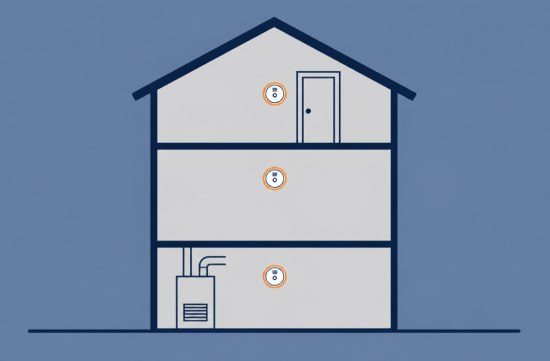
Install one on each floor of the house and outside sleeping areas. The guidance from CPSC and NFPA specifies a central location outside each separate bedroom area.
Why outside the bedroom? Because the most vulnerable time for a person is when they are asleep, and the alarm needs to be loud enough to wake them.
If the bedrooms are at opposite ends of the hallway, one alarm may not be sufficient. If there are two sleeping areas, think of it as needing two alarms. This is especially true if the doors are closed while sleeping.
The basement and attic are a bit different. While CPSC states that you don't necessarily need to install alarms in attics or basements without bedrooms, some manufacturers recommend alarms on all floors, including the basement.
If I had a furnace in the basement, I would definitely place one there. It gives me peace of mind to have an alarm close to the source.
For example, let's say there's a furnace in the basement, the first floor has the living room and kitchen, and the second floor has a bedroom area.
In this case, it would be reasonable to have at least three alarms: one on the first floor, one in the hallway outside the bedroom on the second floor, and one in the basement. If the garage is attached to the house, also check the indoor space near the door connected to the garage. This is because exhaust from a running car in the garage can seep indoors through the door cracks.
The installation height and distance from appliances vary by product. Be sure to read and follow the manual inside the box. Many guides recommend avoiding humid areas like bathrooms or places right next to windows.
Now, let's briefly look at the regulations in Rhode Island. State law requires carbon monoxide detectors in homes with fuel-burning appliances or attached garages.
There are also standards when selling a home. According to state fire regulations, smoke detectors and carbon monoxide alarms must be installed according to NFPA 72 before ownership is transferred, and the responsibility lies with the seller.
For renters, the installation and maintenance of alarms are generally the landlord's responsibility. However, tenants should report any malfunctions, so contact your landlord immediately if something seems off.
Different towns may have varying guidelines regarding power sources or plug-in types. If you are planning to buy or remodel, it's advisable to check with the local fire department first.
More often than installation, maintenance is overlooked. The CDC recommends checking or replacing batteries when changing the clocks in spring and fall.
It's a good habit to press the test button about once a month. I've set mine for the first weekend of each month to help me remember.
Alarms themselves have a lifespan. Typically, they last between 5 to 7 years, but the exact replacement time can be found on the back of the unit or in the manufacturer's instructions.
If you've replaced the battery and it continues to beep intermittently, it may be a signal that the unit has reached the end of its life. In that case, you need to replace the unit, not just the battery.
Finally, here's what to do when the alarm goes off. Don't wander around the house looking for the source; instead, get everyone outside immediately and call 911.
If you experience dizziness or nausea, seek medical attention without delay. If you're concerned about your health, be sure to consult a doctor.
To summarize, think of it this way: one alarm on each floor, one outside each sleeping area, and one in the basement if there's a source present.
Replace the batteries when you change the clocks, and replace the unit according to the manufacturer's date. Considering that a small device mounted on the wall protects your family at night, wouldn't it be worth checking it this weekend?
 LakeCrystal
 CookieSurvive




 Noodle Noodle |

 figtop |

 Toaster Pizza Magic Show |

 DO Main TODAY |

 Caribbean |

 Lord Island |

 Rhode Island Good People |

 USALATU BLOG |

 novaline |

 pixelhaven |
 strawberry |
 US Regional Information Local News |
 USA Business News |
 Blondee |
 E whisper |
 Potato House |
 freshmint |
 Ansaso |
 Golado |
 babybay |
 honeycom |
 French Macarons |
 Exploring American Life Information |
 Sunshine Blog |
 Community Cross |
 Sayonara H |
 What can make money? |
 Information Search LifeMAN |
 morvex37 |
 neontrail |