
Do you remember last January? The sky outside was as clear as glass, but the wind was sharp as a knife, and every time we opened the front door, we could hear the heating system sighing.
The gas bill we received was truly shocking. I wasn't the only one who felt that way.
In fact, Consumers Energy reported that during the first three weeks of January this year, they supplied 25% more gas to customers compared to the same period last year. They also mentioned that the cold was the harshest in years.
Interestingly, the price of gas in Michigan isn't as high as one might think. According to the company, residential gas rates are 28% lower than the national average.
This is thanks to buying gas when it's cheaper in the summer and storing it underground for winter use. Of course, since this is the company's claim, we shouldn't take it all at face value.
Ultimately, the reason our bills are hefty is due to the amount we use rather than the price per unit. With a long and cold winter, households are consuming a lot of gas.
According to the Michigan Public Service Commission (MPSC), natural gas accounts for about 77% of home heating across the state. So, even a small change in how we use gas can make a significant difference.
There's also some news: on October 15, the MPSC approved an increase in the basic gas delivery charge from Consumers Energy.
The increase amounts to $139.2 million and will take effect on November 1. The company originally requested $240 million, so this is a significant reduction.
For an average household using about 75 ccf per month, this means an increase of $3.92, which is a 4.33% rise. Even if it's just the price of a cup of coffee, it adds up over the winter.
This increase is not due to the cost of gas itself but rather delivery costs like pipeline replacements and leak inspections, which are unavoidable regardless of where you buy gas.
For reference, Lansing BWL primarily handles electricity and water, so most gas bills for Lansing homes come from Consumers Energy. It's helpful to know which company's updates to follow.
Now, let's talk about how to actually lower your bills. The easiest first step is adjusting your thermostat.
The U.S. Department of Energy advises that lowering the temperature by 7 to 10 degrees Fahrenheit for about 8 hours a day can save you around 10% on heating costs. However, this may be less effective in extremely cold areas.
If it were me, I would start by lowering the temperature only during sleeping hours and when I'm out. There's something nice about looking at the stars outside from under the covers at midnight.
If you have a smart thermostat, it can do this automatically, making it much more convenient. Consumers Energy also runs a smart thermostat rebate program, but the amount varies by season, so be sure to check the website before purchasing.
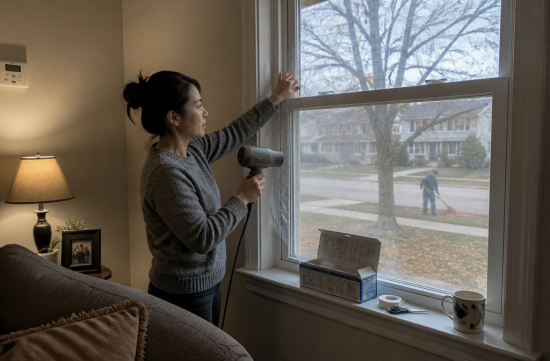
The second tip is to seal drafts. Weather stripping for doors and window film can be bought at hardware stores for just a few dollars, and it can be done in an afternoon on the weekend.
If you feel a cool breeze when you touch the window, that's where money is leaking out. After I did this, I definitely noticed the living room air was less chilly.
If you want to take a broader approach, Consumers Energy offers a home energy audit program. Their official page mentions rebates of up to $3,750 for insulation and other improvements after the audit.
However, you must go through designated partners, and the budget is first-come, first-served, so if you have plans for renovations, it's best to look into this before winter arrives.
The third option is budget billing, which spreads out your payments evenly. While it won't reduce the total amount, it can help you avoid the shock of a huge bill in January.
Michigan also has a Gas Customer Choice program that allows you to choose your gas supplier. However, fixed-rate contracts can sometimes be more expensive, so it's important to compare the terms carefully.
Lastly, be aware of assistance programs that can help. Consumers Energy's Winter Protection Plan is designed to help seniors and low-income households stay warm during winter without worrying about shutoffs.
Applications are typically accepted from November to March. If you help manage your parents' gas bills, it's worth checking out together.
If your bill is already a burden, you can call 211 or visit ConsumersEnergy.com/assistance to learn about support programs like MEAP and LIHEAP. It's better to reach out early rather than hesitate.
In summary, while we can't change the price per unit, we can significantly alter how much we use and how we pay.
This weekend, I'm planning to put up window film and adjust my thermostat schedule. For me, starting with these small changes is my style rather than undertaking major renovations.
This winter, the sky will likely be a chilly blue again. I hope we can reduce the sighs caused by our bills a little bit under that sky.
 LuckyGarden89
 MikyungMom


 juicylol |

 Mr Song Song |

 Way to easy |

 holy cow |

 Soy Angelino |
 stormee |

 vanillastorm |

 sugartrail |

 vibranto |

 raspberry7 |
 ssome |
 skykong |
 Shining Our Own World |
 gardener 007 |
 golfmaster |
 Nanana Nanana Nanana |
 Who's watching? |
 endone |
 RockStar |
 Casa Mia |
 You Only Live Once |
 Hardworking CPA |
 Joyce 77 |
 Runner Kim |
 My Town My Way Blog |
 My Miami Stories |
 Entip |
 Tony Park |
 Jean Claude Bundang Blog |
 DJ DC BLOG |