
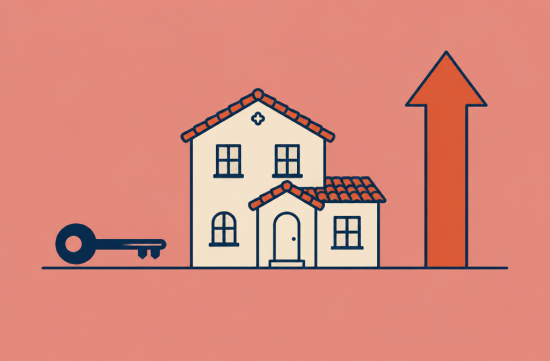
In October, LA real estate can be summarized in three numbers: a median rent of $2,083, a county single-family home price of $994,670, and a 30-year fixed mortgage rate of 7.32%.
Rent has remained nearly unchanged, home prices have increased, and interest rates have climbed back to the 7% range. Since these three numbers are pointing in different directions, it's better to break them down one by one.
First, let's clarify the reference points. The rent data is from Apartment List's November report, which reflects October data; home prices are based on the California Association of Realtors (C.A.R.) report released in mid-October, summarizing September transactions; and the mortgage rates are from Freddie Mac's weekly survey as of October 22.
The median rent in LA is $2,083, which is a 0.1% increase from last month. Essentially, it's stable, and compared to a year ago, it's down 0.6%.
The median for one-bedroom units is $1,864, while two-bedroom units are at $2,377. In the September report, one-bedroom was $1,856 and two-bedroom was $2,367, so it's an increase of about $10.
The overall median for the LA metro area is $2,208, which is actually 5.6% lower than the city average. Considering that there are many older rent-stabilized units in the city, this number isn't too surprising.
Compared to the national median of $1,384, LA is still 50.5% more expensive. Even though it has decreased, the difference is still quite noticeable.
From a tenant's perspective, this is not a bad time to negotiate. Rent has been declining on an annual basis, and winter is typically a slow season for moving, which means there may be room to adjust the increase during lease renewals.
There are also regulatory updates to note. The city's Rent Stabilization Ordinance (RSO) has had a new formula in effect since February 2 of this year.
The new formula is based on 90% of the Consumer Price Index, with a minimum increase of 1% and a maximum of 4%. The LA Housing Department has announced that the allowable increase rate from July 1, 2026, to June 30, 2027, is 3%.
Landlords can no longer impose additional increases simply because they pay utilities. The 10% additional increase that used to apply when a family grew has also been abolished.
Units not subject to the RSO follow state law AB 1482. According to county guidelines, the cap effective August 1 is 8.7%, which is quite different from the RSO.
You can check which category your unit falls into directly on the LA Housing Department website by entering your address. If you've received a renewal notice, it's advisable to run the numbers first.
Now, let's move on to the sales market. According to C.A.R., the price of existing single-family homes in LA County rose from $946,950 in August to $994,670 in September.
However, the transaction volume tells a different story. In September, transactions in LA County were down 10.9% compared to a year ago, and Southern California as a whole saw a 9.1% decrease, marking the largest drop in the state.
Compared to the previous month, county transactions increased by 5.4%. However, a double-digit decrease year-over-year indicates that there are fewer buyers in the market.
When transactions decrease but prices rise, it often reflects a situation where fewer listings are available, and sales are concentrated on higher-priced homes. Therefore, interpreting this price increase as a general rise in neighborhood home values should be approached with caution.
The affordability index is more sobering. According to C.A.R., only 17% of households in LA County can afford to buy a home at the median price.
The minimum required annual income is calculated at $219,200, with a monthly payment of $5,480. Given these figures, it's not surprising that a rent of around $2,000 seems relatively affordable.
Interest rates are exacerbating this trend. The average 30-year fixed rate in September was 6.86%, up from 6.67% in August.
In October, rates exceeded 7%. According to Freddie Mac's survey, rates reached 7.40% during the weeks of October 8 and 15, then slightly decreased to 7.32% by the week of October 22, which is over 1 percentage point higher than the same week last year at 6.19%.
The 15-year fixed rate was 6.68%. Some people are considering 15-year loans to reduce monthly payments, but the overall monthly burden may actually increase, so it's essential to calculate carefully.
Finally, let's discuss the upcoming election. On the November 3 ballot, there was initially a state measure that could nullify what was once called the mansion tax, Measure ULA, but it was withdrawn following an agreement with the state government in June.
Instead, the proposed measure 43 does not apply to existing taxes, meaning it does not change ULA. The ULA transfer tax on high-value transactions will remain in place for the time being.
At the city level, there is a proposal to exempt transactions for victims of the Palisades fire from ULA, which will be on the ballot. If you've been monitoring properties in that area, it's important to check the results.
In summary, October in LA provided tenants with a bit of breathing room, while buyers still faced high entry barriers. Rather than rushing to buy at 7% rates, it might be more comfortable to maintain renting while watching the direction of interest rates.
If you're already looking at homes, the current decrease in transaction volume could be favorable for price negotiations. It's advisable to compare listing prices with recent sales and the time properties have spent on the market.
October sales data will be released in mid-November. At that time, I will provide an updated summary reflecting interest rates and election results.
 SmileRiver
 DreamTrail91






 Choco Choco Star |

 gentle |
 neapolis |

 moo moo |

 ultron78 |

 Weekend Movie Blog |

 Anjollinya Blog |

 Yo Lock Me Up |

 Karina's Blog |

 Victory 1988 |
 ssome |
 skykong |
 Shining Our Own World |
 gardener 007 |
 golfmaster |
 Nanana Nanana Nanana |
 Who's watching? |
 endone |
 RockStar |
 Casa Mia |
 You Only Live Once |
 Hardworking CPA |
 Joyce 77 |
 Runner Kim |
 My Town My Way Blog |
 My Miami Stories |
 Entip |
 Tony Park |
 DJ DC BLOG |