


The United States is vast, with a truly large land area.
To travel from California to New York, one must take a flight of nearly 6 hours. In Korea, that distance could be covered by going back and forth to Jeju Island three times.
Looking down at the American land from the airplane window, you can see cities, rural areas, and many isolated houses in the open fields.
Then a sudden thought arises: "Do Americans really live and die in the state where they were born?"
As of 2021, about 38% of Americans die in the state where they were born. The remaining 62% have moved somewhere else.
It makes sense when you think about it. Attending college often leads to moving to another state, and people relocate for jobs, marriage, or even climate reasons.
Especially those who lived in the cold northern states often retire and move to warmer places like Florida or Arizona.
Thus, living one's entire life in their hometown is actually a rare case in the U.S.
This applies to me as well. I am a Korean man in my 40s, born in Korea, who immigrated to New York and lived there for a long time before moving to Florida.
At first, I believed that the busy and complicated environment of New York suited me, but at some point, I felt it wasn't good for raising children, so I moved down to southern Florida where homeownership is easier.
Now the weather is warm, and the pace of life is much more relaxed. There are many reasonably priced places, and the neighbors are friendly, which makes me feel less stressed.
After living here for over a year, another question arose.
"Are there many immigrants like me here in Florida?"
Now, let's look at the numbers. The top 3 states where 'immigrants' have settled the most in the U.S. are as follows.
1st is California.
This is as expected. Just in Los Angeles alone, there are well-established Korean Town, Chinatown, and Mexican communities, and foreign labor is essential in everything from IT to agriculture. 26% of the total population is foreign-born. It is truly a 'melting pot of immigrants.'
2nd is Texas.
The immigrant rate is about 18%, with over 5 million people. Due to its geographical proximity to Mexico, the Hispanic community is very large. Recently, there has been an increase in Asians from India, Pakistan, Vietnam, and Korea.
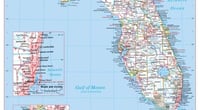
3rd is Florida.
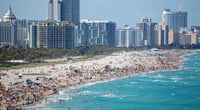
I thought it was just full of retirees, but surprisingly, there are many immigrants as well. About 21% of the total population is foreign-born. There are many from Latin America, especially Cuban Americans. So when you visit Miami, it can be confusing whether you are in the U.S. or Cuba.
On the other hand, there are also the top 3 states with the fewest immigrants.
Last place is West Virginia.
The immigrant rate is only 1.5%. There are hardly any foreigners living in the cities, and there are no major cities at all. For immigrants, it's a place that makes you wonder, "Why would anyone come here?" Even Americans don't often go to this state.
Next is Montana.
The rate is 2%. There is vast land and beautiful nature, but there are few jobs and small communities. For immigrants like us, who feel uneasy without a 'Korean supermarket,' it can be a bit lonely.
The third is South Dakota.
In winter, minus 30 degrees is common, and the cities are small. The racial composition is so homogeneous that it feels psychologically distant for foreigners to live there.
From an immigrant's perspective, ultimately, the question of 'where to live' is influenced more by community, economic opportunities for homeownership, educational environment, and cultural comfort than by weather or scenery. That's why people move. They leave their hometowns. Sometimes they even leave the mainland for Alaska, Hawaii, or even back to Korea.
Yet, amidst all this movement, it is quite strange that there are still 38% of Americans who die in the state where they were born.
Some people live their entire lives without ever leaving their hometown.
What about me? My hometown is Korea, but my children were born in the U.S. and will remember this place as their 'hometown.'
And someday they will leave this place to live in a new city... but will they eventually return here? Or will they meet their end in a completely different place?
I feel that life is ultimately a continuous series of moves and choices.
Some stay put, while others keep moving.
There are no right answers. However, if there is a place where one can comfortably settle at some point, isn't that enough?





 El Dorado |
 lightyear |
 Moscow Kim |
 coloradoman |
 Montgomery Mom |
 Splendid Mission |

 Taco Bell Candy Note Blog |
 FLORIDA Acus |
  Tonky |
  viroma |
  cookie |
  Live and that's it |
  Alright Twain |
  eatontown blog |
  HAWAII Korean Church News |
  Amore |
  linex |
  Balancework |
  laro90 |
  MEDBIO American Doctor Blog |
  SWAT TEAM BLK |
  DREAM BIG |
  frostbite |
  330 Forever My Love |
  dralix58 |
  Gorama Round |
  Skydiving |