
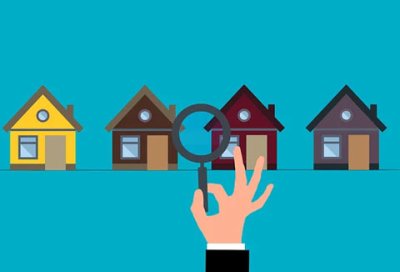
While discussing reverse mortgages, I often hear this question: "Doesn't that mean the bank owns your house?"
This is a common question whenever reverse mortgages come up.
However, when you break it down, it's a bit different.
Simply put, a reverse mortgage does not mean you are giving your house to the bank.
Homeowners aged 62 and older can borrow money using the equity they have built up in their home.
The title of the house remains in my name.
With a traditional mortgage, you borrow money from the bank and pay it back monthly.
In contrast, a reverse mortgage allows you to receive money using your home as collateral, and you do not have to make monthly principal and interest payments right away.
Repayment occurs when the house is sold, the owner passes away, or the home is no longer the primary residence.
Then, does the debt pass on to the children? This is a concern for many.
The most common government-backed reverse mortgage is the HECM, which has a non-recourse structure.
For example, if the loan balance is $300,000 but the home is only worth $250,000, the children are not required to pay the $50,000 difference.
However, if the children want to keep the house, the situation changes.
They will need to settle the loan, either by paying it off with their own money or refinancing it with another loan.
At this point, you might think, "Isn't that a good thing?"
It's not that simple.
A reverse mortgage is still a loan. It's not free money.
There are origination fees and closing costs involved.
HECMs also require FHA mortgage insurance, with an initial premium of 2% and ongoing annual premiums.
So, if you plan to sell the house after just a few years, it might not be worth the costs.
Let's take a look at home prices in San Antonio.
As of May 2026, the average home value is about $251,000. It has decreased by approximately 2.1% over the past year.
And in Texas, I always mention property taxes. Receiving a reverse mortgage does not eliminate property taxes.
The effective property tax rate in Bexar County is around 1.55%, and depending on the area, combined rates from cities and school districts can reach the mid to high 2% range.
You also need to keep paying for homeowners insurance. Just because you're not making monthly mortgage payments to the bank doesn't mean you're off the hook for home maintenance costs.
You have to pay property taxes. You have to pay insurance. You need to maintain the house.
Another common question is, "Does the bank kick you out when you get older?"If you maintain the requirements for your primary residence and fulfill your contractual obligations, there is no structure that allows them to evict you simply because you are older.
However, if you end up in a nursing home or hospital for an extended period, and the house is no longer recognized as your primary residence, that is something to consider.
So, it's important to read the contract carefully.
And for those with children, there's one more thing to think about.
As time goes on, interest and fees accumulate on the loan balance of a reverse mortgage.
This naturally reduces the equity left in the home.
If you've paid off the mortgage and created a home, but used that equity for living expenses in retirement, the value of the home you leave to your children may decrease.
This is more of a choice than a disadvantage.
Will you try to leave as much as possible to your children?
Or will you use some of the value of the home you've built over your lifetime for your retirement living expenses?
Every family will have a different answer.
Therefore, we cannot say that reverse mortgages are always good, nor should we avoid them as scary products.
 JerryPayCard







 urbanmint |
 |
| 
 Premium Gas Camp |
 CA Real Estate |
 Hajiwon Blog Hair Salon |
 Make My Day |
 Helpful Life Stories |
 Texas Migration Story |
 horizon |
  Nanana Nanana Nanana |
  victoria jung |
  Kkikki Ppappa Shout Out Loud |
  Lululala |
  Toaster Pizza Magic Show |
  nortrix |
  Mau Nui |
  novapixel |
  fixed |
  AL ALASKA |
  amola |
  History Repeats Itself |
  Doori Ark |
  Rainbow Bridge to the Sky |
  Sunny Fullerton |
  U.S. Weather Bureau News |
  GOGO SING |