

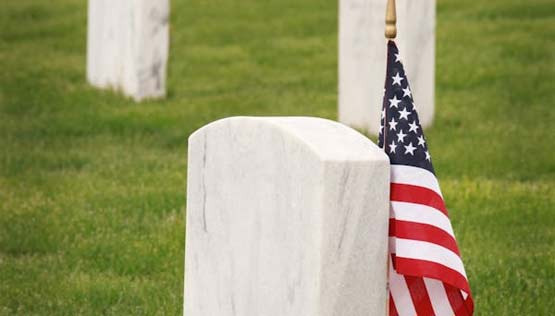
Memorial Day is a day to honor fallen soldiers in the United States, commemorated on the last Monday of May.
This day is not just a holiday, but holds deep meaning in honoring and expressing gratitude for the courage and dedication of soldiers who sacrificed for their country.
The origins of Memorial Day date back to after the American Civil War. The Civil War raged from 1861 to 1865, resulting in the deaths of over 620,000 Americans. Following such great sacrifices, people began to honor the fallen soldiers by placing flowers on their graves.
On May 30, 1868, the Grand Army of the Republic, a northern veterans' organization, organized the first official memorial event, which was called 'Decoration Day.' As the name suggests, the main event was decorating graves with flowers. Initially, it focused on honoring Civil War casualties, but as the U.S. participated in various wars, it expanded to include soldiers who died in World War I, World War II, the Korean War, the Vietnam War, the Iraq War, and the Afghanistan War.
In 1971, the U.S. Congress designated Memorial Day as an official federal holiday, fixing the date to the last Monday in May. This was done to provide a long weekend for citizens to spend time with family while also reflecting on the sacrifices of fallen soldiers.
Across the United States, various traditions and events commemorate Memorial Day. One of the most notable traditions is visiting national cemeteries. At Arlington National Cemetery near Washington, D.C., official memorial ceremonies are held where the President or high-ranking officials lay wreaths at the Tomb of the Unknown Soldier. Citizens visit national cemeteries and military graves across the country, placing flags and flowers, and quietly paying their respects.
Here are the top 5 wars based on the number of U.S. military deaths:
Vietnam War (1955–1975)
-
Number of deaths: Approximately 58,220
-
Number of injuries: Approximately 153,372
-
Characteristics: Prolonged due to guerrilla warfare and jungle combat, leading to significant social division in the U.S.
Korean War (1950–1953)
-
Number of deaths: Approximately 36,574
-
Number of injuries: Approximately 103,284
-
Characteristics: A major war in the early Cold War that solidified the division of the Korean Peninsula.
Iraq War (2003–2011)
-
Number of deaths: Approximately 4,576
-
Number of injuries: Approximately 31,993
-
Characteristics: Initiated under the pretext of weapons of mass destruction (WMD), but later became controversial as no WMDs were found.
Afghanistan War (2001–2021)
-
Number of deaths: Approximately 2,459
-
Number of injuries: Approximately 20,769
-
Characteristics: The longest war initiated after the 9/11 attacks, experiencing the collapse and resurgence of the Taliban regime.
Gulf War (1990–1991)
-
Number of deaths: Approximately 294
-
Number of injuries: Approximately 849
-
Characteristics: Started in response to Iraq's invasion of Kuwait, involving large-scale airstrikes and ground battles over a short period.
Additionally, there is a tradition of a moment of silence nationwide at noon on Memorial Day (National Moment of Remembrance). During this time, people pause all activities to quietly remember those who sacrificed for the country.
Moreover, many cities and towns hold parades to honor fallen soldiers. Major cities like New York, Chicago, and Washington, D.C. host large official parades, while smaller towns see local residents come together to march, showcasing band performances and military displays.
Meanwhile, Memorial Day is also seen as an unofficial start to summer. As a result, many families enjoy camping, barbecues, and outdoor activities together. However, amidst these joyful activities, the greatest significance of Memorial Day is to remember and express gratitude for those who sacrificed for the country.






 Victory 1988 |
 El Dorado |
 lightyear |
 Moscow Kim |
 coloradoman |
 Helpful Life Stories |
 American Man in a Mask |
 Make My Day |
 Texas Migration Story |
 USA Pharmacy Pharmacist |
  round1 |
  Way to easy |
  musicque |
  road98 |
  Churros Train Conductor |
  gleeful |
  Burbank Lee |
  Olivia's Blog |
  Bushing Around Life |
  Active |
  Cherokee Rose |
  Kor. Master |
  Holey Moley |
  Conflite Teacher |
  Hodong Prince Over Flex |
  Mist inn |
  citrus pop |
  Onion Ring |
  phoenixia |
  viewtop |