
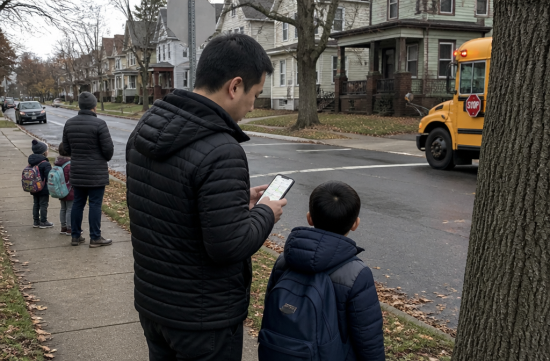
On the first day of school, August 24, did you see the news about a seven-year-old child attending Joseph M. Gallagher School who got on the wrong bus? For almost an hour, no one knew where the child was, and they eventually found him at a street corner.
The school district issued an official apology and stated that they would review all the transportation applications submitted by parents. There have been reports from other households about getting on the wrong bus or being dropped off at the wrong stop.
This was the beginning of the first year of the Cleveland Metropolitan School District (CMSD) merger. Now that the semester is nearly halfway through, let's summarize what has changed and what parents need to keep in mind.
First, the big picture. The CMSD Board of Education passed a plan on December 9, 2025, to close or merge 29 out of 88 schools. The initiative is called Building Brighter Futures.
Simply put, this means there will be 59 schools left, and based on buildings, 18 buildings will be closed, and five lease agreements will be terminated. With one in three schools disappearing, the impact is significant.
The reason lies in the numbers. Enrollment in Cleveland public schools has dropped by more than half compared to the early 2000s.
The district estimates that this merger will save $30 million annually. They need to cut at least $150 million over the next three years, and if they don't, they could face state oversight, according to CEO Warren Morgan.
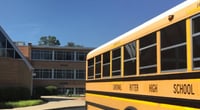
Now, let's talk about the transportation issues that parents find most confusing. The key question is whether to attend the assigned welcoming school or choose another school.
For K-8, the basic principle of CMSD is as follows: If the school is less than one mile away, it is considered a walk zone, and no school bus will come.
If a student from a school targeted for consolidation accepts a reserved seat at the assigned welcoming school, the situation changes. If the distance from home is more than one mile, they will receive transportation support for the 2026-27 and 2027-28 school years.
If the original school was within three miles of home but the new school is more than three miles away, that case is also eligible for extended transportation support until 2027-28. However, there are conditions that they must have been eligible for bus service or lived in the walk zone of the previous school.
On the other hand, if they choose a different school instead of the assigned school, they will not receive this benefit. The general rule of one to three miles will apply.
High school students do not take the yellow bus but use RTA. If they live more than one mile from school, they receive GCRTA transportation support, and specialized schools that accept students from across the district also follow the one-mile rule.
Students with transportation provisions in their IEP will continue to receive transportation support as before. This part has not changed.
It's not just the buses that have changed. To accommodate the merger, the start and end times for 13 elementary schools and five high schools have been adjusted.
This is quite significant. There have been interviews with parents who had to find new before and after care options due to changes in their children's school hours.
Let's also look at classroom conditions. At John Marshall High School, which merged three schools, there are reports from teachers of classrooms with up to 40 students in a single class.
The teachers' union chair stated that they haven't heard of major overcrowding issues, but they believe that schools with larger classes need to rehire laid-off teachers. The same issue can have different perspectives in different discussions.
So, will money really be saved? A study from Stanford and USC released last May looked at nearly a decade of school closures in California and found that many places did not achieve the expected savings.
Closures could actually increase student attrition and create a vicious cycle of reduced budgets based on student numbers. Honestly, this part felt a bit concerning.
In my opinion, the merger itself is a step in the right direction. With enrollment down by more than half, keeping the buildings as they are is a waste of taxpayer money, and from a real estate perspective, the cost of maintaining empty classrooms ultimately falls on someone.
However, the execution is a separate issue. The fact that a seven-year-old could go missing for an hour cannot be explained by budget cuts.
So, here are the steps parents can take right now. First, double-check that the transportation information for your child registered with the district is correct.
Second, measure the distance from home to school yourself. If you are on the boundary of one mile or three miles, it will determine eligibility.
Third, mark on your calendar that the extended transportation support lasts until 2027-28. After that, you may revert to the general rules.
Fourth, if you are considering school choices for the next academic year, you should also look at the bus conditions. Last year, the school choice portal opened in early January, so it's good to keep an eye on this year's schedule as well.
If you're confused, the quickest way is to contact the CMSD Transportation Department at 216-838-4287. The conditions are also summarized on the district's Building Brighter Futures page.
If it were me, I would start by checking the distance. The reality of this merger is that a single number can completely change your morning routine.
 midnightroadwalker1949
 DakgalbiTV

 Augusta 90 |
 Pointy |

 rissa |
 Gomo Nim |

 lattepop |

 solid90 |

 uplifted |




 radiant |
 Raymond K. |
 gravity |
 714 Success Era Real Estate |
 Investment Beginner Company Information Encyclopedia |
 musicque |
 The Gelaton |
 ovelion |
 Chicagonian |
 Freedom Yea |
 AZ Road Master |
 glenix39 |
 Something is popping in the situation |
 orvella |
 vella |
 comets |
 Banana |
 Yes Dorian |
 Minnesota Sonata N |
 zentar |
 mykiwi blog |