
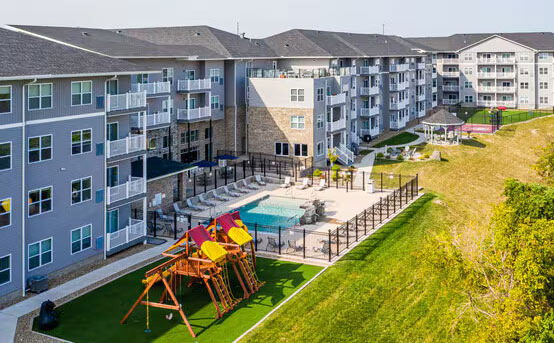
In the past, buyers often didn't pay much attention to the construction year when purchasing a condo in Morgantown.
Even older buildings near West Virginia University were often bought simply because they were affordable, with buyers prioritizing signing contracts first.
Now, things are different. As awareness grows that management fees and future special assessments can vary based on the age of the building, more buyers are asking about the construction year and structural inspection history before signing contracts.
The price of condos in Morgantown is around $187,000 as of 2026, which is lower than the average single-family home price of $215,000 in the same area (according to Houzz). Due to the nature of the college market, there is a steady demand for small units, but older buildings often have lower listing prices while management fees can be unexpectedly high.
West Virginia applies the Uniform Common Interest Ownership Act to condominiums established after July 1, 1986. However, this law does not mandate reserve studies or minimum reserve fund accumulation rates, only requiring that long-term maintenance costs be reflected in the budget. The diligence of the management in building reserves ultimately results in variations between buildings.
Following a case where a buyer was looking for condos in Morgantown with a budget of around $200,000, both listings had similar construction years, but the financial status of the management was vastly different. One provided the last three years of budgets and reserve accumulation records immediately, while the other took weeks just to access meeting minutes. Ultimately, the speed and transparency of document provision by the management became a crucial factor in the selection of the property.
There are five main items to check in order: recent financial statements and budgets for the last 2-3 years, whether a reserve study has been conducted and the accumulation rate, any pending or scheduled special assessments, litigation or dispute history in the management meeting minutes, and rental restriction regulations. In states like West Virginia, where the law does not specify these details, the process of directly verifying these documents carries more weight.
Loan conditions are also worth noting. Fannie Mae and Freddie Mac classify buildings with excessively high rental unit ratios or reserve funds below 10% of the budget as non-warrantable condos, which may only allow for higher interest loans. This is particularly important in areas with a high volume of investment purchases for rental purposes, like college towns.
In Morgantown, rental demand is centered around West Virginia University, so Korean families considering condos for school district reasons are relatively few. However, for families moving in, it is advisable to check school district ratings on sites like GreatSchools and verify the assigned school for the address before signing a contract.
Families relocating from other states may find it easy to judge overall costs based solely on the perception that West Virginia has a low property tax rate. However, since condos also include management fees and insurance costs, it is safer to calculate based on Monongalia County standards and compare them with previous residences.
In areas like Morgantown with many mountainous terrains, the condition of drainage and retaining wall management also affects management fees. When comparing properties, it can be helpful to ask the management about any recent repairs related to retaining walls or drainage.
Morgantown experiences seasonal fluctuations in rental demand based on the academic calendar, making condos an attractive option for investors who prioritize ease of management. However, if resale is a consideration, it is safer to prioritize buildings with transparent management finances over those with excessively high rental unit ratios.
In recent years, rising reinsurance costs and litigation risks have led to an increase in condo insurance premiums nationwide, which can result in higher management fees or special assessments (iii.org).
Older buildings are often the first to feel this impact, making it increasingly important to inquire about the construction year and recent insurance renewal history.
 PastaPilot
 KingMaga







 Premium Gas Camp |
 CA Real Estate |
 cheesepup |
 breezem |
 yentra |
 silver |
 Gomex Korea |
 Freedom Yea |
 Oz's Wow Company |
 diamondo |
  Let's Be Like a Salt-like City Person |
  Belgray Miscellany |
  sweetvan |
  Augusta Univ |
  Round and Round Children's Song Kingdom |
  butter 90 |
  Lando Mao |
  Washington Denzel DJ |
  LIZ Legal Information Blog |
  vegas mom |
  Sandiego Auntie |
  Things to know |
  TEXAS Fishing Boat |
  AUTO OK |
  aaoaa |
  Florida King |
  Encyclopedia of New York and Surrounding Areas |
  Study Abroad Life Know-How Tips |
  Conflite Teacher |