

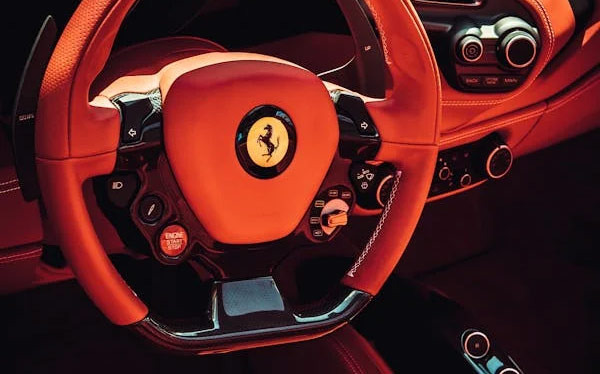
Supercars like Ferrari and Lamborghini have become terms that refer to cars that excel in performance, rarity, quality, and price, going beyond just high-performance sports cars. The term "supercar" originally emerged from a marketing perspective, but it has now become a universal term among car enthusiasts for high-performance vehicles that meet specific criteria.
There is a clear distinction between sports cars and supercars. Sports cars generally have a horsepower range of about 450 to 700 horsepower and are primarily designed for driving enjoyment. They are built to provide a comfortable driving experience for everyday use while allowing for sporty driving on weekends or special occasions. In contrast, supercars surpass sports cars in every aspect, including horsepower, performance, and price. Supercars typically start with horsepower over 600, boasting acceleration from 0 to 100 km/h in the low 3-second range to the high 2-second range.
Rarity is an important factor for supercars. Most supercars are handcrafted and produced in limited quantities. Often, only a few hundred units are produced each year, giving them uniqueness and exclusivity. Consequently, their prices are quite high, typically ranging from $300,000 to $700,000, with prices exceeding $700,000 classified as hypercars.
Let's discuss the history of engine development and fuel efficiency in these supercars!
The History of Ferrari Engines
Since its establishment in 1947, Ferrari has become an iconic brand for sports and supercars. Ferrari engines have always been known for their combination of high performance and technological innovation. In the 1950s and 1960s, the V12 engine became Ferrari's signature engine, embodying the spirit of speed and power that Ferrari represents. A notable model is the Ferrari 250 GTO, which is considered a globally renowned classic supercar.
The characteristics of Ferrari engines include high revs and precise tuning. The engine sound is particularly unique, with Ferrari's V8 and V12 engines captivating fans with their distinctive roar. Modern Ferraris have maintained the traditional V12 engine while achieving technological advancements. For example, the Ferrari 812 Superfast features a 6.5L V12 engine, boasting nearly 800 horsepower.
The History of Lamborghini Engines
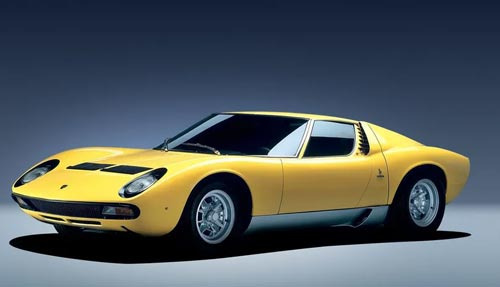
Lamborghini, founded in 1963, has created supercars with a different style compared to Ferrari. In contrast to Ferrari, Lamborghini primarily uses V10 and V12 engines, pursuing a unique, powerful, and aggressive driving performance. Lamborghini engines are famous for their intense sound and strong acceleration, often described as a storm-like roar.
The signature engine of Lamborghini is the V12, with the most famous model being the Lamborghini Miura. The Miura was Lamborghini's first mid-engine supercar, fully showcasing the performance of the V12 engine. Recently, models like the Lamborghini Aventador have been equipped with a 6.5L V12 engine, boasting over 700 horsepower.
Fuel Efficiency of Supercars
It is a fact that the fuel efficiency of supercars is not very economical. This is due to the powerful output of the engines and their performance-oriented development. Of course, since these cars are not designed with fuel efficiency as a priority, their fuel efficiency is relatively low. Nevertheless, each brand is applying technologies to improve fuel efficiency.
Ferrari: For example, the Ferrari 488 GTB is equipped with a 3.9L V8 turbo engine, achieving fuel efficiency of about 9-10 km/L in city driving and 12-14 km/L on the highway. The latest model, the Ferrari Roma, offers similar fuel efficiency, and overall fuel efficiency is gradually improving.
Lamborghini: Traditionally focused on performance, Lamborghini's fuel efficiency is relatively low. The Lamborghini Aventador, for instance, features a 6.5L V12 engine, with fuel efficiency of about 5-6 km/L in city driving and 8-9 km/L on the highway.
However, the allure of supercars is not solely based on fuel efficiency. These cars prioritize performance and driving experience, making fuel efficiency a secondary consideration. The thrill of driving and high-speed performance is the core, so fuel efficiency is not a significant factor.
Advancements in Engine Technology
Both Ferrari and Lamborghini have continuously advanced their engine technology. By integrating hybrid technology, turbochargers, and electric vehicle technologies, they are enhancing performance. For instance, the Ferrari SF90 Stradale features a hybrid V8 engine that produces over 1000 horsepower while providing better fuel efficiency and performance simultaneously.
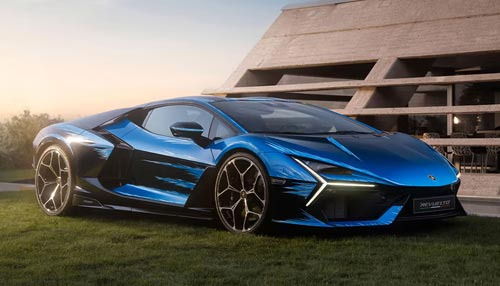
Lamborghini has also recently adopted hybrid technology, with the Lamborghini Sián featuring a hybrid V12 engine that maximizes supercar performance while striving to improve fuel efficiency.
In conclusion, Ferrari and Lamborghini are synonymous with performance and technological innovation, continuously challenging themselves in engine development. While fuel efficiency is not their primary goal, there is a high possibility that fuel efficiency will gradually improve through future technological advancements. Supercars are works of art in their own right, and since the sound, power, and driving experience of their engines are crucial, these engines remain a dream for many people.





 El Dorado |
 lightyear |
 Moscow Kim |
 coloradoman |
 Montgomery Mom |
 Weekend Movie Blog |
 Beauty, Health, Lifestyle Blog |
 Superman Cat Blog |
 novapixel |
  DREAM BIG |
  frostbite |
  330 Forever My Love |
  dralix58 |
  Gorama Round |
  Skydiving |
  dreamport |
  Yellow Snowman |
  Toaster Pizza Magic Show |
  velvetnom |
  Anytime Journey |
  Mrs. Duluth |
  jaxter |
  Atlanta Mama |
  Baguette Blog |
  Tan Sol |
  US Embassy |
  Korean Mom |
  My NYC |