

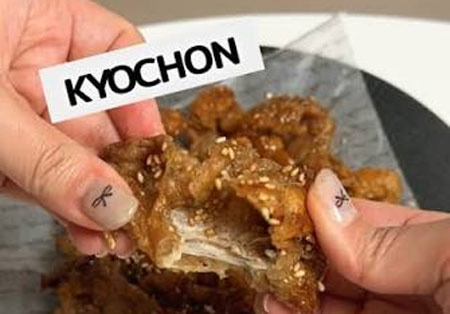
There are many delicious foods in the world, but I strangely love skin types.
Chicken skin, pork skin, salmon skin. These three are truly a work of art when properly fried until crispy and lightly salted.
Some of you might understand the saying that sometimes the skin is tastier than the meat.
Especially when you place chicken thighs in a frying pan and start cooking from the skin side, the initially soft skin begins to release fat.
As the skin cooks in the fat, it becomes golden brown. If it has a hard yet crispy texture, that's a success.
When you take a bite, you hear a crunch, followed immediately by the rich flavor of chicken fat.
If you can taste a hint of saltiness, no other seasoning is needed.
I personally prefer well-cooked fried chicken skin over seasoned chicken.
But when you think about it, why is skin so delicious?
There is a reason.
Skin contains both fat and protein. When heat is applied, the fat melts out and moisture evaporates, making the surface crispy.
When you add the browning reaction that occurs at high temperatures, it creates the savory aroma we love.
Ultimately, the crispy texture, rich fat, and salty flavor all come together in your mouth.
It can't be bad.
Pork skin has another charm.
In Korea, it's called pork skin and is grilled over charcoal. The chewy texture grilled and dipped in soybean powder is also delightful.
However, the Pork Rinds sold in the U.S. seem like a completely different food.
They are fried pork skin made crispy like a snack, and when you take a bite, they crunch and crumble.
When I first tried it, I was amazed at how pork skin could transform into a snack.
In American stores, they come in large bags, with options like plain salt, barbecue flavor, and spicy flavor.
I personally think the original salted flavor is the best.
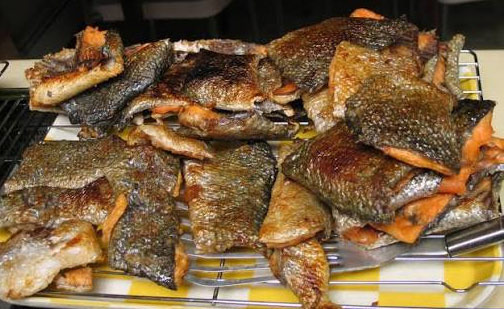
And lately, my favorite has been salmon skin.
Well-cooked salmon skin has a rich flavor like chicken skin but adds the unique savory aroma of fish.
With a sprinkle of salt and a few drops of lemon juice, it becomes an excellent dish.
Sometimes I even eat the crispy skin before the salmon flesh.
Interestingly, all three types of skin have different textures.
Chicken skin is thin and crispy with a strong rich flavor.
Pork skin can be chewy or puffed and crispy depending on the cooking method.
Salmon skin, when cooked thinly, is crispy while retaining the deep flavor of fish oil.
However, they all have one thing in common.
That is salt.
Strangely, salty flavors pair well with skin dishes rather than sweet ones.
When salt is added just right, the rich flavor of fat becomes more pronounced, and the crispy texture keeps you reaching for more.
That's why potato chips need to be salty to be tasty, and fried chicken must be seasoned just right to be delicious.
Of course, these aren't foods you should eat too much of just because they're tasty.
Chicken skin and pork skin are high in fat, and store-bought pork rinds tend to be high in sodium. Salmon skin also has fat, but the fat composition of salmon is different from that of chicken or pork.
So, there's no need to think of all three as the same nutritious food.
Still, there's no reason to give up the joy of properly cooked skin dishes every now and then.
The tips I use to crisp up skin at home are simple.
First, thoroughly dry the surface with a paper towel. If there's too much moisture, it tends to steam rather than crisp up.
Second, don't flip it too often from the start. Especially for chicken skin and salmon skin, it's best to let the skin side touch the pan and cook slowly.
Third, don't add too much salt. To enjoy the natural flavor of the skin, the right amount of seasoning is important.
And finally, eat it right after cooking.
 HaniForever
 DawnRose






 Texas Migration Story |

 Let's Be Like a Salt-like City Person |
 Sandiego Auntie |

 Kitchen Ideas |
 Yellow Snowman |

 Karina's Blog |


 Shintongbangtong Shin Naerin James Park |


 Neither Aunt nor Young Lady |
 Cali M Law Group |
 Delicious Food Finder |
 ultron78 |
 pet dog |
 networky |
 Macon Boy |
 Moscow Kim |
 zoryan |
 Noodle Noodle |
 Anjollinya Blog |
 Elastico |
 peltra |
 banleaf |
 humpday sonata |
 silver |
 Queens Blues |
 Christopher |
 timemachine |