
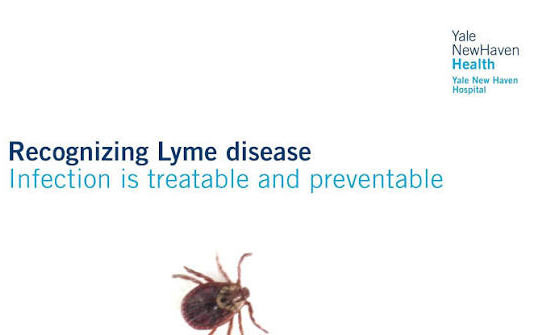
Before moving to New Haven, people often research home prices, school districts, and safety, but surprisingly, they don't pay much attention to ticks.
When I lived in Korea, I never really worried about getting sick from tick bites, but things are different in Connecticut.
When Lyme disease is mentioned in the U.S., Connecticut is always part of the conversation. In fact, the name Lyme comes from a region in Connecticut. New Haven County is also an area where tick-borne diseases should be taken seriously.
Lyme disease is a bacterial infection transmitted by the blacklegged tick, commonly known as the deer tick. Connecticut's agricultural experiment station even has a program for residents to test ticks they find. A significant number of the ticks tested carry the Borrelia bacteria that causes Lyme disease.
So what happens if you get bitten?
The problem is that many people don't realize when they are bitten by a tick. Ticks are so small and the bite is often painless, so it can easily go unnoticed.
A few days later, you might feel fatigued, have a headache, or develop a fever, along with muscle and joint aches that feel like the flu. These symptoms can easily be mistaken for a cold.
A well-known symptom of Lyme disease is a red rash that spreads in a circular pattern, often referred to as erythema migrans. This rash typically expands around the site of the tick bite. However, not everyone with Lyme disease will exhibit the classic target-shaped rash.
Therefore, if you develop unexplained flu-like symptoms after spending time in the woods or fields, it's important to inform your doctor about potential tick exposure.
If caught early, Lyme disease can usually be treated with antibiotics, and most people recover well. The issue arises when it goes unnoticed for a long time.
If the infection progresses, severe joint pain, facial paralysis on one side, and neurological symptoms can occur, and in rare cases, it can affect heart rhythm. So, it's not something to dismiss by saying, "It's just a tick bite."
Connecticut is not just home to Lyme disease. Depending on the type of tick, infections like babesiosis, anaplasmosis, and ehrlichiosis can also be transmitted, and the Powassan virus, though rare, can be a concern. Especially if you experience high fever, severe headaches, or flu-like symptoms, it's best not to assume it's just a cold.
Prevention is not difficult. Wearing long pants and using insect repellent containing DEET when going to areas with lots of woods or grass can help. It's also a good habit to check your body while showering after returning home. Be sure to check areas that are not easily visible, like underarms, groin, behind the knees, around the ears, and in your hair.
If you find a tick attached, the basic method is to use fine-tipped tweezers to grasp the tick as close to the skin as possible and pull it out slowly and straight. It's also a good idea to remember the date you were bitten and monitor your health afterward.
And for Koreans spending their first spring in New Haven, don't underestimate pollen. With many trees in New England, spring brings pollen from oak and birch trees, followed by grass and weed pollen seasons. There are stories of people who had no allergies in Korea experiencing itchy eyes and a runny nose here, thinking they had a cold.
Ultimately, living in New Haven doesn't mean you have to avoid parks out of fear of ticks.
However, developing a habit of checking your body after playing in the woods or grass is necessary.
 AZCowboy
 FunUSALife



 Karina's Blog |
 Jimbeam 88 |
 Taco Bell Candy Note Blog |
 Splendid Mission |
 Florida Gario |
 My Heart Popper |
 Dream Mong |
 Lee Sang Don |
 Jenny's Mom blog |
 Buckwheat Muktudari Notebook |
  novapixel |
  Idaho's Sumi's House |
  Mr. Midwest America |
  wildfire |
  legalway |
  postcard |
  cheesecake07 |
  My Miami Stories |
  windylotus |
  Mia Flori |
  velaro29 |
  velaro |
  foxtrot83 |
  moname |
  mapleline |
  US Legal Consultation on Trials |
  UNI Lover |
  California Dreamer |
  Choco Mint Creator |