
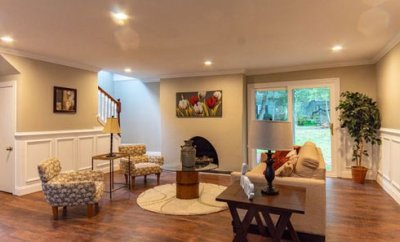
Recently, a family reached out to inquire about investment properties in Fargo, North Dakota. They were living in the Twin Cities of Minnesota and wanted to buy a second home in Fargo to rent out. Their initial question was straightforward: should they buy a three-bedroom house currently on the market to rent out, or should they wait and monitor the market a bit longer?
The average rent in Fargo is around $1,125 per month as of August 2026 (RentCafe). A two-bedroom unit is priced at approximately $1,190 as of July 2026 (Zumper). This is about 42 percent lower than the national average, which could work in favor of calculating rental yields against purchase prices. In the past, Fargo's rental market was heavily influenced by the oil boom in western North Dakota, but it has now shifted to follow a more stable regional economic trend.
Applying the commonly used 1 percent rule in the industry, if you can receive more than 1 percent of the purchase price in monthly rent, the cash flow is likely to be positive. Considering Fargo's median sale prices, properties that meet or come close to this criterion are not uncommon. However, this is just a starting point for investment decisions; actual vacancy rates and maintenance costs must also be factored in.
Investment property loans have different conditions than primary residence loans. A down payment of typically 15 to 25 percent is required, and while a credit score of 620 or higher can qualify you for a loan, a score of 740 or above is needed for favorable interest rates (fanniemae.com, freddiemac.com). Interest rates are often about 0.5 to 0.75 percentage points higher than those for primary residences. When considering rental income for loan qualification, only 75 percent of the expected rental income is recognized, so it's advisable to prepare lease agreements or rent schedules from appraisals.
The effective property tax rate in Cass County, where Fargo is located, is about 1.34 percent based on the median, which is slightly higher than the North Dakota state median of 1.20 percent (Ownwell). There are also variations in tax rates by zip code, with the 58104 area at 1.42 percent and the 58103 area at 1.28 percent. If you are moving from another state, do not judge based on the tax rates from your previous location; check the local county and school district levies in Fargo.
North Dakota does not implement rent control. For month-to-month rentals, landlords can raise rent as much as they want with a 30-day notice, and the security deposit is capped at one month's rent (hemlane.com). While there are some protections for tenants, such as prohibiting retaliatory rent increases and discriminatory hikes, and legal standards for habitability, investors coming from states with strong tenant protection laws may notice these differences.
If direct management feels burdensome, you can hire a property management company, which typically charges a fee of 8 to 12 percent of the monthly rent. Landlord insurance must also be purchased separately, which, unlike standard homeowners insurance, covers rental loss and tenant liability, but the premiums are higher. It is commonly recommended in the industry to set aside about 1 percent of the property value annually for maintenance costs.
If you plan to sell this property later and switch to another investment property, it's worth noting that you can defer capital gains taxes through a 1031 exchange (irs.gov). Ultimately, the advice given to that family was to calculate the rental levels against the purchase price and property tax burden and not to rush into a decision. This is not investment or legal advice, and it is recommended to consult real estate and accounting professionals before finalizing any contracts.
 SodaQueenz
 JellyUpMan






 |
| 
 Premium Gas Camp |
 CA Real Estate |
 cheesepup |
 breezem |
 anchor |
 My Love Sandra |
 reliable |
 North Dakota Ragdoll Cat Owner |
 buddydakota |
  Cap Com |
  nixxon |
  kevin Kim |
  beerdreamer |
  Kims Spring |
  White bunny |
  Kansas City Representative Singer |
  shadow 007 |
  sun walker |
  Choco Choco Star |
  midnight blue |
  honeypot |
  summer |
  adventure77 |
  flexible |
  Shintongbangtong Shin Naerin James Park |
  truepixel |
  Kathy's Blog |
  Hae Naem |
  quatspace |