
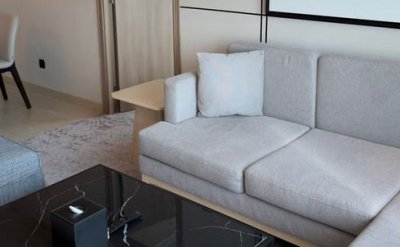
There was a friend looking for rental income opportunities in Grand Rapids. They were weighing whether to buy a one-bedroom condo to rent out or continue renting while investing elsewhere. For those facing this dilemma, it's important to first consider the gap between home prices and rental rates.
Before calculating rental income, one must check how home prices and rents are moving in the Grand Rapids market.
According to Zillow, the median home value in Grand Rapids for 2026 is $268,540, which is a 1.7% increase from the previous year. The average rent, as reported by RentCafe, is $1,595, reflecting a 2.18% rise during the same period. Rents are moving slightly faster than home prices.
A way to assess the relationship between these two is through the price-to-rent ratio. This metric indicates how many times the home price is compared to the annual rent. In Grand Rapids, the home price is about 14 times the annual rent of $19,140. Typically, a ratio below 15 is seen as a favorable signal for buying, so Grand Rapids is just below that threshold.
According to RentCafe, the rent by room size is as follows: studio $1,251, one-bedroom $1,425, two-bedroom $1,657, and three-bedroom $2,126. As the number of rooms increases, rent steadily rises, so if you plan to live in a larger unit for a long time, this trend should be factored into your calculations.
To summarize the key points to consider, there are three main factors:
- First, how much can you prepare for a down payment? If you set it at 20%, you'll need about $53,700.
- Second, how many years do you plan to hold or live in the property? If it's a short period, you may have to sell before recouping closing costs.
- Third, is the monthly mortgage payment manageable compared to rental income or current rent rates?
To elaborate on the third point, if you take out a loan for the remaining amount after the 20% down payment of $53,700 at a fixed rate for 30 years, the monthly payment, including property taxes and insurance, would be around $1,700. If the rental market rate for this condo is about $1,595, you would need to cover approximately $100 out of pocket each month. This is a common oversight for first-time investors.
In Grand Rapids, the situation can vary significantly depending on the area. Neighborhoods like East Grand Rapids, known for good school districts, tend to have higher home prices than the city average, and many Korean families pay attention to these areas for their children's schooling. Conversely, the outskirts of the city still have relatively affordable prices, making them more attractive for investment purposes.
If you're considering buying for rental income, it's essential to compare the total costs of mortgage, property taxes, insurance, and management fees against the actual rental income you can expect. Michigan's property tax rates vary by county, and if it's not your primary residence, you won't benefit from the Homestead Exemption. For those coming from out of state to invest for the first time, this can lead to unexpected financial burdens.
If you're a current resident debating whether to continue renting or make your first purchase, the calculations differ slightly. If you have a down payment ready and plan to live there for over five years, paying an extra $100 to $200 a month may make buying a more favorable option as you build equity. On the other hand, if your stay is short, you might find yourself needing to move before recovering closing costs.
Ultimately, in a market like Grand Rapids, where the price-to-rent ratio is close to 15, there is a tendency to lean towards buying. However, it's safer to calculate not just rental income but also vacancy periods and repair costs before jumping in. This is not investment or legal advice, and it's recommended to consult with an accountant or real estate professional before finalizing any contracts.
 WaveSmart
 KimchiBibim




 Sugar Cream Door Bulletproof Noodles |
 urbanmint |
 |
| 
 Premium Gas Camp |
 CA Real Estate |
 icotla |
 carpflow |
 mygoddess blog |
 apricotla |
 ripple |
  UCLA Captain |
  lattecu |
  dynamite |
  frostingline |
  Hakuna Matata |
  Your Curiosity Resolved |
  Way to easy |
  Chino Min |
  nexabyte |
  moonshine 7 |
  Sunset Oregon |
  victoria 68 |
  golfmaster |
  Montgomery Mom |
  squidogame |
  Noodle Noodle |
  Rhode Island Good People |
  Big North |
  Famous Attractions in the United States |
  Jin Soo V |