

A tenant in an apartment complex in Flushing received a lease renewal notice. They were puzzled to see that while the sale prices for units in the same complex had remained relatively unchanged for months, rents had noticeably increased. There are three main factors to consider.
First, home prices. According to Zillow, the median home value in Flushing is $786,523. It has risen by 3.1% over the past year, showing a gradual increase. Second, rents. According to RentCafe, the average rent in Flushing is $2,318, up from $2,158 a year ago. This represents an increase of about 7.4%, meaning rent has risen more than twice as fast as home prices.
Third, the price-to-rent ratio. This is the value obtained by dividing home prices by a year's worth of rent. Flushing has a ratio of about 28 times. A ratio above 21 indicates that renting is relatively more advantageous than buying. Flushing significantly exceeds this benchmark. However, it is important to note that the rate of rent increase is outpacing the rate of home price increases. If this trend continues, the gap may narrow in a few years.
Next, consider the down payment capacity. At a 20% down payment, about $157,000 is needed. This is a substantial amount even within New York City. If you cannot prepare this much, it may be more realistic to maintain renting while saving up rather than buying. Conversely, if you have a significant amount saved and plan to settle in a good school district, the calculations change. Flushing is a region where families consistently move in based on school district reputation. You should check the school ratings for the addresses you are interested in on GreatSchools or Niche. School district boundaries change frequently.
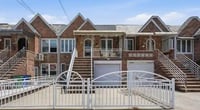
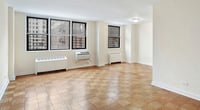
Within Flushing, the situation differs between the condo-dense areas closer to downtown and the quieter single-family neighborhoods. The downtown area has high demand for rentals, leading to faster price increases, while the residential areas have higher sale prices but relatively moderate rent increases. Even within Flushing, the calculations can vary depending on which area you are considering.
When transitioning to buying, you need to factor in closing costs and maintenance fees to determine how many years you need to live there to recoup those costs. In areas like Flushing, where entry prices are high, it is often more advantageous to live or rent for over five years. Condos typically have separate maintenance fees, so it's advisable to check the fee details for each listing in advance.
One guideline to consider is that housing costs should not exceed 30% of monthly income. Flushing, with its high rents and home prices, makes it challenging to adhere to this guideline. It is common for multiple households to share living expenses to manage the financial burden.
You should also check loan products. There are options available even if your down payment is less than 20%, but in this case, mortgage insurance will be an additional monthly cost. Condos often have faster approval processes than co-ops, but conditions can vary by listing, so it's necessary to verify before signing a contract.
If you are not living with multiple households, the amount you have prepared for a down payment will significantly influence your decision. If you do not have enough savings, it seems safer to continue renting while accumulating more funds rather than rushing into buying.
Duration of residence is also a factor to consider. If there is a possibility of moving to another area within a few years, renting remains flexible. If you plan to stay long-term, in a period where rents are rising quickly, buying may become a relatively better option. New York City has different maintenance and property tax structures for each condo and co-op, so you should check the actual monthly costs for each listing separately.
The impression that home prices remain stable while rents are rising is generally accurate. However, it is also important to remember that home prices are gradually increasing and that this gap may not last indefinitely. This information is not investment or legal advice, and it is advisable to consult with a professional before making any actual contracts.
 LeafGhostSch
 DakotaThanx






 garlic bread |
 Sugar Cream Door Bulletproof Noodles |
 urbanmint |
 |
| 
 Premium Gas Camp |
 MintO |

 Vasila's Newlywed Blog |

 Round and Round Children's Song Kingdom |
  Mia Flori |
  nova nova |
  healthy |
  leaves |
  sparkling |
  maryland park |
  persiste |
  conte |
  blueman |
  Going Once |
  Eldorado 88 |
  cherrydino |
  middlekick |
  Moscow Kim |
  nivex85 |
  quanta7 |
  Tomato Health Club blog |
  horse |