

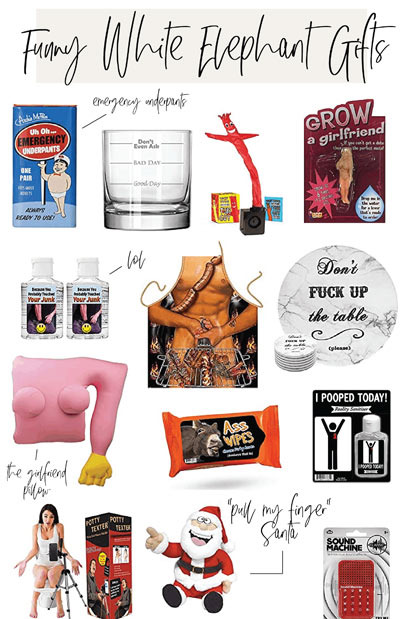
And an event that always comes up during Christmas is the White Elephant gift exchange, but if you think of it just as a regular gift exchange, you might run into problems.
First, let me explain that a White Elephant is basically a game. It's just a gift exchange event meant for everyone to have a good laugh.
The key is to bring a useless but funny gift. If you don't know this, you'll end up like me, not understanding the atmosphere, haha.
The term White Elephant is said to have originated in ancient Thailand, where the king gifted a white elephant to a minister he didn't like. The white elephant is a sacred animal, so you can't make it work, and you can't sell it either, but it costs a lot to feed. In the end, the person who received the elephant seems to have received a precious gift, but in reality, they go bankrupt due to the upkeep costs.
So, the term White Elephant itself has come to mean something that looks nice on the outside but is a burden, something that is troublesome to have. Once you understand this meaning, it makes sense why such gifts come up in American companies.
The gifts that are welcomed in this game are not practical items. In fact, if they are too practical, you become the clueless person.
Items that can bring laughter, quirky novelties, awkward decorations that are hard to keep at home, and literally pretty trash are the right answers. That's why most set a very low price limit beforehand. Usually, it's around $10, at most $20. This price limit itself is already a hint. It means don't take it seriously.
However, I misunderstood this and thought it was like Secret Santa.
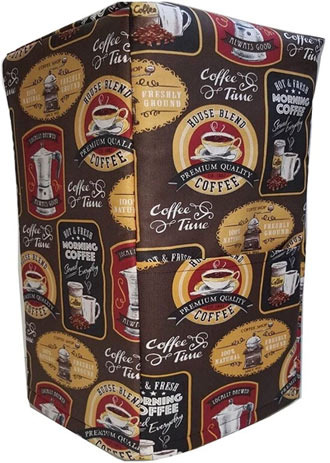
Since the company in New York was very multinational, with American, Filipino, Korean, and Hispanic employees all mixed together, I turned on the typical Korean mode of sincerity for no reason. The budget was said to be $20, so I seriously thought about it and bought a $70 coffee maker. It was big and heavy, and I felt proud carrying it.
But when I got to the party, everyone else brought funny mugs, strange decorations, company logo socks, unused lamps from home, and $10 comic books. At that moment, my mind went blank. I thought, what kind of ridiculous gifts are these.... then I realized I had misunderstood.
When my coffee maker was placed on the table during the gift opening, the atmosphere in the office became awkward, and everyone silently understood the situation with their eyes. The host awkwardly asked me if I knew the price limit, and I awkwardly smiled while my face burned with embarrassment.
The funnier part is that in a White Elephant, there are rules for stealing and swapping gifts, so popular gifts keep circulating.
My coffee maker was a huge hit that day, and after going around, it ended up with the last person remaining. I just sat there clapping.
Since that day, I learned that in American companies, a White Elephant is not a place to show sincerity or price, but rather a place to intentionally bring something useless and laugh together. The point is who brought the funniest item, not who bought the most expensive one, which actually counts against you. Of course, the person who received a good gift thanked me and helped me a lot later at work.
So now, whenever someone says they are doing a White Elephant at the company, I make sure to tell them. Never take it seriously.
My experience has taught me that if it's funny, it's a success, and if it's expensive, it's a failure.







 fortbliss |
 Folding Instructions |
 yentra |
 Cali M Law Group |
 quanta7 |
 nova nova |
 TwinBee |
 Living in the Eastern United States |
 Whisper |
 MintO |
  Korean Mom |
  My NYC |
  moo moo |
  Mr Oh |
  forevergee |
  festival |
  manchester |
  constant |
  Leapfrog Move |
  vibranto |
  Tora Tora |
  yellowbutter |
  Dolly |
  US Embassy |
  NYC saladbar |
  Finding Superfoods |
  lightyear |
  song bang |
  vexomo |
  Indiana Jones |