

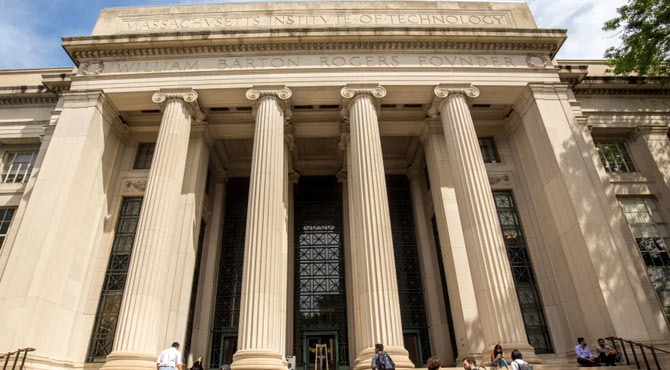
If Harvard symbolizes tradition and philosophy, MIT symbolizes innovation and a spirit of experimentation.
The fact that these two universities sit side by side across the Charles River makes it easy to understand why Cambridge is called the 'capital of knowledge'.
MIT was established in 1861, in response to the demands of a rapidly changing era following the Industrial Revolution. The founder, William Barton Rogers, believed that "an educational institution was needed to apply science and technology to actual industries". This philosophy continues to be the core spirit of MIT today. While other universities focused on the humanities, MIT established itself as an educational institution teaching 'practical knowledge' by concentrating on engineering, physics, mathematics, and applied sciences.
The campus stretches along the north bank of the Charles River in Cambridge and is connected to downtown Boston by the Longfellow Bridge. The view of MIT from this bridge is truly impressive. The massive dome-shaped Main Building harmonizes with the classic gray stone buildings, followed by modern research centers and laboratories. The sight of students jogging along the river, researchers commuting by bicycle, and professors walking with laptops in hand shows that the term 'city of knowledge' is not an exaggeration at all.
MIT's academic structure aims to go beyond just engineering, focusing on the integration of humans and technology. It consists of five schools: the School of Engineering, the School of Science, the School of Architecture + Planning, the School of Humanities, Arts, and Social Sciences, and the Sloan School of Management. In particular, the MIT Sloan School of Management is considered one of the two giants of MBA programs worldwide, alongside Harvard Business School, producing numerous CEOs of Silicon Valley startups and global leaders.
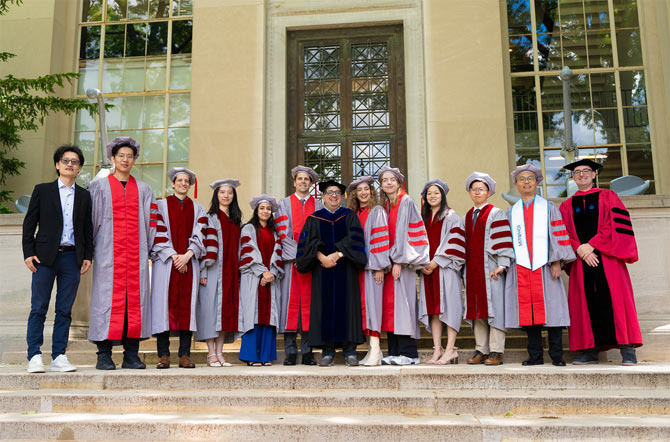
Students at MIT are naturally associated with the term 'genius'.
They possess not only intelligence but also creative and experimental thinking. MIT is known for valuing curiosity and problem-solving skills more than test scores. Perhaps that's why the phrase 'Do not be afraid to fail (Fail Fast, Learn Faster)' is posted throughout the school.
The culture at MIT is much freer and more challenging than traditional academic atmospheres. There is a unique tradition called 'MIT hacking', which is not just about computer hacking but a culture of pranks that combines humor and creativity. For example, placing a giant toy spaceship on top of the central dome at midnight or hanging a banner saying "We have better engineers" across the Boston River to engage in a light-hearted competition with Harvard students.
In research, MIT is at the top level globally. Numerous innovations have emerged here in key fields of future industries such as robotics, artificial intelligence, quantum computing, aerospace engineering, and nanotechnology. In particular, the MIT Media Lab is an experimental space where art, technology, and design converge, significantly influencing the development of today's digital culture. Figures like Amazon founder Jeff Bezos, Google co-founders Larry Page and Sergey Brin, and SpaceX's Elon Musk are representative symbols of the MIT spirit.
The MIT campus is not just a place for studying. Each building has a strong personality, and artworks are naturally placed throughout. Notably, the Strata Center, designed by architect Frank Gehry, is famous for its unique curves and asymmetrical structure. Inside the campus, there are exhibitions of robots and experimental projects created by students, giving the feeling of being in a small science museum.
Most student dormitories are located on campus, and cooperative communal living is common. Each dorm has its own operating team, and students set and manage community rules themselves. It is not unusual to see professors and students sharing pizza in the evening while discussing project ideas.
MIT is not just a school that trains scientists or engineers; it is a place that teaches a mindset to change the world. As the school's motto says, "Mind and Hand", MIT fosters the ability to implement ideas and turn theories into reality.
In the laboratories along the riverside in Cambridge, the technologies of tomorrow and the future world are being created.



 candytip |
  Spaghetti Pasta Fan |
 lollipop |
 sprinkletop |
 Anytime Journey |
  Mrs. Duluth |
  jaxter |
  Atlanta Mama |
  Baguette Blog |
  US Embassy |
  Korean Mom |
  My NYC |
  moo moo |
  Mr Oh |
  forevergee |
  festival |
  manchester |
  constant |
  Leapfrog Move |
  vibranto |
  Tora Tora |
  yellowbutter |
  Dolly |
  NYC saladbar |