
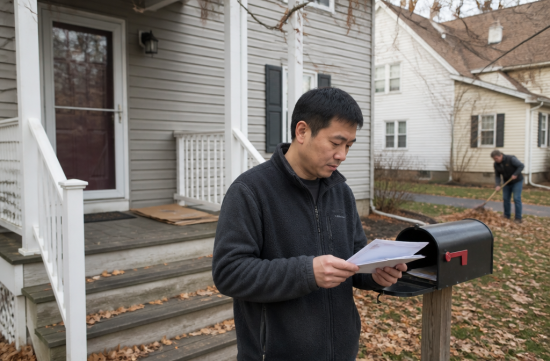
This year, many who bought homes may have received their school tax bill and scratched their heads. The previous owner had the STAR exemption, but now that it's in my name, that line is missing.
To put it simply, New York State's STAR benefits do not automatically transfer with the home. The new owner must register directly with the state government to receive the benefits.
STAR stands for School Tax Relief, a New York State program that reduces the school tax burden for residential property owners. There are two forms of STAR benefits.
One is an exemption, which reduces the amount on the school tax bill itself. The other is a credit, where the state sends money via check or direct deposit to pay the school tax.
According to the New York State Department of Taxation and Finance (DTF), exemptions are no longer available to new homeowners. A law change in 2016 stopped new applications, and since then, anyone who buys a home must register for the credit.
Existing homeowners who have received an exemption since 2015 can continue to maintain it as long as they live at the same residence. The issue is that this benefit does not transfer.
The tax department explains that if the previous owner had an exemption on the home, the new owner can receive that exemption in the first year. However, starting the following year, they must register for the credit to continue receiving benefits.
This can lead to situations where someone feels relieved after seeing the first year's bill, only to discover the exemption has disappeared the following year. With so many documents during closing, it's easy to overlook this detail.
The registration is not handled by the local assessor's office. The new owner must do it directly with the state tax department, and towns or counties cannot process it.
There are two ways to register: online through the Department of Taxation and Finance's Homeowner Benefit Portal or by calling 518-457-2036.
When registering online, log into your Individual Online Services account and navigate to the Real Property section under the Services menu. You will need to enter the purchase date during this process.
It's also important to know the eligibility date. To receive the STAR credit for that year, you must own and occupy the home as your primary residence as of July 1.
For example, if you bought the home after summer, the credit for that year will be based on the owner as of July 1. Your share will begin the following year.
The tax department recommends registering as soon as the home becomes your residence. There is no clearly announced deadline, so handling it right after moving in is the best approach.
The state government closely examines actual residency. They consider the duration of residence, voter registration address, vehicle registration, and ID address, and may request proof if necessary.
You also need to check the income criteria. According to the tax department, the Basic STAR credit is for incomes below $500,000, while the exemption is for incomes below $250,000.
Here, income is defined as the federal adjusted gross income (AGI) minus taxable IRA withdrawals. Benefits for 2026 will be based on 2024 tax return data.
The Enhanced STAR for those over 65 has an income limit of $110,750 for 2026 benefits. For 2027, the limit will increase to $113,550.
There are also changes starting this year. Only one of the residing owners needs to turn 65 by December 31 of that year, and the relationship between owners does not matter.
When calculating income, the income of co-owners who do not live in the home is excluded. Only the income of the residing owner's spouse is included.
The process for moving from Basic to Enhanced has also been simplified. Those receiving the credit do not need to apply separately; if they meet the criteria, they will automatically receive the Enhanced credit.
Some may ask if the credit is less favorable than the exemption, but that's not necessarily true. Since the 2019 law change, the exemption reduction amount has not increased, but the credit can grow by up to 2% each year.
You only need to register once. The state government checks eligibility each year based on tax return data, so there's no need to reapply annually as long as you remain eligible.
However, if you move, the situation changes. You must register again for the new home, and the registration from the previous home does not carry over.
Those paying school taxes through escrow need to be particularly careful. The credit does not reduce the bill; it is separate money that comes in, so if you don't register, you end up paying that amount extra.
Recently, it's not uncommon for Korean families buying their first home to miss this detail and find out much later. Even if the amount isn't huge, it adds up over the years and becomes significant.
If you're unsure about your registration status, you can check your current status on the same portal. Just verifying whether the credit is registered under your name and address is sufficient.
To summarize from my perspective: after closing and moving in, register on the portal that week, and check your status again before the next year's school tax bill arrives.
Specific conditions may vary based on ownership type or income composition, so for any unclear aspects, it's best to contact the tax department directly. Spending a few minutes to register ensures you won't miss out on money you're entitled to receive each year.
 DakotaThanks








 Dolly |

 B.I.G. Victor |

 Amber H |

 uplifted |

 Dr. Kelso |

 passive |

 namico |


 sound good |

 Belgray Miscellany |
 American Travel Cruise Information |
 vanillatop |
 Karina's Blog |
 ASURA |
 Misstic M |
 parlon |
 Mrs New Mex |
 MBTI Detective Agency |
 ShyShy dating |
 hihihi |
 kiwifox |
 Silent Sea |
 Masa Masa |
 dewyo |
 summita |
 coconutpath |
 moonlight |
 Curry Dragon |