
As mid-November approaches, I start noticing the last page of the calendar. At this time of year, certain numbers come to mind that I need to keep track of, and this year, I wanted to整理 the topic of inherited IRAs.
A friend recently asked me quietly if it's true that you only need to withdraw everything from an inherited IRA within 10 years.
That's partly correct, but it can also be misleading. Depending on who you inherited it from and when, there may be cases where you are required to withdraw a certain amount each year.
The starting point is the SECURE Act, which was passed at the end of 2019. If you inherit an IRA from an account owner who passed away after 2020, many heirs are subject to the so-called 10-year rule, which requires them to empty the account within 10 years.
Previously, heirs could withdraw small amounts over their lifetime based on their life expectancy, but that option has been largely closed off.
The question is whether annual withdrawals are necessary during those 10 years. Reading the legal text, it seemed like you only needed to empty the account by the end of the 10th year.
However, the IRS provided a different interpretation in proposed regulations in 2022, and confirmed that stance in final regulations in July 2024. These final regulations will apply starting in the distribution year of 2025.
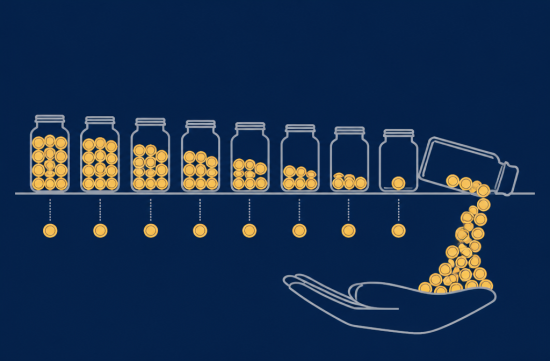
The key point is this: If the account owner had already begun receiving their RMD by their required beginning date and then passed away, the heir must take RMDs from year 1 through year 9 and withdraw all remaining funds in year 10.
Conversely, if the account owner passed away before that point, there is no annual withdrawal requirement. You only need to empty the account by December 31 of the 10th year.
It can be a bit confusing that the same 10-year rule has these different implications. So, I would recommend first considering whether your parents were receiving RMDs at the time of their passing.
For reference, the age at which you must start taking your own RMD varies by birth year, but under SECURE 2.0, it is 73 for those born in 1951 and later. So, this benchmark can also vary based on the account owner's birth year.
Not all heirs are subject to the 10-year rule. There is a separate group referred to in the law as eligible designated beneficiaries.
This group includes spouses, minor children of the account owner, disabled individuals, or anyone who is not more than 10 years younger than the account owner.
These individuals can continue to use the method of withdrawing based on their life expectancy. However, minor children will start the 10-year rule once they turn 21, according to the final regulations.
Most adult children, siblings, and nieces or nephews are typically subject to the 10-year rule. This is a common scenario in our surroundings.
Roth IRAs have a slightly different situation. The account owner does not have RMDs during their lifetime, so they are considered to have passed away before the benchmark, meaning the 10-year rule applies, but there is no annual withdrawal requirement.
Given the confusion over the years, the IRS waived penalties for missed annual RMDs from 2021 to 2024. However, this relief ends there, and starting in 2025, you will need to ensure annual withdrawals.
This means you must also take your 2026 RMD by December 31. With the end of the year approaching, it might be a good idea to hurry a bit.
If you miss it, a 25 percent excise tax will be imposed on the amount not withdrawn. Fortunately, if you withdraw the missed amount within the specified period and report it using Form 5329, the penalty can be reduced to 10 percent.
While this is much lower than the previous 50 percent, it's still money that shouldn't be overlooked. I would mark it on my calendar and take care of it by November.
Another thing that can easily be overlooked is that if the account owner did not receive their full RMD in the year they passed away, the heir must withdraw the remaining amount for that year.
The annual RMD amount is typically calculated based on the heir's single life expectancy table, and that number decreases by 1 each year. Most financial institutions can help with the calculations, so it's worth reaching out for peace of mind.
If you only withdraw the minimum amount each year and then take a large sum in the 10th year, your income tax bracket for that year could significantly increase. Therefore, many people consider withdrawing a bit more in years when their income is lower.
Withdrawals from inherited IRAs are taxed as ordinary income. However, as an heir, you won't incur the 10 percent early withdrawal penalty even if you withdraw before age 59 and a half.
To summarize, the order of checks is as follows: when did they pass away, were they receiving RMDs at that time, and do I belong to an exception group? This will clarify your situation.
However, there are many variables, such as the type of account, whether there are trust beneficiaries, and if multiple heirs share the account. It varies by individual circumstances, so be sure to consult a tax advisor or financial expert.
You wouldn't want to burden the memory of your parents with tax worries. Even if it's a bit of a hassle, taking a look before the end of the year will make next year much lighter.
Tonight, I plan to sit down with a warm cup of tea and organize my documents. I hope everyone finishes the remaining year quietly and comfortably.
 DreamRoad
 SandraBirth



 American Politician Community |

 memorabilia |

 orvian89 |

 looksee 78 |

 vivavida |

 Bald Eagle Brothers |


 PETRO Vatican Shrine |

 Bacon King Blog |

 Lifestyle Information Search USA |

 USA Business News |
 MBTI Detective Agency |
 ShyShy dating |
 hihihi |
 kiwifox |
 Silent Sea |
 Masa Masa |
 dewyo |
 summita |
 coconutpath |
 moonlight |
 Dolly |
 Curry Dragon |
 secure |
 tredon |
 Eldorado 88 |
 donggul donggul |
 korvix |
 Noodle Zin |
 Forever Tiger Teacher |
 strongman |