

When I first moved to Salt Lake City, one of my subtle worries was about hospitals.
It's not a huge city like LA or New York, but I wondered where I would go if I got seriously ill as I got older.
However, as I lived here and learned more, I realized this was truly an unnecessary concern.
Salt Lake City has a surprisingly high level of medical care for its size. People come here for treatment not just from Utah, but also from surrounding areas like Idaho, Wyoming, Montana, and Nevada.
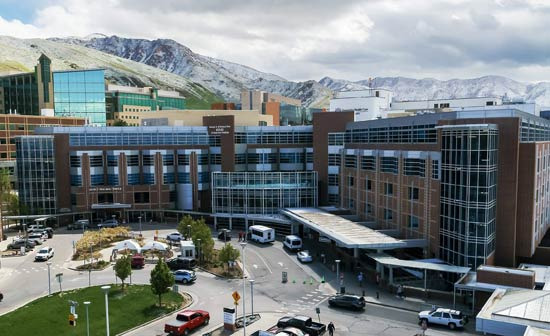
The first place to know about is the University of Utah Hospital.
Simply put, it's a teaching hospital operated by the University of Utah. It's not just a local general hospital; it's a leading academic medical institution in Utah that combines patient care, surgery, physician training, and medical research.
In the 2026-2027 U.S. News hospital rankings, it ranked first in the Salt Lake City metro area. This has happened not just once, but for 13 consecutive years.
It also operates a crucial Level I Trauma Center for major accidents. A team of trauma specialists is on standby 24/7 to treat emergency patients with severe traffic accidents or serious injuries.
Additionally, the Huntsman Cancer Institute, known for cancer treatment, is part of University of Utah Health. In the 2026-2027 rankings, it was rated number one for cancer treatment in Utah.
The John A. Moran Eye Center is well-known for eye diseases. In 2026, it ranked 9th in the U.S. for ophthalmology. There's also the Craig H. Neilsen Rehabilitation Hospital, which specializes in rehabilitation after strokes, spinal injuries, and brain injuries.
So, when it comes to serious illnesses like cancer, major surgeries, or severe trauma, there's no need to worry about whether treatment is available in Utah or if I need to go to another state.
The second place to know is the Intermountain Medical Center.
Located just south of Salt Lake City in Murray, it's the flagship hospital of Intermountain Health. It's a large hospital with over 500 beds and is also a Level I Trauma Center.
The advantage of this hospital is that it offers treatment for severe patients and various specialties, including cardiology, all in one place. It serves as a regional medical center for patients from Utah and surrounding states.
If I were living in the Salt Lake area, I would definitely remember the names University of Utah Health and Intermountain Health, as I would encounter these two healthcare systems frequently in real life.
The third is Intermountain LDS Hospital.
This hospital has a long history, having opened in 1905, so it's over 120 years old. It's no longer operated by the LDS Church but is now part of the nonprofit medical organization Intermountain Health.
Currently, it's a general hospital with about 260 beds, handling emergency care, cancer treatment, cardiology, orthopedics, childbirth, blood cancer and bone marrow transplants, and surgeries.
It's particularly accessible for people living in downtown Salt Lake City or the northern areas due to its proximity.
Interestingly, this hospital is preparing for another major change. In September 2026, Intermountain Health announced plans to build a new LDS Hospital at 745 South State Street in downtown Salt Lake City.
The new hospital will include an emergency room, intensive care unit, cancer treatment, women's health, orthopedics, cardiology, neurology, behavioral health, imaging, and surgical facilities. As the population of Salt Lake City grows, so does the medical infrastructure.
So, the healthcare environment in Salt Lake City feels more reassuring than I initially thought.
For everyday issues like colds or simple check-ups, I can go to a nearby clinic, but for critical moments like cancer, heart disease, major surgeries, or serious accidents, large hospitals like University of Utah Hospital and Intermountain Medical Center are close by.
When I was younger, I would prioritize choosing a home based on work, school, or shopping centers, but as I age, having a hospital nearby becomes a significant living condition.
In that sense, Salt Lake City is a place that, while not a massive city, has a solid large medical infrastructure. Looking back, my worries about hospitals when I first moved here were truly unfounded.
 ThunderBoys
 LuckyBird






 Diana Blues |

 Dragon Lee |

 Churros Train Conductor |

 Tora Tora |

 neroyo |

 Tan Sol |

 morvex37 |
 AliAluAlo Blog |

 loran |
 The Gelaton |
 Twist Kim |
 berlon93 |
 Physical Laws and Science |
 good thinking |
 Solo Yolo |
 Mr Oh |
 laro90 |
 San Diego TOP Idol |
 Round and Round Children's Song Kingdom |
 American Golf Course Travelogue |
 MEDBIO American Doctor Blog |
 Hot Seat Driver |
 bryvexi |
 koala organic farm |
 riverstone |
 My Antonio |
 California Information News |
 chilli chilli |
 Moon Su San |