

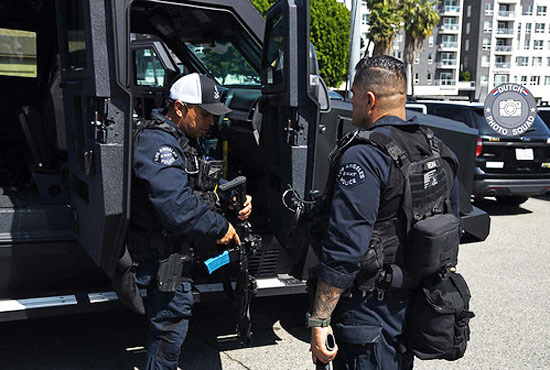
Some people associate LA with danger, while many believe it is relatively safe compared to areas like South LA.
However, the actual sense of security felt by the local Korean community is somewhat different. It is more accurate to view the city as having a gap between data and reality.
According to data from the Los Angeles Police Department for 2025, there were 230 homicides in LA, which is historically quite low.
It is clear that there have been improvements. However, the anxiety that Koreans feel is closer to "property crimes" than "life-threatening" situations.
In particular, vehicle-related crimes have become almost common knowledge in Koreatown, where leaving items in a car can lead to a broken window.
When speaking with Koreans living in Koreatown, many accept the notion that "theft is something that will happen at least once."
There are also certain areas that are recognized as problematic. Skid Row is a densely populated area of homeless individuals, creating tension even during the day, while Westlake and Watts are still perceived as high-crime areas.
In contrast, areas like Beverly Hills and Santa Monica on the Westside are definitely more stable.
Koreatown, where many Koreans reside, falls somewhere in between. There are generally no major issues during the day, but the atmosphere can change drastically at night depending on the block.
As a result, actual residents often say, "There are more dangerous areas than before."
In particular, crimes and fire issues related to homelessness have already reached a level that affects daily life.
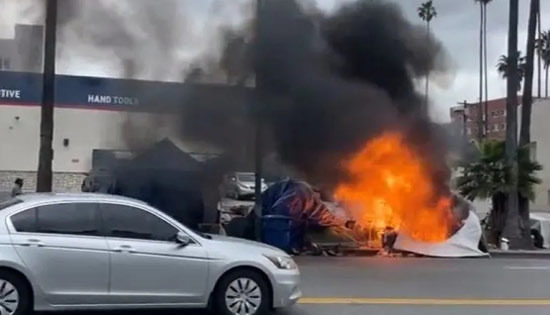
According to LAFD data, an average of over 40 homeless-related fires occur daily, which is not just a statistic but means "it can happen around me at any time."
The fact that fires, which were around 7,000 in 2020, exceeded 17,000 in 2025 signals that the situation is worsening.
 USAToday







 eatontown blog |
 Toaster Pizza Magic Show |
 US Embassy |
 fortbliss |
 Folding Instructions |
 Weekend Movie Blog |
 Beauty, Health, Lifestyle Blog |
 coloradoman |
 Superman Cat Blog |
 Noodle Noodle |
  Tonky |
  viroma |
  cookie |
  Live and that's it |
  Alright Twain |
  HAWAII Korean Church News |
  Amore |
  linex |
  Balancework |
  laro90 |
  MEDBIO American Doctor Blog |
  SWAT TEAM BLK |
  DREAM BIG |
  frostbite |
  330 Forever My Love |
  El Dorado |
  dralix58 |
  Gorama Round |
  Skydiving |