

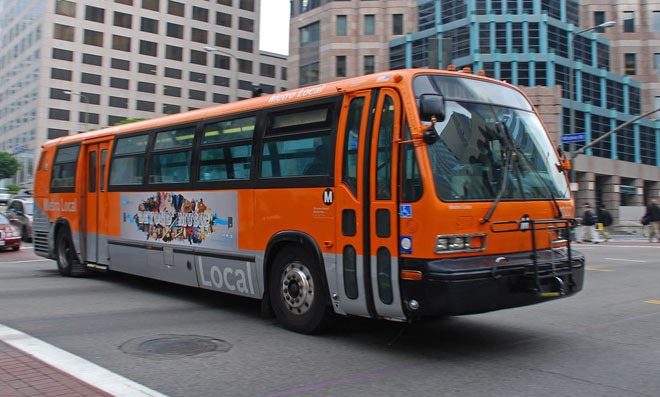
Living in LA, one might wonder if it is possible to get around without a car using public transportation like buses. Since cars are considered essential in this city, many think it would be inconvenient to travel without one, but the Los Angeles Metro (METRO) bus system is much better equipped than most people realize.
Of course, it is not as densely connected as cities like New York with its subway, but if you utilize the buses well, it is quite feasible to move between major tourist spots and downtown. The Metro bus covers all of Los Angeles County, with over 170 routes operating thousands of times a day.
In particular, the orange bus known as 'Metro Local' covers most roads as the basic route, while the red 'Metro Rapid' reduces the number of stops to quickly connect key areas. Additionally, the blue 'Metro Express' runs along highways, making it advantageous for long-distance travel. Thanks to this, downtown LA is connected to Hollywood, Santa Monica, USC, and Koreatown by bus.
With just a TAP card, you can freely use both buses and subways, and the prices are quite reasonable. A single ride costs $1.75, with free transfers within 2 hours, making it efficient for those who frequently travel short distances. The unlimited day pass is $5, which is especially useful for tourists looking to explore multiple areas in one day.
The TAP card can be purchased with cash on the bus, and if you recharge it through the Metro app, you can easily pay with just your smartphone. However, the buses do not always arrive exactly on schedule, which is still an area needing improvement.
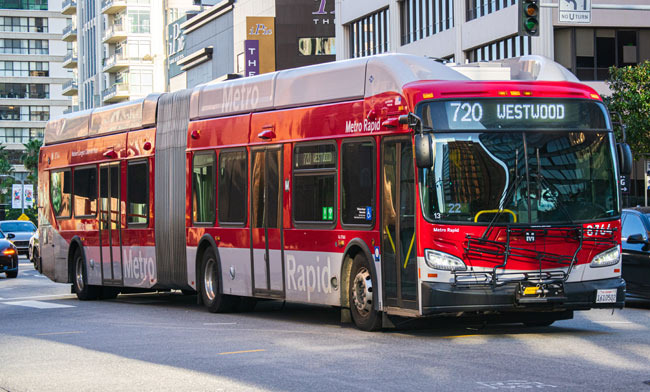
Therefore, locals often check 'real-time arrival information' on the Metro app or Google Maps before heading out. Also, since LA is so vast, it is often difficult to reach your destination in one bus ride, and transfers are frequently necessary.
However, the seats on the buses are spacious, air conditioning is well-maintained, and most routes operate low-floor buses, making it convenient for the elderly and disabled. Recently, the number of eco-friendly electric and hybrid buses has been increasing, contributing to a reduction in carbon emissions across the city.
From a tourist's perspective, the Metro bus is the most economical means to reach major attractions like the Hollywood Walk of Fame, LA County Museum of Art (LACMA), Getty Center, and Santa Monica Beach. For example, taking a taxi from downtown to Santa Monica costs over $50, but the bus fare is less than $2.
However, the routes can be complicated, and certain areas (especially some sections at night) may not be safe, so it is advisable to use Google Maps navigation if you are unfamiliar with the area. Additionally, some routes reduce or end service after 11 PM, so it is important to check the last bus times if you plan to return late.
Recently, the city of LA has been implementing a bus route overhaul project called the 'NextGen Bus Plan,' which aims to reduce wait times and improve service frequency on major routes to every 10 minutes. In fact, key lines connecting Koreatown, downtown, UCLA, and Santa Monica continue to operate consistently even during peak traffic hours.
The LA Metro bus breaks the stereotype that 'you can't do anything without a car.' While it may not be perfect, it is affordable and accessible enough to be a practical transportation option for students, tourists, and retirees.
Especially for those who find driving burdensome after retirement, it is said that they can still visit hospitals, markets, parks, and more by bus.







 Weekend Movie Blog |
 Beauty, Health, Lifestyle Blog |
 coloradoman |
 Superman Cat Blog |
 Awesome Blog |
  manchester |
  constant |
  Leapfrog Move |
  vibranto |
  Tora Tora |
  yellowbutter |
  Dolly |
  US Embassy |
  NYC saladbar |
  Finding Superfoods |
  lightyear |
  song bang |
  vexomo |
  Indiana Jones |
  meloncat |
  novapixel |
  mortrix |
  Esther 1983 |
  fortbliss |
  Moscow Kim |