
This morning, while brewing coffee, I glanced at the calendar stuck to my fridge. November is already halfway through.
That moment reminded me of last December. Two days before Christmas, I opened my wallet and found only two $20 bills, while I had five grateful faces to consider.
In the end, some were taken care of while others were not, and that discomfort lingered for quite a while. So this year, I decided to create a budget a month in advance.
First, it helps to know a number. According to a survey conducted by Bankrate at the end of October last year, 2,445 American adults were asked about year-end tipping.
The median amounts people planned to give were $50 for housekeepers, $25 for teachers, and $20 for mail carriers. All three amounts were the same as in 2023 and 2024.
The amount for babysitters decreased slightly from $50 to $48. In contrast, those who manage gardens or shovel snow saw a significant increase from $30 to $50.
Garbage collectors also saw an increase from $20 to $25. I thought everyone would be tightening their wallets due to rising prices, but it seems that those we see daily are actually receiving more.
However, the percentage of people who plan to tip babysitters dropped from 55% to 47%. This means fewer people are tipping, but the amounts from those who do remain largely unchanged.
So how should we create a budget? I divided people into three categories.
The first category includes those who come regularly to the house. This includes cleaners, babysitters, and dog walkers.
The Emily Post Institute, known for its etiquette standards, suggests giving housekeepers the equivalent of one week's pay or a gift. Dog walkers are also considered to receive about one week's pay.
If it's a regular babysitter, they recommend adding a small gift chosen by the child to the equivalent of one evening's pay. This category will take up the largest portion of the budget.
The second category includes those we see occasionally but rely on consistently, like the salon owner or the local dry cleaner.
For hairstylists, the standard is usually the cost of one service or a gift of equivalent value. I plan to give a card along with my next appointment.
The third category is the most confusing. This includes those with specific regulations, like mail carriers, garbage collectors, and delivery drivers.
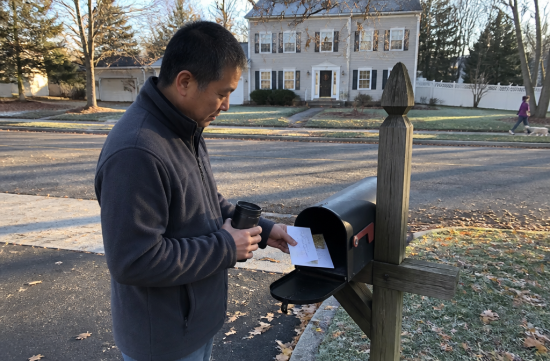
Mail carriers are federal employees and cannot accept cash. Checks that can be converted to cash or universal gift cards are also not allowed, regardless of the amount.
What is allowed is a non-cash gift worth $20 or less at a time. Gift cards that can only be used at specific stores and are worth $20 or less are acceptable, and the total amount received from one person cannot exceed $50 in a year.
So giving a mail carrier an envelope with $50, while well-intentioned, puts them in an awkward position. A coffee shop gift card along with a handwritten note is just right.
Delivery companies also have their own internal regulations, so a snack basket is a safe bet instead of cash. Many people leave water and snacks at their front doors.
Garbage collection varies by neighborhood. In areas operated directly by the city or town, cash may be prohibited, so it's best to check with the town's website or office first.
For private companies, Emily Post's guidelines suggest a range of $10 to $30 per person. If there are three people on a team, it can add up quickly, so be sure to multiply by the number of people.
For teachers, the first step is to check the school's regulations. Some schools set limits on personal gift amounts.
The budget doesn't need to be elaborate. Five columns for name, relationship, method, amount, and delivery date are sufficient, and I wrote mine in my phone's notes.
The method column is surprisingly important. By deciding in advance whether it will be cash, a gift card, or a gift, I can prepare everything at once when I go shopping.
After listing everyone in the three categories, I write the total in the last column. When I first did this for my household, I was honestly surprised at how much it added up to.
So I established an order. I will prioritize those who have genuinely helped our household throughout the year, and then distribute the remaining amount among others.
I plan to stop by the bank this week to withdraw new bills for those who need cash. Writing names on envelopes and storing them in a drawer will prevent any last-minute rush in December.
The amounts mentioned here are merely guidelines and not definitive answers. If it's a tight year, reducing the amounts and substituting with a heartfelt card is perfectly acceptable.
Still, if it were me, I would definitely stick to one principle: if you're going to give, decide in advance, and if you can't, at least express your gratitude clearly.
Thinking about the hands that empty our trash cans in the chilly morning air makes the 30 minutes spent creating this budget worthwhile. This year, I hope to make December 23rd a little less hectic for myself.
 Chicago773
 MellowSky71


 choi family |

 content |

 Carolina border |

 Que Buena |
 juicylol |
 morninpo |

 breezem |

 silverleaf |


 strawberry |
 US Regional Information Local News |
 USA Business News |
 Blondee |
 E whisper |
 Potato House |
 freshmint |
 Ansaso |
 Golado |
 babybay |
 honeycom |
 French Macarons |
 Exploring American Life Information |
 Sunshine Blog |
 Community Cross |
 Sayonara H |
 What can make money? |
 Information Search LifeMAN |
 morvex37 |
 neontrail |