
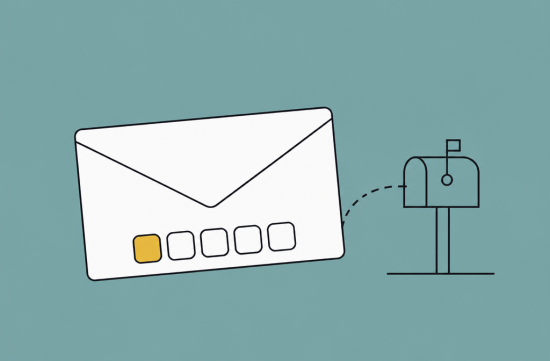
A few days ago, while ordering year-end gifts online, I paused at the payment screen. I mindlessly typed five digits into the ZIP code field and suddenly realized I had never wondered what ZIP actually stands for.
Is it related to zippers, or is it an abbreviation for a compressed file? It's funny that I type this word several times a day while living in the U.S., yet I didn't know its meaning.
Upon researching, I found out that it stands for Zone Improvement Plan. In Korean, it translates to something like "district improvement plan," which sounds much more administrative than I expected.
This system started on July 1, 1963. At that time, the U.S. Postal Service, which was then known as the Post Office Department, introduced five-digit numbers nationwide.
Interestingly, it wasn't mandatory at first. Even without it, mail was delivered, and the post office was the one asking people to use it.
Why was there a sudden need for such numbers? The reason was simple. After World War II, the volume of mail doubled, and the manual sorting method hit its limits.
In fact, there had been similar attempts before. In 1943, postal zone numbers were assigned to 124 major cities, using a method where one or two digits were added after the city name.
If you've seen addresses in old American movies or letters with numbers following the city name, that's the postal zone number. This later evolved into the last two digits of the ZIP code.
The person known as the father of the ZIP code is Robert Moon, a postal inspector. While working in Philadelphia, he proposed the idea of a three-digit number to indicate regional processing facilities in 1944.
However, that proposal wasn't adopted immediately. It took nearly 20 years for it to be combined with the existing two-digit zone numbers to create the five-digit system we have today. It's a reminder that even good ideas need the right timing.
There was also a clever reason for naming it ZIP. In English, "zip" conveys a sense of speed, suggesting that mail travels quickly. This was likely the image they aimed to project.
They put considerable effort into promotion as well. A character named Mr. ZIP, resembling a mail carrier, was first introduced at a postmaster convention in October 1962 and later appeared on stamps and posters.
In modern terms, this could be seen as one of the earliest examples of public agency mascot marketing. Since it wasn't mandatory, they needed to appeal to people's hearts, and choosing a cute character was a smart move even by today's standards.
The five-digit numbers have their own order. The first digit represents a large region of the country, with the Northeast being 0 and the numbers increasing as you move west.
Our neighborhood in Nevada falls under the 8 region, grouped with mountainous states like Colorado, Utah, and Arizona.
The numbers for the Las Vegas Valley start with 89. When I first moved here and tried to memorize the address, I only saw it as a block of numbers, but now just seeing 89 makes me think, "Oh, that's nearby."
The second and third digits indicate the regional processing facility, while the last two represent smaller post offices or delivery areas. This means Robert Moon's three digits and the old zone numbers are still intact.
In 1983, ZIP+4 was introduced. This adds four more digits after a hyphen to narrow it down to specific buildings or blocks.
I've noticed that when I enter my address on delivery sites, sometimes four digits are automatically added at the end, and that's what this is. It feels like those previously unnoticed numbers are finally getting their names.
Interestingly, ZIP codes are now used more outside of mail. They are asked for when paying at gas stations, determining insurance rates, or checking delivery areas.
In a way, ZIP codes have become the shortest summary of where someone lives in the U.S. It's a bit strange to think that a number created to expedite mail delivery is now used like an identification number in daily life.
Some of you might remember when postal codes in Korea changed to five digits. It's interesting that despite different numbering systems, the ultimate goal of connecting people and goods faster is similar across countries.
Through this exploration, I realized that within those five digits lies a lot of thought from a nation. The surge of letters after the war, the manual sorting, and even the character created to persuade people.
The next time I encounter the ZIP field at the payment screen, I'll probably think of the stiff name Zone Improvement Plan first. And also of the people who first wrote this number in the summer of 1963.
Personally, I'd like to give a nod to the person who chose the name ZIP. If they had used the full term, it probably wouldn't have stuck in our minds for so long.
Why not check what region the first digit of your ZIP code belongs to? The numbers you use every day might suddenly look a little different.
Starting from such trivial curiosities and gradually understanding the nuances of life in America is a small joy for me. I'm looking forward to what other everyday things will turn into questions next.
 joyfulvalleybuilder2004
 CandyPower






 moodansa 77 |

 Conflite Teacher |

 US Snowboard Information Exchange |

 There Are Such Things in the World |

 San Diego TOP Idol |

 nero kim |
 tarve7 |



 Shining Our Own World |
 Raymond K. |
 gravity |
 714 Success Era Real Estate |
 Investment Beginner Company Information Encyclopedia |
 musicque |
 The Gelaton |
 ovelion |
 Chicagonian |
 Freedom Yea |
 AZ Road Master |
 glenix39 |
 Something is popping in the situation |
 orvella |
 vella |
 comets |
 Banana |
 Yes Dorian |
 Minnesota Sonata N |
 zentar |