

There's one living expense that no one properly warns you about before moving to Fort Myers: the summer electric bill.
It's easy to think that utility costs will be low in Florida because winter heating bills are minimal, but after experiencing a summer here, your perspective changes. Instead of heating costs, you'll be paying for air conditioning.
In the Fort Myers area, electricity is supplied by either FPL (Florida Power & Light) or LCEC (Lee County Electric Cooperative), depending on your address. The choice of company is determined by your residential area, not by consumer preference.
The trouble starts around May. As daytime temperatures rise to around 90 degrees and humidity increases, you'll find yourself running the air conditioning practically all day. There aren't many nights cool enough to open the windows. The humidity is so high that if you turn off the air conditioning, your home quickly becomes damp.
Electric bills vary significantly based on the size of the home, the year it was built, insulation, and the condition of the air conditioning unit. A well-maintained small one-bedroom apartment might cost around $100 to $150 a month, but during the peak summer months, it's safer to budget for $150 to $200 or more.
For a two-bedroom apartment or a home around 1,000 to 1,300 square feet, you can expect summer bills to be approximately $150 to $250. If the building is older with poor window insulation and an aging air conditioning unit, it's not unusual for bills to exceed $250 to $300.
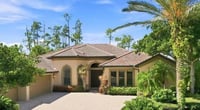
For single-family homes over 2,000 square feet, the situation changes again. If you're running a pool pump and setting the air conditioning to a low 72 to 74 degrees, your bill could easily exceed $300 to $400 in the summer. In larger homes or those with poor energy efficiency, bills can approach $500.
Conversely, winter is quite comfortable. Between December and February, there are days when you hardly use the air conditioning, and you don't need to run heating like in northern states. A home that incurs a $250 electric bill in summer might see that drop to $100 to $150 in winter. Smaller apartments can even see bills fall below $100 in some months.
Gas costs vary by home. In Fort Myers, many all-electric homes use electric ranges, electric water heaters, and heat pumps, so it's common to find homes with no separate gas bill. Therefore, when looking at rental listings, it's wise to inquire not only about the electric bill but also whether the water heater, range, dryer, and heating are electric or gas.
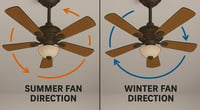
The most practical way to reduce your electric bill is by adjusting the air conditioning temperature. There can be a significant difference in usage between 72 degrees and 78 degrees. Raising the temperature a bit when you leave and using ceiling fans can also help. Check the air conditioning filter every month or two, and it's advisable to use blinds or curtains on windows that receive strong sunlight.
Especially when renting, don't rush to sign a lease just because the house looks nice; check the age of the air conditioning unit first. An older two-bedroom with a 15-year-old air conditioning unit can have a significantly different electric bill compared to a newer two-bedroom with a high-efficiency system, even if both are set to the same temperature.
So, when calculating living expenses in Fort Myers, budgeting around $100 a month for electric bills can be misleading. For a two-bedroom, it's better to plan for an average of $150 to $200 a month, with the possibility of exceeding $250 in summer. Florida saves on winter heating costs but spends on summer air conditioning. To avoid being shocked by your first summer bill, it's crucial to thoroughly check the air conditioning and insulation conditions when signing a lease, just as you would with the rent.
 Dailyfun
 midnightcitywalker1942





 Valley Hong |

 Mr Oh |

 ollege Mom |
 Helpful Life Stories |
 prixon74 |

 Way to easy |
 seouljung |
 Florida Gario |
 chocopup |
 Angeles Choi |
 My Heart Popper |
 comova |
 vintago |
 Sky Way |
 Top Beaches |
 folyfoly |
 ground |
 averagestudent |
 hot chocolate |
 SODA MAKER |
 james kim |
 All About Cars |
 lomira98 |
 calmbridge |
 oneonly |
 Brighto |
 racuse |
 Total Beauty |