

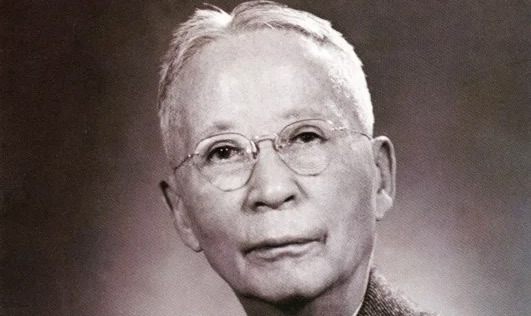
When one reaches their 50s, they often look back on the past. The path I have walked, and the people who stood on that path.
Recently, the name 'Seo Jae-pil' suddenly came to mind. A figure that briefly appeared during my studies of Korean history.
I only remembered him as the 'founder of the Independence Newspaper', 'participant in the Gapsin Coup', and 'a doctor active in the United States'.
However, it turns out he was not just a simple independence activist. He was the first person to break the framework of the Joseon dynasty and prove himself beyond its boundaries.
Seo Jae-pil was born on January 7, 1864, in Ganae Village, Munduk-myeon, Boseong-gun, Jeollanam-do.
He was the second son among four sons and one daughter of his father, Seo Gwang-hyo, who served as a local magistrate, and his mother from the Seongju Lee clan.
As a child, he became the adopted son of Seo Gwang-ha, who was a sixth cousin of his father, and moved to Jinjam (now Daejeon) in Chungcheong-do.
Thanks to this, he connected with the powerful Kim clan of Andong and encountered new opportunities.
The most important connection was meeting Kim Ok-kyun while staying at the home of his adoptive mother's brother, Kim Seong-geun.
This meeting became a turning point that changed Seo Jae-pil's life.
He was a gifted student who studied at Sungkyunkwan.
In 1879, Seo Jae-pil ranked first in the examination presided over by the king and entered Sungkyunkwan as a student.
There, he dreamed of reforming Joseon while reading Japanese books with Kim Ok-kyun, Park Yeong-hyo, and Seo Gwang-beom.
The realization that Joseon could not continue as it was, and the will to act for change, were already burning fiercely within these young men in their late teens.
In 1882, he passed the special examination for the literary degree under King Gojong and subsequently took on various official positions, eventually embarking on a journey to study in Japan.
He graduated from the Toyama Military Academy in 1884 and returned to Korea, joining plans to establish a new military academy in Joseon.
However, due to the interference of the moderate reformists, this military academy could not last long and was abolished. His frustrations during this period must have been quite deep.
For a young man dreaming of change without a prepared path, Joseon was not a very generous land.
The event that etched his name in history was the Gapsin Coup of 1884. Along with Kim Ok-kyun and Park Yeong-hyo, he experienced a three-day reign.
This coup, raised with dreams of reform, collapsed instantly due to the intervention of the Qing dynasty, and Seo Jae-pil fled to the United States via Japan to save his life.
At that time, he was 20 years old. He became a traitor in Joseon and a wanderer with nothing in America.
But here, an amazing twist begins.
In America, he started his life all over again. Despite the differences in language, culture, and skin color, he did not give up.
He studied just like Americans, took the same exams, and earned his Doctor of Medicine (M.D.) degree from Columbia University in 1892.
This was the first doctorate awarded to a Korean in the United States.
Afterward, he obtained American citizenship and worked as a doctor, establishing himself in American society. However, his heart for Joseon did not easily fade away.
He returned to Joseon and founded the 'Independence Newspaper' in 1896. It was the first private newspaper written in Hangul, and it itself represented the change in Joseon.
"The owner of the country is the people."
This statement he proclaimed through the Independence Newspaper may seem obvious to us today, but at the time, it was a revolutionary sentence.
He was a politician, a doctor, a journalist, and an educator. But above all, he was a person who transcended the limits of the 'system' of Joseon.
Joseon could not accept him, and America paradoxically nurtured him.
Now in my 50s, I feel this figure even more profoundly.
He was not just someone who fought for independence, but a pioneer who proved through his life that 'not just a nation, but individuals can change history.'
Seo Jae-pil is someone we must learn from today.
These days, the world is changing rapidly. It is difficult to live a lifetime with just one profession as in the past.
The more so, I think of Seo Jae-pil.
Because of people like him, who transcended borders, professions, and languages to carve their own paths, we are who we are today.
He was a wanderer but had a center, a displaced person but a global citizen.
And ultimately, he was a 'Korean in the world' who loved his homeland more than anyone.




 Korean Mom |
 novapixel |
 Peter Pan Pet |
 horse |
 Sunset Oregon |
 Nuchuhan Exploration BLOG |
 Sugar Cream Door Bulletproof Noodles |
 Moscow Kim |
 US Embassy |
  My NYC |
  moo moo |
  Mr Oh |
  forevergee |
  festival |
  manchester |
  constant |
  Leapfrog Move |
  vibranto |
  Tora Tora |
  yellowbutter |
  Dolly |
  NYC saladbar |
  Finding Superfoods |
  lightyear |
  song bang |
  vexomo |
  Indiana Jones |