

In Washington DC, there can be significant differences in assigned school scores even with just a two-block difference. I have seen properties where one side had a score of 9, while the adjacent area had a score of 5.
While it may be convenient to summarize these differences with a single number, the reality is more complex. The GreatSchools rating reflects test scores, academic growth, and college readiness, each contributing 33% to the overall score. College readiness is calculated based on SAT/ACT results, four-year graduation rates, and participation rates in AP, IB, and dual enrollment programs. Recently, the weight of equity metrics, which assess the performance of disadvantaged students separately, has increased. If this metric is low, the overall rating may be lower than expected, even if the average performance of all students is not bad.
It can be helpful to compare actual ratings side by side. Garrison Elementary School has a score of 9 with a parent rating of 4.6, and Benjamin Banneker High School also has a score of 9 with a rating of 4.5. In contrast, Deal Middle School has a score of 10 with a rating of 4.0, while Hardy Middle School has a score of 9 with a rating of 4.7. Even with the same rating, parent scores can vary, and there are cases where ratings and scores move in opposite directions.
The reason for these differences is that ratings and reviews focus on different aspects. Ratings are based on objective metrics like test results and college readiness indicators. Reviews capture aspects that are harder to quantify, such as school atmosphere, communication, and after-school programs. To get a clearer picture of a school, it's important to consider both ratings and reviews. If a school has a high rating but low reviews, it's advisable to read a few reviews to understand the reasons behind it.
To elaborate on college readiness, it includes not only SAT and ACT results but also participation rates in AP, IB, and dual enrollment programs. AP and IB are advanced courses where high school students take college-level classes and exams, while dual enrollment allows students to earn community college credits while still in high school. Higher participation rates lead to better college readiness scores.
Equity metrics assess the performance gap between disadvantaged student groups and their peers. A smaller gap results in better scores, while a larger gap can lead to lower overall ratings, even if the average scores are high. In cities like DC, where there are significant disparities by district, this metric often becomes a key variable in determining ratings.
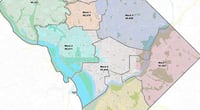
One aspect that is easy to overlook when comparing ratings is school district boundaries. DC has a finely divided school assignment system, so even if two areas look similar, it's common for the assigned schools to change with just one road in between. When viewing properties, it's safer to verify the school names on the DC Public Schools district map with the exact address rather than relying solely on real estate listings.
DC operates a centralized application system called My School DC, which allows you to check the list of charter schools you can apply to in addition to your assigned school. If you're not satisfied with the assigned school rating, exploring other options through this system can be a good strategy.
It's also beneficial to look at rating trends over time. Schools that have improved ratings in recent years may have introduced new programs or undergone staff changes, while schools with declining ratings should be examined for reasons in reviews or district news. The student-to-teacher ratio is also information that may not be captured in ratings, so it's wise to check that separately.
If you have the same budget, don't just look at one school with a score of 9; consider nearby schools in the 8 range along with commuting distance and reviews to make a more informed decision. For families moving to DC from other states, it's also good to check that property tax and rental regulations may differ from their previous residence. This article is not investment or legal advice, and consulting a professional before making any agreements is recommended.
 Stop206
 DreamRoad







 moo moo |
 ultron78 |
 garlic bread |
 Sugar Cream Door Bulletproof Noodles |
 urbanmint |
 El Dorado |
 Eldorado 88 |

 American Travel Cruise Information |
 Another Eden Channel BLOG |
  round1 |
  Way to easy |
  musicque |
  road98 |
  Churros Train Conductor |
  gleeful |
  Burbank Lee |
  Olivia's Blog |
  Bushing Around Life |
  Active |
  Cherokee Rose |
  Kor. Master |
  Holey Moley |
  Conflite Teacher |
  Hodong Prince Over Flex |
  Mist inn |
  citrus pop |
  Onion Ring |
  phoenixia |
  viewtop |