

Omaha is the largest city in Nebraska, with a population of over 500,000. It is often praised for its relatively low cost of living and high quality of life, but some areas within the city have crime rates significantly higher than the national average, making thorough research necessary before moving. Overall, Omaha's crime index ranks in the middle to upper tier among U.S. cities, and the large variance in violent and property crime rates means that the neighborhood you choose to live in plays a crucial role in your perceived safety.
One area frequently mentioned as having the weakest safety in Omaha is North Omaha. Specifically, the area between 24th Street and 30th Street, as well as around Ames Avenue, is classified as a hotspot for gun violence, robbery, and drug-related crimes. According to crime statistics from NeighborhoodScout and the Omaha Police Department, the violent crime rate in this area can be 2 to 3 times higher than the Omaha average. Historically, this area has also been concentrated with economic disadvantage and poverty, leading to ongoing discussions about urban redevelopment.
Some neighborhoods in South Omaha also require caution. In particular, certain blocks between Q Street and L Street, as well as the area south of 24th Street, are classified as places where caution is advised when walking at night. This area is relatively safe during the day as a vibrant commercial district, but the risk of crime increases at night. Gang-related activities and property crimes (such as vehicle theft and residential burglary) have been reported in these areas.
In contrast, areas known for better safety in Omaha are the western and southwestern suburbs. Elkhorn, Papillion, La Vista, and Bellevue are evaluated as having low violent crime rates and stable residential environments. Elkhorn, in particular, has maintained its quiet suburban character even after being annexed by Omaha, and it has a strong sense of community with many family residents.
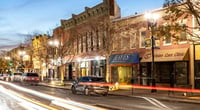
Downtown Omaha is relatively safe during the day, but at night, especially late on weekends, incidents such as assaults and property damage occasionally occur around areas with a high concentration of bars. Downtown has recently revitalized due to redevelopment, but it is advisable to avoid less populated areas like parking lots and alleys when moving around at night alone.
The Omaha Police Department provides an online crime mapping tool that allows you to check recent crime history near specific addresses. It is recommended to use this tool to review the crime history for the past 3 to 6 months for any address before signing a rental agreement. Additionally, private crime data platforms like SpotCrime and NeighborhoodScout can also be useful for comparative reference.
Based on the safety perceptions of local residents, there is a notable disparity in safety across Omaha, particularly between the east-west and north-south directions. Generally, there is a strong perception that areas south of Dodge Street, north of downtown, are safer than those to the north. If you are considering a move, visiting neighborhoods during the day, at night, and on weekends to gauge the atmosphere is the most practical approach.
In conclusion, Omaha is a city that should be evaluated by neighborhood rather than as a whole. The western suburbs and southeastern Bellevue areas are generally safe and quiet, while the northern and some South Omaha areas require thorough investigation before actual residency. For a more accurate assessment, it is beneficial to reference both the official statistics from the Omaha Police Department and reviews from actual resident communities.
 CornShoe
 AssaultMon






 Tesla X |
 Another Eden Channel BLOG |
 Victory 1988 |
 Smile Face |
 Helpful Life Stories |
 lunexa |
 Nebraska Center Director TOP |
 The Good Life |
  Doori Ark |
  Rainbow Bridge to the Sky |
  Sunny Fullerton |
  U.S. Weather Bureau News |
  GOGO SING |
  Gold Bar |
  Banana Style Life |
  Old English |
  urbanmint |
  forestcloud |
  forever young |
  Arlington house |
  liquid asset |
  Who's watching? |
  eclipse |
  quietwave |
  Hajiwon Blog Hair Salon |
  hoosierdaddy |
  saffronroute |