

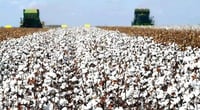
San Joaquin Valley is one of the main areas in California where cotton cultivation is actively taking place, and the unique climate and fertile soil of this region provide ideal conditions for producing high-quality cotton. This area accounts for a significant portion of cotton production in the United States and is particularly noted for its environmentally friendly and sustainable agricultural practices.
San Joaquin Valley has a Mediterranean climate characterized by mild winters and dry summers, providing the optimal environment for cotton growth. The temperature difference between day and night contributes to the improvement of the fiber quality of cotton. Additionally, the deep and fertile soil in this region allows cotton roots to grow deeply, aiding in increased yields.
California's water scarcity issue affects agriculture throughout the San Joaquin Valley, but cotton farmers are maximizing water use efficiency by utilizing precision irrigation systems, water recycling, and drone technology. These efforts contribute to saving water resources and reducing environmental impacts.
The cotton produced in San Joaquin Valley has long fibers and excellent quality, making it a raw material for high-end fabrics and industrial fibers. In particular, Pima Cotton, widely used in the United States, is one of the representative varieties grown in this region and is highly popular in the global market.
Cotton farmers in San Joaquin Valley face challenges such as water scarcity, climate change, and environmental regulations, but they are overcoming these through technological innovation and sustainable agricultural practices. Precision agriculture technology, automated harvesting machines, and data-driven agricultural management systems are enhancing the efficiency of cotton production.
Cotton plays a vital role in the local economy of San Joaquin Valley, providing jobs in farming, processing facilities, transportation, and distribution industries. The cotton industry also supports local communities and agricultural ecosystems, contributing to the sustainability and competitiveness of California agriculture.
San Joaquin Valley is a representative case where the tradition of cotton cultivation meets cutting-edge technology, being recognized as a leading region for future-oriented agricultural models.
Cotton cultivation in California is once again gaining attention. Utilizing California's unique climate and soil conditions, cotton cultivation has emerged as a new challenge and innovation in the agricultural sector.
Agricultural experts evaluate that California's mild climate and dry summers are favorable for cotton growth. However, amid ongoing concerns about water scarcity and drought, farmers are actively adopting efficient water management systems and eco-friendly cultivation technologies to overcome difficulties. These technological innovations significantly contribute to improving cotton quality and enhancing productivity.
Local agricultural organizations have stated that while cotton production in California is small-scale, it is competitive in terms of quality and brand value. Farmers are increasing production and management efficiency by utilizing precision irrigation systems, drones, and automation devices, supplying high-quality cotton to the market.
Moreover, in California, there is an expanding movement for collaboration between the government and the private sector for sustainable agriculture. Various projects and research are underway to achieve both environmental protection and production efficiency, and investments for the future of cotton cultivation are also increasing.






 Weekend Movie Blog |
 Beauty, Health, Lifestyle Blog |

 coloradoman |
 Superman Cat Blog |
 Noodle Noodle |
  Tonky |
  viroma |
  cookie |
  Live and that's it |
  Alright Twain |
  eatontown blog |
  HAWAII Korean Church News |
  Amore |
  linex |
  Balancework |
  laro90 |
  MEDBIO American Doctor Blog |
  SWAT TEAM BLK |
  DREAM BIG |
  frostbite |
  330 Forever My Love |
  El Dorado |
  dralix58 |
  Gorama Round |
  Skydiving |