

These days, one of the most common questions from tenants is, "If I live in a single-family home, can my landlord raise the rent by more than 10%?"
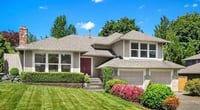
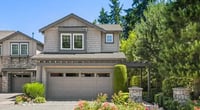
To put it simply, just because it's a single-family home doesn't mean it's exempt from the rent cap. There are quite a few misleading explanations circulating online, so I'd like to clarify this today.
First, let's look at the numbers. The Washington State Department of Commerce has announced that the maximum rent increase for 2026 is 9.683%.
This cap will apply from January 1 to December 31, 2026. The basis for this is HB 1217, known as the Rent Stabilization Act, which was signed by Governor Ferguson in May 2025.
The calculation method is simple. The lower of 7% plus the Consumer Price Index (CPI) or 10% will be the cap for that year.
The price index used here is the 12-month change rate of the Consumer Price Index for the Seattle-Tacoma-Bellevue area as of June. When the data from the Bureau of Labor Statistics comes out in mid-July, the Department of Commerce will immediately announce the cap for the following year.
So, the numbers for next year are already out. On July 15, 2026, the Department announced that the cap for 2027 will be 10%.
The value of 7% plus the local inflation rate exceeded 10%, hitting the legal maximum. I felt that 9.683% was quite high when I first saw it, but seeing it hit the ceiling in just one year was honestly a bit disheartening.
Now, let's get to the main topic: the exceptions. The categories exempt from the cap are defined in state law RCW 59.18.710.
First, newly constructed buildings that received their certificate of occupancy within the last 12 years. This is calculated based on the date of the increase notice.
Second, properties owned by public housing authorities or non-profit organizations where rent is already regulated under other laws or low-income housing programs. Buildings that have entered into Low-Income Housing Tax Credit (LIHTC) agreements also fall under this category.
Third, tenants who share a bathroom or kitchen with the landlord.
The fourth point is often confusing. This applies to single-family homes where the landlord lives directly in the property and rents out two or fewer rooms or units, including accessory dwelling units (ADUs).
Fifth, if the landlord resides in one unit of a duplex, triplex, or fourplex. The landlord must have been using that unit as their primary residence when the tenant moved in.
As you can see, the key to the exceptions related to single-family homes is whether the landlord lives there. If the landlord lives elsewhere and rents out the entire single-family home, the cap generally applies.
Additionally, there are caveats to these residency-based exceptions. If the owner is a REIT (Real Estate Investment Trust), a corporation, or an LLC with corporate members, they cannot claim the exception even if the landlord resides there.
Some blogs have stated that "single-family homes not owned by corporations are exempt," but reading the legal text shows that it's not that broadly defined. Simply being a private landlord is not enough; the residency requirement must also be met.
Regardless of whether an exception applies, there are rules that must be followed. Rent increases must be communicated in writing at least 90 days in advance.
Also, during the first 12 months after moving in, rent cannot be increased regardless of the amount. This applies to all types of housing.
If a landlord wants to raise the rent above the cap based on an exception, they must provide supporting facts in the increase notice regarding which exception applies. If such an explanation is not included in the notice, it gives tenants a reason to question it.
For reference, the rent for mobile home community lots is subject to a separate annual cap of 5%. This number does not change every year.
I also want to point out that it's early October. If you plan to raise the rent in January, you'll need to provide a 90-day notice, so many people may start receiving notices around this time.
If the increase takes effect in 2027, the cap should be considered 10%. When you receive a notice, it's a good first step to calculate what percentage it is compared to your current rent.
Next, check if your home might qualify for an exception. You can look up the owner's name in the county property records to see if it's an individual or a corporation, and check the age of the building.
For landlords, the same applies. If you're renting out a single-family home as an investment, it's safer to plan your increases within the cap rather than relying on exceptions.
If the situation is unclear, I recommend checking the Department of Commerce's HB 1217 information page or free legal information sites like WashingtonLawHelp first. For specific disputes, it's best to consult local tenant support organizations or attorneys.
In my opinion, this law is more of a safeguard against sudden spikes in rent rather than a system that caps rent. Even 10% is not a small number for households, so it's wise to budget ahead of the renewal period.
This article is based on the announcements from the state Department of Commerce and the texts of RCW 59.18.700 and 59.18.710 as of early October 2026. Please verify the original text before making any important decisions, as legal interpretations or specific conditions may change.
 MaskTroll





 |
| 
 Premium Gas Camp |
 CA Real Estate |
 cheesepup |
 breezem |
 Real Estate Agent USA |
 PETRO Vatican Shrine |
 Time Management Enthusiast |
 Bacon King Blog |
 Good Neighborhood, Wealthy District Information |
  Pirate Ship Popcorn Maker |
  USA Business News |
  Samsung My My |
  bubblo |
  tartbear |
  Washington Monument |
  Forever Young |
  crystalx |
  Spaghetti Flying Religion |
  lunarpath |
  Another Eden Channel BLOG |
  sprinkletop |
  bongo |
  savannah choi |
  Successful Manager Kim's Team |
  crystalo |
  Canvas Pro Blog |
  Cap Com |
  nixxon |