
When I was young and first learning English, one of the songs I sang was "Mary had a little lamb." It's the story of a little lamb that followed Mary to school.
However, this week, before going grocery shopping for Thanksgiving, I stumbled upon an interesting fact. The person who wrote that nursery rhyme is actually the key figure behind the Thanksgiving we celebrate today.
At first, I honestly thought it was a joke. A nursery rhyme writer and a national holiday? There seemed to be no connection at all.
The main character's name is Sarah Josepha Hale. This poem was first published in a children's poetry collection titled Poems for Our Children in 1830 under the title "Mary's Lamb."
But Hale's real career was not as a nursery rhyme writer. She was the editor of Godey's Lady's Book, the most influential women's magazine in America at the time.
She held that position for an impressive 40 years, from 1837 to 1877. The magazine was published in Philadelphia, and Hale lived there from 1841 onward.
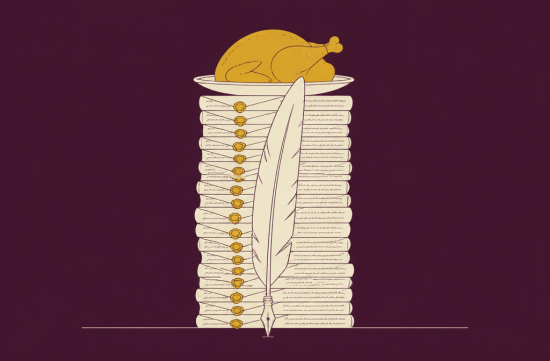
This is important because, at that time, women did not have the right to vote. Hale's only weapons were her pen, the printed page, and immense perseverance.
Back then, Thanksgiving was not celebrated on a common national date like it is today. Each state's governor decided the date, and some places didn't celebrate it at all.
Hale began her campaign in earnest around 1846. She published editorials in her magazine and introduced turkey and pie recipes, gradually turning this holiday into a cultural event.
Outside of the magazine, she wrote letters. To governors, congressmen, and even presidents.
Every fall, editorials with the same arguments were published again. Even if she was rejected, she would write again the following year. It was similar to a consistent campaign content strategy we see today.
Presidents Taylor, Fillmore, Pierce, and Buchanan received her letters in succession, but no one took action.
If it were me, I think I would have given up after the second rejection. Just sending three unanswered emails can be disheartening, and this was over a span of more than ten years.
Then, on September 28, 1863, Hale sent a letter to President Lincoln in Philadelphia. It requested that Thanksgiving be established as a national holiday on a fixed date.
The timing was quite peculiar. That summer, the Battle of Gettysburg had occurred, and the nation was deeply divided and in the midst of war.
Just a few days later, on October 3, Lincoln issued a proclamation to celebrate Thanksgiving on the last Thursday of November. It is said that the draft was written by Secretary of State William Seward.
From 1846 to 1863, it was exactly 17 years. Of course, the National Park Service also counts from the first time she wrote in 1827, calling it a 36-year journey.
What amazed me the most was that one person endured for so long for a single goal. In today's terms, it was truly a long game.
Interestingly, this date was shaken up again later. In 1939, President Roosevelt moved Thanksgiving up a week to extend the holiday shopping period.
The backlash was immense. It even earned the nickname "Franksgiving" by combining Franklin and Thanksgiving.
For several years, the dates varied by state, creating confusion as if there were two Thanksgivings. It was the very situation Hale had wanted to eliminate.
Eventually, Congress stepped in and established the fourth Thursday in November as a federal holiday, which Roosevelt signed into law on December 26, 1941. That's why this year Thanksgiving falls on November 26.
Hale passed away at her home in Philadelphia on April 30, 1879. She now rests at Laurel Hill Cemetery on Ridge Avenue in Philadelphia.
If you live near Philadelphia, it seems like a place worth visiting during the holidays. It's not an extravagant monument but rather a modest grave, which might make it even more appealing.
I want to address one thing with balance. The image of the "peaceful first feast between pilgrims and natives" that Hale spread is a much simplified story compared to actual history.
As a result, some Indigenous communities observe this day as a day of mourning. I believe that knowing both perspectives is the true meaning of gratitude.
Still, Hale's core dream was clear. It was for a nation torn apart by war to at least sit at the same table for one day.
For someone like me, who grew up as an immigrant, Thanksgiving initially felt like someone else's holiday. But after learning this story, it looks different to me.
A woman who had no voting rights changed the nation's calendar with each letter she wrote. It feels like proof that a small voice can still make a difference.
This year, if someone at your table asks, "Who created Thanksgiving?" try answering like this: The person who wrote Mary's little lamb, the one who wrote letters for 17 years.
 TOUCHE
 AllOrNothing








 moodansa 77 |
 Conflite Teacher |

 US Snowboard Information Exchange |

 There Are Such Things in the World |

 San Diego TOP Idol |

 blueman |
 Fransco Family |

 viba viba |

 bubblo |

 Shining Our Own World |
 Raymond K. |
 gravity |
 714 Success Era Real Estate |
 Investment Beginner Company Information Encyclopedia |
 musicque |
 The Gelaton |
 ovelion |
 Chicagonian |
 Freedom Yea |
 AZ Road Master |
 glenix39 |
 Something is popping in the situation |
 orvella |
 vella |
 comets |
 Banana |
 Yes Dorian |
 Minnesota Sonata N |
 zentar |