

After turning thirty, it has become more important to think about 'what to eat today?' rather than 'what did I eat yesterday?'.
Strangely, around 7 AM every morning, my stomach growls as if someone set an alarm.
Even trying to sleep in on weekends doesn't help. The stomach is honest. Why does it get so hungry at this time?
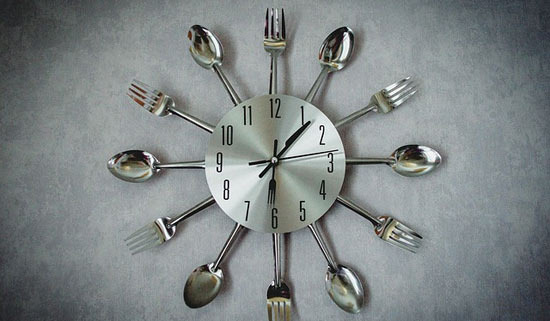
This is what is commonly referred to as the "belly clock". The belly clock is not just a play on words.
In fact, the belly clock is a phenomenon that can be explained scientifically.
Our bodies have an internal biological clock known as the 'circadian rhythm'.
This system remembers a 24-hour cycle that includes light, temperature, hormone secretion, and even meal times.
There is a clock in our brain that automatically recognizes and maintains routines like "I should sleep at this time, and I should eat at this time".
Since our brain also remembers 'meal times', when it's time to eat, the stomach secretes gastric juices, and the intestines start to move.
As a result, the body itself starts to say "Feed me~" and the stomach becomes noisy.
So, what happens to the belly clock when you go to another country?
For example, let's say you travel from Korea to the United States.
If you take a flight at 10 PM and fly for 12 hours, the local time will be 9 AM.
However, my body still thinks it's 11 PM Korean time.
Even though I'm not hungry, the hotel breakfast is already being served, and my friend who came with me is finishing their plate saying, "Bacon is delicious~".
At that moment, I wonder, "If I force myself to eat according to the local time, will I adapt to the time difference faster?"
The answer is... "Yes." Surprisingly, adjusting meal times plays a significant role in adapting to jet lag.
Is food the key to adjusting to jet lag?
According to experts, in addition to light exposure, sleep, and exercise, "when you eat" has a considerable impact on helping with jet lag adaptation.
Why? Because meal times regulate one of our body's biological rhythms, the 'metabolic rhythm'.
If you eat breakfast according to local time, the brain recognizes, "Ah, it's morning now".
If this is repeated, the belly clock naturally adjusts.
Therefore, nowadays, those who frequently travel long distances adjust their meal routines to local time to quickly overcome jet lag.
However, this doesn't mean you should force yourself to eat. The key is to give your body signals by eating 'lightly' according to local time.
For example, after arriving in the U.S., if you eat yogurt, a banana, or oatmeal at local breakfast time of 8 AM, have a light salad or sandwich for lunch, and a proper dinner,
eating 2-3 meals according to local time will help your body adapt much faster.
The belly clock is not just about "I'm hungry"; it's a message that "your body expects food at this time".
If you use this well, you won't skip breakfast, and you can overcome jet lag much more easily while traveling.
So, the next time you travel abroad and wonder 'Why am I hungry at this time?', it's an opportunity to reset your body's rhythm.
Meal times are also a part of health, as today's morning growl reminded me.






 Tora Tora |
 neroyo |
 nivex85 |
 Old English |
 nixxon |
 blueman |
 DelphiaMo |


 sparklingo |
  Tonky |
  viroma |
  cookie |
  Live and that's it |
  Alright Twain |
  eatontown blog |
  HAWAII Korean Church News |
  Amore |
  linex |
  Balancework |
  laro90 |
  MEDBIO American Doctor Blog |
  SWAT TEAM BLK |
  DREAM BIG |
  frostbite |
  330 Forever My Love |
  El Dorado |
  dralix58 |
  Gorama Round |
  Skydiving |